
Geopolitical Risk and Leverage: The October 2025 Crypto Crash as a Cautionary Tale
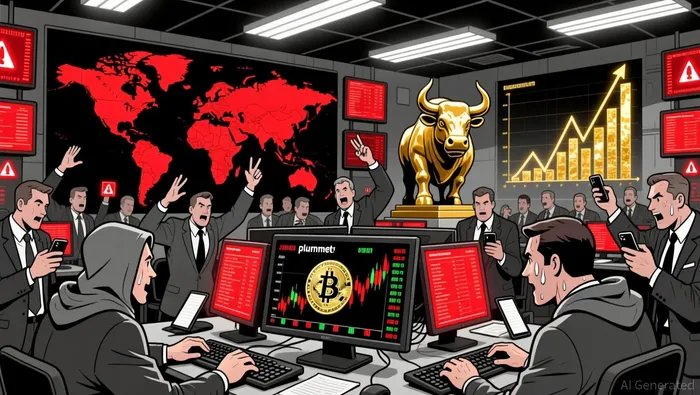
The crash was ignited by escalating U.S.-China trade war rhetoric, which reached a boiling point on October 10 when Washington announced sweeping tariffs, as reported by a Financial Content Markets article. This move sent shockwaves through global markets, with crypto assets-already prone to speculative swings-collapsing under the weight of fear. BitcoinBTC-- and EthereumETH-- plummeted by double digits within hours, while gold surged 14.72% to an unprecedented $4,381 per ounce as investors fled to safe havens.
The Federal Reserve's 25-basis-point rate cut in late October failed to restore confidence, as Chair Jerome Powell's warning that "further easing is far from guaranteed" underscored the fragility of macroeconomic stability. For leveraged crypto traders, the combination of geopolitical uncertainty and tightening monetary policy created a perfect storm.
Leverage as a Double-Edged Sword
Leveraged positions, while capable of amplifying gains, proved catastrophic during the crash. Bitcoin and Ethereum ETFs saw outflows of $488.43 million and $184.31 million respectively in just 48 hours, as reported by a Coinpedia report, reflecting the forced closure of margin accounts and stop-loss triggers. The mechanics of liquidation amplification became evident as automated systems exacerbated downward spirals, with each sell order triggering further margin calls.
Infrastructure failures worsened the crisis. Oracle systems like ChainlinkLINK-- and Pyth NetworkPYTH-- propagated corrupted price feeds, while centralized exchanges (CEXs) like Binance faced recursive leverage losses when synthetic stablecoins like USDeUSDe-- depegged to $0.6567. Colin Wu, a crypto analyst, estimated that these vulnerabilities turned a 10–12% price drop into a $19–30 billion liquidation cascade.
Lessons in Risk Management
The October 2025 crash highlights critical risk management strategies for leveraged crypto positions during geopolitical shocks:
Academic research further underscores the systemic risks of oracle dependency and liquidation cascades, urging regulators and platforms to adopt stress-testing protocols.
Conclusion: Preparing for the Next Crisis
The October 2025 crash is a cautionary tale for investors and institutions alike. Geopolitical shocks will always pose risks, but the role of leverage and infrastructure vulnerabilities in amplifying losses is a lesson that cannot be ignored. As markets digest the end of quantitative tightening and Bitcoin hovers near $115,000, the priority must shift from speculation to structural resilience.
For leveraged traders, the message is clear: geopolitical risk is not a variable to hedge against-it is a force to architect for.






Comentarios
Aún no hay comentarios