
Geopolitical Risk and the New Investment Paradigm: How U.S. Foreign Policy Designations Reshape Global Asset Allocation
The Defense Sector: A Fortress of Federal Funding
The 2025 U.S. Federal Budget underscores a stark reality: national security is no longer a political talking point but a financial imperative. With $13 billion allocated to cybersecurity across civilian departments and agencies, the government is prioritizing resilience against state and non-state actors. The Cybersecurity and Infrastructure Security Agency (CISA) received a $103 million boost, bringing its total funding to $3 billion, while the Department of Homeland Security (DHS) is expanding its focus on AI-driven threat detection. These investments aren't just about defense-they're about signaling to markets that the U.S. is prepared to outspend adversaries in a high-stakes game of attrition. For investors, this means defense contractors and tech firms with cybersecurity capabilities are prime candidates for long-term growth.
Cybersecurity: From Vulnerability to Valuation
The F5, Inc. breach in 2025 serves as a cautionary tale. When a nation-state actor infiltrated its systems, the company's stock plummeted, and investor scrutiny intensified. Such incidents have forced firms to adopt AI-driven compliance frameworks, like OneShield's registration under the Cloud Security Alliance AI Controls Matrix. This shift isn't just about patching vulnerabilities-it's about building trust in an era where data breaches can erode market confidence overnight. Cybersecurity spending is now a non-negotiable line item for corporations, and firms that lead in AI-powered threat mitigation will dominate the sector.
Political Risk Insurance: The New Hedging Frontier
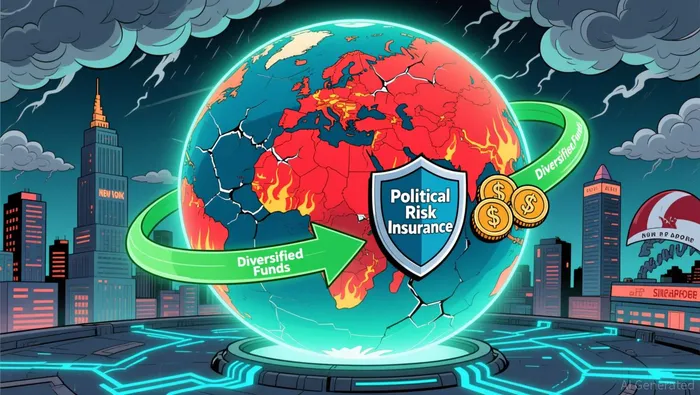
Political risk insurance (PRI) has emerged as a critical tool for multinational corporations navigating a fractured geopolitical landscape. A 2025 Howden report reveals that 51% of surveyed firms experienced political losses tied to international investments, with currency conversion and ownership disputes being the most common issues. The same report highlights that PRI reduces losses by an average of $1.4 million per incident and lowers the cost of capital in emerging markets by $2 million annually. As U.S. designations heighten instability in regions like the Middle East, demand for PRI is projected to grow by 33%. This isn't just insurance-it's a strategic asset for companies and investors alike.
Strategic Investment: Hedging Against the Unknown
The key to thriving in this environment is to embrace hedging instruments and resilient asset classes. The Wealth Company Mutual Fund's Multi Asset Allocation Fund, which balances equities, debt, and commodities like gold and silver, offers a blueprint for diversification. Meanwhile, crypto's institutional ascent-exemplified by Grayscale's IPO filing-provides another layer of portfolio resilience. Investors should also consider AI-driven portfolio strategies, like those offered by LINK FOREX, to navigate macroeconomic volatility.
Conclusion: Act Now, Adapt Forever
The U.S. designation of terrorist entities isn't just a policy decision-it's a catalyst for market reallocation. As defense budgets balloon, cybersecurity becomes a competitive moat, and political risk insurance gains traction, investors must pivot swiftly. The winners in this new paradigm will be those who hedge aggressively, invest in resilience, and stay ahead of the curve. The time to act is now.







Comentarios
Aún no hay comentarios