
Geopolitical Risk and Infrastructure Resilience: The Cost of Underestimating Tail Risks in Energy and Nuclear Sectors
The Tail Risk Paradox: Rare, High-Impact Events Reshape Asset Valuations
Tail risks-low-probability, high-impact events-have long been dismissed as outliers in financial modeling. However, the Chernobyl strike demonstrates that such events are becoming more frequent in a world where nuclear infrastructure is increasingly weaponized. The NSC, built to last a century, now requires urgent repairs to prevent further degradation. The IAEA has warned that without comprehensive restoration, the structure's ability to withstand extreme weather or future attacks will erode, heightening the risk of a catastrophic release of radioactive material.
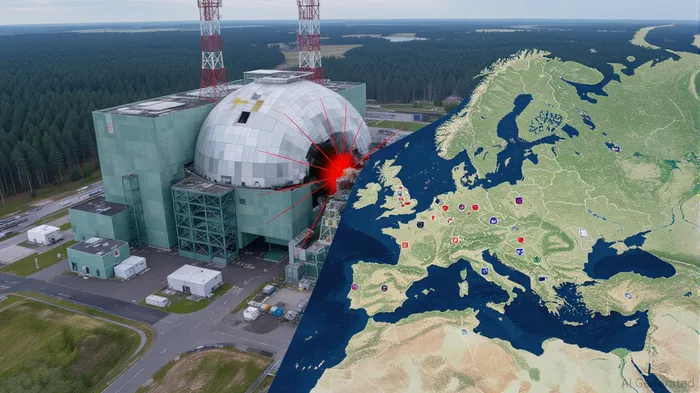
This scenario mirrors the 2022 Zaporizhzhia nuclear plant occupation, where repeated disruptions to Ukraine's energy grid highlighted vulnerabilities in nuclear safety protocols according to IAEA statements. Yet, despite these warnings, energy and nuclear stocks have historically been valued based on steady-state assumptions, ignoring the compounding risks of geopolitical instability. The Chernobyl incident is a wake-up call: investors must now factor in the probability of infrastructure sabotage as a core component of asset valuation.
Energy Security Investments Gain Urgency
The attack has accelerated a shift in energy security strategies, particularly in conflict-affected regions. Ukraine's response-prioritizing decentralized energy systems, including solar, wind, and battery storage-reflects a broader trend toward resilience-driven infrastructure. By November 2025, Ukraine had added 1,500 MW of solar capacity and deployed a 200 MW battery storage system, creating localized "energy islands" to mitigate large-scale outages.
These developments align with global policy shifts. The U.S. Department of Energy and private firms like JPMorgan have launched initiatives to bolster nuclear supply chains, with Morgan Stanley revising its 2050 nuclear value chain projections upward by 46%. Similarly, the European Bank for Reconstruction and Development has allocated €500 million to support Ukraine's energy recovery, signaling a growing recognition of infrastructure resilience as a strategic asset.
Geopolitical Risk Mitigation: A New Frontier for Investors
The Chernobyl strike has also intensified demand for geopolitical risk mitigation tools. Funds focused on energy security and nuclear safety are attracting inflows as investors seek to hedge against infrastructure vulnerabilities. For example, startups like Radiant and Holtec are advancing next-generation nuclear technologies, while traditional energy firms are diversifying into hybrid systems that integrate renewables with grid-hardening measures according to industry analysis.
However, the market's response remains fragmented. While the IAEA has called for global cooperation to secure nuclear sites, funding for post-strike repairs at Chernobyl remains uncertain, with donor nations hesitant to allocate resources amid broader geopolitical tensions. This gap highlights an opportunity for private capital to step in, particularly in emerging markets where infrastructure resilience is a critical but underfunded priority.
Conclusion: Repricing Risk in a Fractured World
The Chernobyl drone strike is not an isolated incident but a harbinger of a new era in infrastructure risk. As conflicts increasingly target energy and nuclear assets, investors must abandon complacency and reprice tail risks into their models. Exposure to companies specializing in nuclear safety, decentralized energy systems, and geopolitical risk analytics will become essential for long-term portfolio resilience.
The IAEA's warnings and Ukraine's policy pivots make one thing clear: the cost of underestimating these risks is no longer theoretical. It is a reality that markets must now confront.







Comentarios
Aún no hay comentarios