
Geopolitical Risk and Global Real Estate: Navigating the Impact of Religious Tensions and Terrorist Threats
The global real estate market in 2025 is increasingly shaped by geopolitical risks, particularly the interplay of rising religious and cultural tensions and the lingering shadow of terrorism. Events like the October 2025 Manchester synagogue attack, which occurred on Yom Kippur and left two dead, have amplified concerns about antisemitism and community safety in the UK, according to a Christ Community piece. While direct data on post-attack property value shifts in Manchester remains absent, historical patterns from prior terrorist incidents reveal a consistent trend: investors prioritize safety and resilience in the face of such threats. This article examines how religious dynamics and terrorism influence real estate strategies, drawing on global case studies and market behavior.
Religious Tensions and Neighborhood Preferences
Religious and cultural identities continue to shape real estate demand. Investors often seek properties in areas aligned with their faith, such as neighborhoods with strong religious institutions or cultural centers; that Christ Community piece highlights several faith-driven location preferences. For example, Islamic finance principles have spurred the growth of halal-compliant real estate products like Murabahah and Ijarah, catering to communities adhering to Shariah law, as noted in PwC's Emerging Trends report. Conversely, religious prohibitions-such as aversion to alcohol or gambling industries-can steer investors away from certain sectors (discussed in the Christ Community piece). These preferences are not static; they evolve with societal shifts, as seen in the post-Manchester context, where heightened antisemitism may drive Jewish communities to consolidate in areas with enhanced security or cultural cohesion, as observed in a Business News Today analysis.
Historical Impact of Terrorism on Property Values
Terrorist attacks have historically caused immediate declines in property values, particularly in proximity to attack sites. The 9/11 attacks, for instance, led to a sharp drop in commercial real estate values near the World Trade Center, with investor confidence eroding rapidly (see related reporting in Business News Today). Research on REIT acquisitions shows similar patterns: property values often plummet in the year of an attack but recover within subsequent years, reflecting a salience-driven overreaction (as discussed in the Christ Community piece). The Manchester synagogue attack, while not yet analyzed for real estate effects, fits into this broader trend. Its occurrence on a sacred religious day and the attacker's lack of prior surveillance by UK counterterrorism agencies - details covered in PwC's Emerging Trends report - underscore the unpredictable nature of modern threats, which can destabilize even well-established markets.
Investor Behavior and the Shift to Safer Assets
Terrorism heightens risk aversion, prompting investors to reallocate capital toward safer assets. A Banking and Finance study of U.S. investor behavior between 2000 and 2010 found that a one standard deviation increase in terrorism correlated with a 7.05% decline in equity fund flows and a 10.32% rise in government bond fund flows. This shift reflects a psychological response to fear, independent of direct economic losses. In 2025, as domestic terrorism-often involving lone actors-poses a growing threat (as that Banking and Finance study notes), real estate investors are increasingly prioritizing properties in politically stable regions or those with robust security infrastructure. For example, demand for office spaces in cities like Singapore and Toronto has outpaced that in high-risk areas, driven by perceptions of safety documented in Heritage's Terror Trends report.
Risk Mitigation: The Role of Terrorism Insurance
To counteract the financial fallout of terrorism, investors are adopting tools like terrorism insurance. This coverage, which emerged as a critical risk management strategy post-9/11, helps preserve property values and restore market confidence in affected areas (as described in Heritage's Terror Trends report). In the UK, the Manchester attack has likely accelerated uptake of such policies for religious institutions and commercial properties in culturally sensitive zones (Business News Today has covered these developments). Additionally, real estate developers are integrating resilience features-such as enhanced security systems and community engagement programs-to mitigate reputational and financial risks (Heritage's analysis discusses several resilience measures).
Future Outlook and Strategic Recommendations
As religious tensions and terrorism persist, real estate investors must balance ethical considerations with financial prudence. Key strategies include:
1. Prioritizing Resilient Markets: Focus on cities with strong governance, inclusive policies, and diversified economies to buffer against geopolitical shocks.
2. Leveraging Religious Affinity Investing: Align portfolios with faith-based communities' preferences, such as supporting halal or kosher-compliant developments.
3. Adopting Dynamic Risk Assessments: Continuously monitor regional security trends and adjust holdings accordingly, using data-driven tools to identify emerging threats. 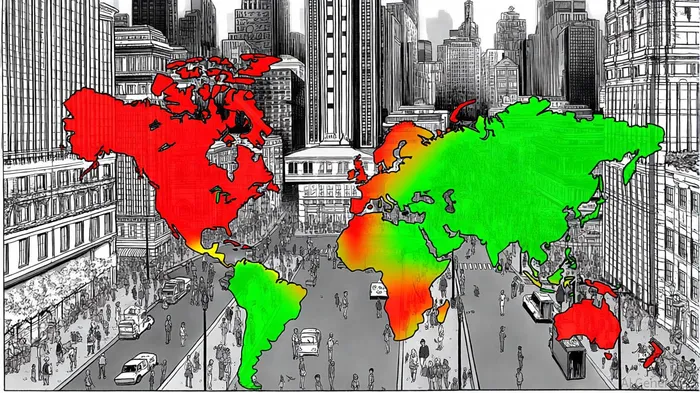







Comentarios
Aún no hay comentarios