
Geopolitical Risk and Global Markets: The Dual Impact of Leadership Credibility and Policy Instability
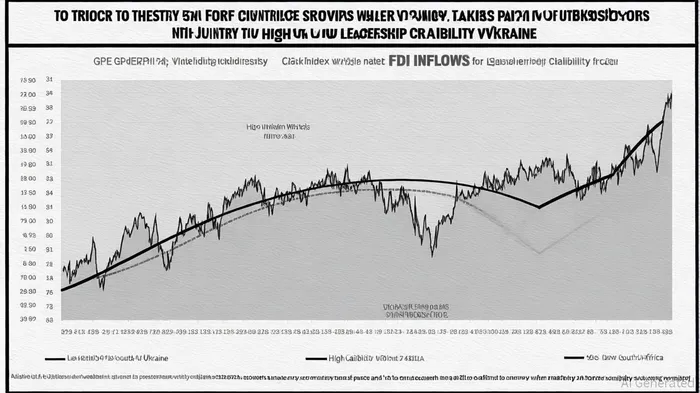
In an era marked by geopolitical tensions and economic uncertainty, the credibility of leadership and the stability of policy frameworks have emerged as critical determinants of global market performance. Recent events underscore how trust in governance and consistent policy-making can either bolster or undermine investor confidence, shaping everything from foreign direct investment (FDI) flows to stock market volatility. This analysis examines the interplay between leadership credibility, policy instability, and their measurable economic impacts, drawing on case studies from Ukraine, South Africa, and broader global trends.
Leadership Credibility: A Pillar of Economic Resilience
Leadership credibility—defined as the trust stakeholders place in a government's ability to execute coherent, transparent policies—has proven pivotal in stabilizing economies amid crises. Ukraine's response to Russia's full-scale invasion exemplifies this dynamic. Despite widespread destruction, the country's GDP grew by 2.9% in 2024 and is projected to expand by 2.5% in 2025, driven by fiscal discipline, anti-corruption reforms, and alignment with European and OECD standards [1]. The National Bank of Ukraine also reported a 629 million USD inflow of FDI in Q2 2023, despite war-related challenges like business closures and labor migration [3]. This resilience highlights how credible leadership can attract investment even in conflict zones, provided institutions maintain transparency and policy continuity.
Conversely, South Africa's struggles with policy instability—marked by inconsistent regulatory frameworks and corruption scandals—have deterred FDI. While the country's G20 presidency (2024–2025) offers an opportunity to rebrand as a stable investment hub, its 2024 FDI inflows of 12 billion USD lag behind peers like Kenya and Nigeria [6]. The OECD notes that policy uncertainty in emerging markets like South Africa correlates with reduced investor confidence, as firms prioritize jurisdictions with predictable governance [2].
Policy Instability: A Drag on Markets and Growth
Policy instability, often rooted in weak institutional frameworks or geopolitical conflicts, exacerbates market volatility and deters long-term investment. The UNCTAD World Investment Report 2025 reveals that global FDI stagnated near 0% over the past decade, with developing economies losing 7% of FDI in 2023 due to rising geopolitical risks [2]. For instance, Pakistan's MSCIMSCI-- index reflected a direct negative correlation between political instability and stock market returns in 2024, as frequent government changes and economic mismanagement eroded investor trust [4].
The Federal Reserve Board further notes that economic policy uncertainty (EPU) and trade policy uncertainty (TPU) delay corporate decisions for months to years, with Argentina's 2024–2025 experience illustrating this. Prolonged shifts between populist and market-friendly policies caused asset returns to fluctuate by over 15%, forcing investors to adopt hedging strategies [4]. Similarly, the Russia-Ukraine war disrupted energy supply chains, raising global household energy costs by nearly 100% and triggering a 4% decline in FDI to Europe [5].
Case Studies: Contrasting Outcomes
Ukraine's success contrasts sharply with nations lacking credible leadership. The OECD attributes its 2024–2025 GDP growth to coordinated public-private efforts and international aid, which stabilized the economy despite 40% of businesses closing due to the war [3]. Meanwhile, South Africa's 2024 FDI figures underscore the cost of policy instability: despite its G20 platform, the country's FDI inflows remain 30% below pre-2020 levels, reflecting lingering doubts about regulatory consistency [6].
The Kearney FDI Confidence Index 2025 reinforces this divide. Developed markets like the U.S. and Germany dominate rankings due to “technological innovation” and “efficient legal processes,” while emerging economies like China and Saudi Arabia gain traction by aligning with global sustainability trends [7]. This suggests that leadership credibility is not merely about political stability but also about adapting to evolving investor priorities, such as ESG (environmental, social, governance) criteria.
Implications for Investors
For investors, the takeaway is clear: leadership credibility and policy stability are non-negotiable factors in risk assessment. The IMF's April 2025 Global Financial Stability Report warns that geopolitical tensions and policy uncertainty could trigger stock price declines of 10–15% in vulnerable markets [5]. Conversely, countries with strong institutional frameworks—like Ukraine—demonstrate that even conflict-affected economies can attract FDI if governance remains transparent.
Investors should prioritize markets where leadership demonstrates adaptability, such as those integrating AI-driven policy tools or aligning with international standards. For example, the U.S. retained its top position in the 2025 FDI Confidence Index due to its 45% of investors citing “technological innovation” as a key attraction [7]. In contrast, regions with fragmented governance, like parts of Sub-Saharan Africa, require higher risk premiums to offset policy instability.
Conclusion
Geopolitical risk remains a defining challenge for global markets, but its impact is mediated by the quality of leadership and policy frameworks. Ukraine's economic resilience and South Africa's struggles illustrate that credible governance can mitigate even the most severe crises, while policy instability perpetuates uncertainty. As the OECD and UNCTAD emphasize, investors must scrutinize not just macroeconomic indicators but also the institutional underpinnings of growth. In a world of rising tensions, leadership credibility is no longer a soft factor—it is the bedrock of economic stability.







Comentarios
Aún no hay comentarios