
Geopolitical Risk and European Markets: The Hybrid Warfare Challenge in the Nordics
The escalation of hybrid warfare in the Nordic region has emerged as a defining geopolitical risk for European markets in 2025. Russia's sophisticated tactics-ranging from maritime sabotage and GPS jamming to disinformation campaigns-have not only destabilized regional security but also triggered cascading effects on defense spending, energy markets, and investor behavior. As hybrid threats blur the lines between conflict and peace, European policymakers and investors are grappling with a new era of strategic uncertainty.
Defense Market Trends: A Surge in Spending and Strategic Rebalancing
The European defense sector has experienced a seismic shift in 2025, driven by the urgent need to counter hybrid threats. According to a HANetf report, NATO defense budgets have reached a record $1.6 trillion, with European members committing to long-term goals of allocating 5% of GDP to defense by 2035. This surge is evident in the Nordic and Baltic states, where defense spending has consistently exceeded 2.5% of GDP. Poland, for instance, has secured contracts for over 150 major defense systems, while the EU's European Sky Shield Initiative has gained momentum to address hybrid air denial tactics, according to a Mordor Intelligence study.
However, the defense market faces structural challenges. An Energy Intelligence analysis highlights critical capability gaps in air and missile defense, cyber warfare, and drone technology, which are straining supply chains and budgets. Despite these hurdles, defense stocks have outperformed broader markets, with the MSCI European Aerospace and Defense index rising sharply as institutional investors prioritize security over ESG concerns, according to a European Council report. Companies like Rheinmetall and Leonardo are capitalizing on demand for uncrewed systems and heavy armor, while startups such as Helsing and Anduril are disrupting traditional defense paradigms with precision technologies, per a Hogan Lovells briefing.
Energy Market Volatility: Sabotage, Prices, and Resilience Strategies
Hybrid warfare has also destabilized European energy markets, particularly in the Nordics. Russian-linked sabotage of undersea infrastructure-such as the 2023 Balticconnector gas pipeline explosion-has exposed vulnerabilities in critical energy systems, as noted by Energy Intelligence. These incidents, coupled with GPS spoofing and shadow fleet operations, have driven up energy prices and eroded investor confidence. A Mordor Intelligence analysis points out that the strategic value of energy infrastructure peaks in winter, amplifying risks as Europe faces potential retaliatory strikes from Moscow.
In response, the EU has accelerated investments in renewable energy and grid resilience. The International Energy Agency (IEA) reports that low-emissions electricity investments in the EU reached $390 billion in 2025, while grid infrastructure spending exceeded $70 billion to integrate renewables and address bottlenecks, according to Mordor Intelligence. Offshore wind and battery storage have emerged as key pillars of this transition, supported by falling costs and technological advancements, based on a Montel report. However, geopolitical uncertainties-such as U.S. policy shifts and trade conflicts-remain a drag on long-term planning, a trend Montel's analysis also highlights.
Investor Behavior: From ESG Hesitation to Strategic Prioritization
Investor behavior in 2025 reflects a recalibration toward security-driven assets. A HANetf analysis reveals that European defense stocks have outperformed the broader market, with renewed interest from institutional investors who once shunned the sector due to ESG concerns. The European Commission's ReArm Europe plan, which allows an additional €650 billion in defense spending, has further bolstered confidence (the HANetf report noted these dynamics).
In the energy sector, Nordic investors are adopting a dual strategy: prioritizing project profitability while hedging against geopolitical risks. A Montel blog post highlights the growing reliance on battery storage and locational pricing signals to manage grid volatility. Meanwhile, nuclear energy is regaining traction, with small modular reactors (SMRs) positioned as a solution for baseload capacity in an electrified grid, as Montel reports.
Policy and Strategic Responses: EU-NATO Coordination and Resilience Building
The EU and NATO have intensified efforts to counter hybrid threats through coordinated strategies. The EU's Preparedness Union Strategy and NATO's Baltic Sentry operation exemplify this collaboration, focusing on cybersecurity, critical infrastructure protection, and intelligence sharing, guided by European Commission guidance. A European Council report underscores the importance of the European Defence Industry Programme (EDIP) in fostering cross-border innovation and reducing fragmentation.
Despite these measures, challenges persist. Supply chain bottlenecks for energetic materials and nationalistic procurement policies hinder progress. As the EU's Defense Commissioner, Andrius Kubilius, emphasizes, strategic autonomy requires not only funding but also political will to harmonize national and collective interests, a point echoed by Mordor Intelligence.
Conclusion: Navigating Risk in a Hybrid Era
The hybrid warfare escalation in the Nordics has redefined European markets, creating both risks and opportunities. While defense and energy sectors face heightened volatility, they also present compelling investment prospects for those who can navigate geopolitical complexity. For investors, the key lies in balancing short-term resilience with long-term strategic alignment-prioritizing sectors that address hybrid threats while leveraging technological and policy-driven tailwinds.
As the EU and NATO continue to adapt, the coming years will test Europe's ability to transform vulnerability into strength. In this new era of hybrid conflict, market success hinges on agility, foresight, and an unwavering focus on resilience.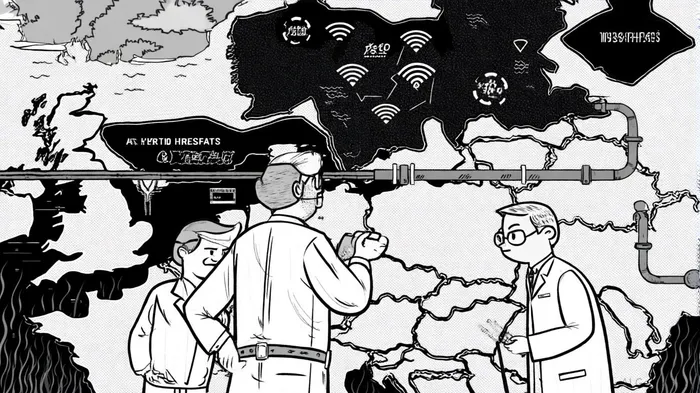







Comentarios
Aún no hay comentarios