
Geopolitical Risk and Emerging Markets: The Middle East's Debt and Investment Dilemma
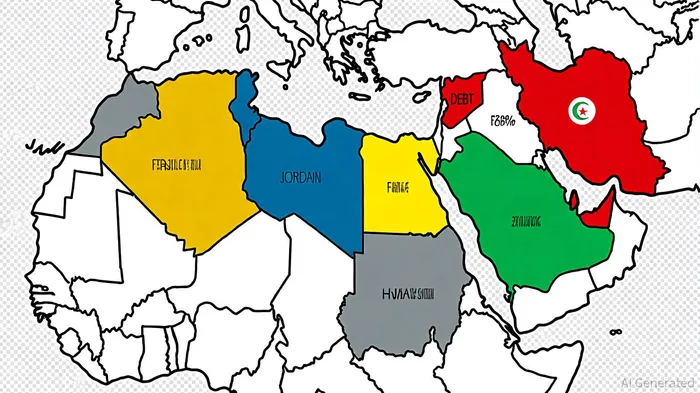
The Middle East has long been a region of strategic and economic significance, but the confluence of political instability, global economic shocks, and shifting geopolitical dynamics has placed emerging markets in the region under intense pressure. From 2023 to 2025, sovereign debt metrics and investment flows have been profoundly shaped by these factors, with countries like Egypt, Jordan, Lebanon, and Tunisia teetering on the edge of a debt crisis. This analysis explores how political instability and external shocks have compounded existing vulnerabilities, while also highlighting pockets of resilience and strategic adaptation.
Sovereign Debt Metrics: A Precarious Balancing Act
Political instability in the Middle East has exacerbated structural fiscal and external imbalances, pushing several emerging markets into debt distress. According to a report by the IMF, Egypt's public debt-to-GDP ratio surged from 70% in 2019 to 95% by 2025, while Lebanon's debt-to-GDP ratio ballooned from 130% to 180% in the same period [1]. These figures underscore the fragility of economies reliant on external financing and vulnerable to global interest rate hikes. The Russia-Ukraine war further compounded the crisis by driving up food and fuel prices, forcing governments to subsidize essentials at the expense of fiscal discipline [3].
Lebanon's sovereign debt default in 2023 serves as a stark warning. Political infighting and a lack of credible reform programs have eroded investor confidence, leaving the country dependent on IMF support and bilateral aid [2]. Similarly, Egypt and Tunisia have struggled to secure sustainable financing, with both nations relying on IMF programs to stabilize their economies. The IMF has emphasized that high debt levels are exacerbated by global economic conditions and a lack of fiscal consolidation, warning that without structural reforms, growth prospects will remain bleak [1].
Geopolitical Tensions and Investment Flows: A Double-Edged Sword
Geopolitical instability has further complicated the investment landscape. The October 7 Hamas attacks on Israel and the subsequent regional tensions have heightened uncertainty, deterring foreign direct investment (FDI) in oil-importing economies. Goldman Sachs analysts note that such conflicts could disrupt supply chains and reduce FDI inflows, particularly in sectors like manufacturing and tourism [2].
However, the FDI landscape has also shown signs of adaptation. In 2025, the Middle East's M&A market recorded 271 deals—a 19% increase from the previous year—reflecting resilience in sectors like infrastructure and renewables [4]. The UAE, for instance, has leveraged its political neutrality and economic reforms to attract $35 billion in investments for Egypt's Ras El Hekma tourism project [1]. Morocco's Noor Ouarzazate Solar Complex and Tarfaya Wind Farm have similarly drawn FDI, aligning with global decarbonization trends [1].
Yet, the benefits of FDI remain unevenly distributed. While Egypt and the UAE have capitalized on their strategic locations and reform agendas, Jordan and Iran have seen limited economic growth despite receiving foreign capital [5]. This disparity highlights the importance of political stability and institutional credibility in attracting and sustaining investment.
Credit Ratings and the Path Forward
Credit rating agencies have adopted a cautiously neutral stance toward the region. Fitch Ratings notes that Middle East and North Africa sovereigns face a "neutral" outlook in 2025, balancing stable oil prices and modest economic growth against high debt levels and external vulnerabilities [2]. However, this neutrality masks underlying fragility. The IMF warns that rising trade tensions, policy uncertainties, and extended oil production cuts could weaken growth prospects, particularly for oil-importing economies [5].
For countries like Egypt and Jordan, the path to recovery hinges on implementing structural reforms and securing debt relief. The IMF has stressed that without fiscal consolidation and improved governance, debt sustainability will remain elusive [1]. Meanwhile, multilateral institutions and global creditors have been reluctant to offer relief, citing concerns over accountability and transparency [3].
Conclusion: Navigating a Fragile Future
The Middle East's emerging markets are at a crossroads. Political instability and geopolitical risks have amplified existing debt challenges, while FDI flows remain sensitive to regional tensions. Yet, the region's resilience—evidenced by surges in infrastructure and renewable energy investments—suggests that strategic reforms and diversification can mitigate some of these risks. Investors and policymakers must remain vigilant, balancing short-term stabilization efforts with long-term structural adjustments to navigate this complex landscape.







Comentarios
Aún no hay comentarios