
Geopolitical Risk and Emerging Markets: The Halkbank Case and Its Impact on Turkish Capital Flows
Geopolitical risks have long been a critical factor in emerging market investments, but the case of Turkey's state-owned Halkbank underscores how legal and political challenges can directly shape investor sentiment and capital flows. Since 2019, Halkbank has faced U.S. criminal charges for allegedly facilitating Iran's evasion of sanctions by transferring $20 billion in oil revenue through intermediaries in Türkiye, Iran, and the United Arab Emirates, according to a Reuters report. This protracted legal battle, now reaching the U.S. Supreme Court, has not only strained U.S.-Turkish relations but also created a climate of uncertainty for foreign investors, with measurable impacts on Turkey's financial markets and foreign direct investment (FDI) trends.
Legal Challenges and the Erosion of Sovereign Immunity
Halkbank's defense has hinged on claims of sovereign immunity under the U.S. Foreign Sovereign Immunities Act (FSIA) and common law. However, the U.S. Supreme Court's 2023 ruling clarified that the FSIA does not apply to criminal cases, and the Second Circuit Court of Appeals later denied the bank's common law immunity claims in October 2024 in the Second Circuit decision. This legal precedent has significant implications: it signals that U.S. courts can prosecute foreign state-owned entities for commercial activities conducted abroad, even if those activities occur outside U.S. jurisdiction. Halkbank's repeated appeals, including a May 2025 petition to the Supreme Court, have warned that such actions could destabilize international legal norms by exposing U.S. agencies to reciprocal litigation, according to a Turkiye Today report.
Investor Sentiment and Market Volatility
The Halkbank case has directly influenced investor confidence in Turkey. In March 2025, political turbulence-including the arrest of Istanbul Mayor Ekrem İmamoğlu-triggered a 15% weekly drop in the Borsa Istanbul 100 Index, its worst performance since the 2008 financial crisis. The Turkish lira depreciated by 6.7% against the U.S. dollar for the year, prompting the Central Bank of the Republic of Türkiye (CBRT) to raise interest rates to 46% in a bid to stabilize the currency, according to Financial Mirror. While the CBRT's interventions provided temporary relief, the Halkbank legal saga has kept foreign investors wary. For instance, Halkbank's shares surged 11% in late 2025 amid expectations of a "manageable fine" to resolve the dispute, reflecting cautious optimism about a potential diplomatic resolution, according to a Bloomberg report.
FDI inflows to Turkey have also been affected. According to Invest in Türkiye, FDI reached $12.5 billion in 2024, with the finance and manufacturing sectors attracting the most investment. However, the Halkbank case has introduced uncertainty, particularly for firms seeking to partner with state-owned enterprises. The bank's absence from international bond markets since 2019-due to heightened scrutiny-has further complicated its ability to raise capital, indirectly impacting Turkey's broader financial landscape, as reported by Turkiye Today.
Geopolitical Tensions and Diplomatic Leverage
The Halkbank case has become a focal point in U.S.-Turkish diplomacy. Turkish President Recep Tayyip Erdoğan has repeatedly raised the issue with U.S. President Donald Trump, emphasizing its symbolic importance for national sovereignty. A Bloomberg report notes that Turkey anticipates a settlement involving a "manageable fine" to avoid prolonged legal and financial penalties. Such a resolution could stabilize investor sentiment, but the prolonged uncertainty has already eroded trust. Analysts argue that political instability and perceived judicial overreach-such as the İmamoğlu arrest-undermine long-term investment, as markets demand institutional clarity rather than reactive measures like interest rate hikes (as noted in Financial Mirror).
Broader Implications for Emerging Markets
Halkbank's case highlights a global trend: the fragmentation of regulatory frameworks and the prioritization of national interests over international coordination. As noted by EY, divergent approaches to financial regulation-such as the uneven implementation of Basel 3.1 reforms-increase compliance costs for emerging market institutions. For Turkey, the Halkbank case exemplifies how legal challenges against state-owned entities can amplify geopolitical risks, deterring capital flows and forcing firms to invest heavily in regulatory monitoring.
Conclusion
The Halkbank legal battle serves as a cautionary tale for investors in emerging markets. While Turkey's anticipated resolution with the U.S. may provide short-term relief, the broader lesson lies in the interplay between legal precedents, geopolitical tensions, and market volatility. For investors, the case underscores the importance of scenario planning and political risk analysis. As global regulatory environments grow more fragmented, the ability to navigate legal uncertainties-particularly in state-owned enterprises-will remain a defining factor in emerging market success.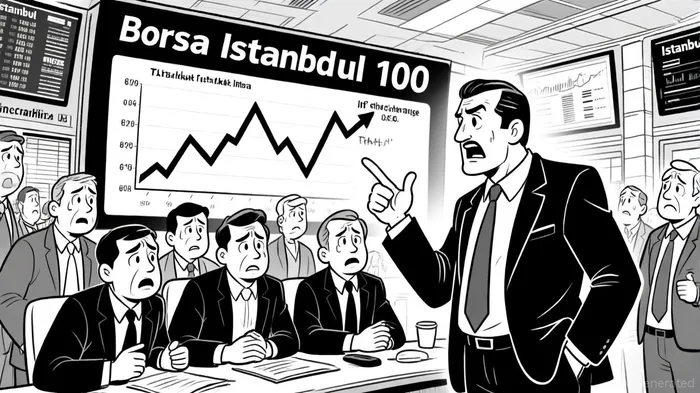







Comentarios
Aún no hay comentarios