
Geopolitical Risk and Emerging Market Stability: U.S. Policies in the DRC and the Path to Peace and Investment
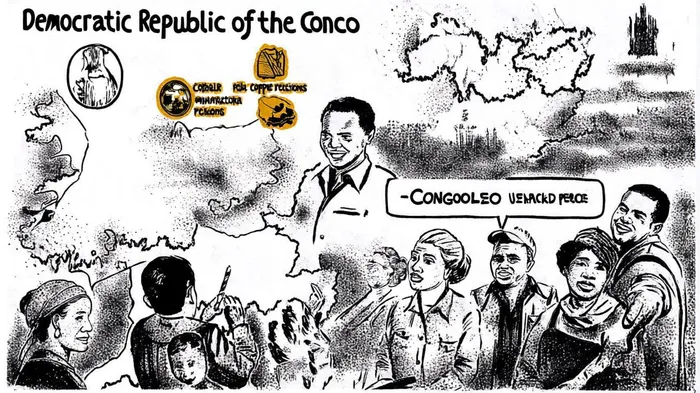
In the volatile landscape of emerging markets, the Democratic Republic of the Congo (DRC) stands as both a beacon of opportunity and a cautionary tale of instability. The country's vast reserves of cobalt, copper, and other critical minerals have made it a focal point for global supply chains, particularly for the United States, which seeks to reduce its reliance on Chinese-dominated mineral markets. However, the DRC's eastern regions remain mired in conflict, with armed groups like the Rwanda-backed M23 rebel faction controlling key towns and destabilizing the region. U.S. political developments in 2025—ranging from sanctions to peace deals—have sought to address this instability, but their effectiveness in fostering long-term stability and investor confidence remains uncertain.
The U.S.-Brokered Peace Deal: A Fragile Foundation
In June 2025, the U.S. government mediated a peace agreement between the DRC and Rwanda in Washington, D.C., hailed by President Donald Trump as a “Great Day for Africa and, quite frankly, a Great Day for the World!”[1]. The deal aimed to end decades of conflict involving M23 and other armed groups, with commitments to withdraw Rwandan forces from DRC territory and establish a joint security coordination mechanism[3]. However, the agreement has yet to translate into tangible peace. M23 continues to hold strategic cities like Goma and Bukavu, and the withdrawal of regional peacekeeping forces has left a vacuum in enforcement[3].
Critics argue that the peace deal overlooks the political and social dimensions of the conflict, focusing instead on economic incentives tied to mineral access[2]. While the U.S. has positioned the agreement as a step toward stabilizing the DRC's mining sector, the lack of trust between the DRC government, Rwanda, and M23 remains a critical barrier. As one analyst notes, “Without inclusive dialogue and credible military deterrence, the peace deal risks becoming another unfulfilled promise”[3].
Sanctions and the Illicit Mineral Trade
Complementing the peace efforts, the U.S. Treasury has imposed sanctions on entities linked to the illegal trade of critical minerals in the DRC. In August 2025, the Office of Foreign Assets Control (OFAC) targeted groups like PARECO-FF and companies such as Cooperative des Artisanaux Miniers du Congo (CDMC), East Rise Corporation Limited, and Star Dragon Corporation Limited[1]. These actions aim to disrupt the flow of funding to armed groups while signaling U.S. commitment to ethical mineral sourcing.
However, the economic impact of such sanctions is nuanced. While they may deter illicit activity, they also create uncertainty for investors. A study by the Atlantic Council highlights that U.S. sanctions on countries with high corruption levels often exacerbate instability, as seen in the DRC's ongoing conflict[4]. For foreign investors, the risk of entanglement with sanctioned entities—particularly in the extractive sector—remains a deterrent. “Sanctions can act as a double-edged sword,” explains a CSIS expert. “They target bad actors but also raise the perceived risk of operating in fragile markets”[5].
FDI Trends and the DRC's Investment Climate
Foreign direct investment (FDI) in the DRC has shown mixed trends in recent years. According to the UNCTAD World Investment Report 2024, FDI inflows declined by 11.4% in 2023, totaling USD 1.63 billion[2]. However, by 2023, inflows rebounded to USD 2.38 billion, a 68.53% increase from 2022[4]. This volatility reflects the DRC's dual identity as a resource-rich but politically unstable market. The mining sector, which accounts for over 95% of the country's export revenue, remains the primary draw for investors, but challenges like corruption, weak governance, and security risks persist[2].
The U.S. has sought to leverage its diplomatic and economic influence to improve the DRC's investment climate. For instance, the Lobito Corridor initiative—a U.S.-supported infrastructure project—aims to boost connectivity and economic integration in the region[4]. Yet, as of 2025, the DRC ranks 163rd out of 180 countries on Transparency International's Corruption Perception Index[2], underscoring the systemic hurdles to sustained investment.
Geopolitical Risk and Investor Behavior
The interplay between U.S. policies and investor confidence in conflict-affected regions is further complicated by broader geopolitical trends. Research indicates that U.S. portfolio investments in emerging markets are highly sensitive to geopolitical risk, particularly in regions with poor institutional quality[6]. For example, the U.S. dollar's diminished safe-haven status has prompted investors to seek alternatives like gold and BitcoinBTC--, though these come with their own volatility[6].
In the DRC, the U.S. peace deal and sanctions have created a paradox: while they aim to stabilize the region, they also heighten uncertainty. A 2025 report by the Federal Reserve notes that firms' perceptions of geopolitical risk lead to reduced investment, especially in sectors reliant on international trade[7]. For the DRC, this means that even with mineral wealth, the lack of political stability and effective governance could deter long-term capital flows.
The Path Forward: Balancing Diplomacy and Investment
The U.S. strategy in the DRC underscores a broader challenge: how to align geopolitical objectives with economic incentives in conflict-affected regions. While the peace deal and sanctions address immediate security concerns, they must be paired with sustained efforts to strengthen governance, protect human rights, and ensure inclusive economic development. As one expert from the Atlantic Council argues, “The DRC's future depends not just on mineral extraction but on building institutions that can manage its wealth equitably”[5].
For investors, the key lies in assessing the long-term viability of the DRC's reforms. The U.S. government's role as a mediator and donor is critical, but without a credible commitment to addressing the root causes of conflict—such as regional rivalries and the proliferation of armed groups—the DRC's investment climate will remain precarious.
Conclusion
The Democratic Republic of the Congo's potential as a hub for critical minerals is undeniable, but its path to stability and investment success hinges on the effectiveness of U.S. and international efforts. While the 2025 peace deal and sanctions represent significant steps, their success will depend on sustained engagement, transparent governance, and a willingness to address the complex interplay of political, economic, and security challenges. For investors, the DRC remains a high-risk, high-reward proposition—one that demands both strategic patience and a nuanced understanding of the region's geopolitical dynamics.






Comentarios
Aún no hay comentarios