
Geopolitical Risk and Emerging Market Investments: The Impact of U.S. UN Peacekeeping Funding Delays
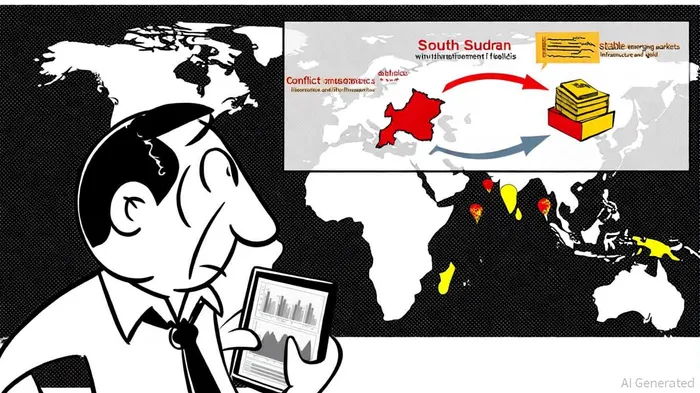
The U.S. government's recent delays and proposed cuts to United Nations peacekeeping funding have sparked a cascade of geopolitical and economic consequences, particularly in emerging markets. As the largest contributor to the UN peacekeeping budget—covering 27% of the $5.6 billion annual cost—the U.S. has historically played a stabilizing role in conflict zones. However, the Trump administration's decision to withhold $4.9 billion in foreign aid, including $800 million for peacekeeping, has left the UN with a $2.7 billion shortfall in arrears[1]. This financial strain has directly impacted operations in regions like the Democratic Republic of the Congo (DRC), South Sudan, and Lebanon, where peacekeeping missions are critical to protecting civilians and maintaining fragile stability[2].
Geopolitical Instability and Sovereign Risk
The erosion of UN peacekeeping capacity has exacerbated regional instability, heightening sovereign risk for investors. According to a report by the International Monetary Fund (IMF), geopolitical shocks in emerging markets typically raise sovereign risk premiums by 45 basis points, compared to 30 basis points in advanced economies[3]. This is particularly evident in countries like South Sudan and the DRC, where delayed UN operations have led to staffing freezes and operational delays, increasing the likelihood of violence and humanitarian crises[4]. Such instability not only disrupts local economies but also deters foreign direct investment (FDI), as firms reassess exposure to regions with weak governance and security.
For example, the Central African Republic (CAR) has seen a breakdown in emergency coordination due to reduced UN humanitarian support, raising the risk of famine and further destabilizing the region[5]. Sovereign wealth funds (SWFs) and institutional investors are now recalibrating their strategies, with 67% of SWFs expecting emerging markets to match or outperform developed markets over the next three years, but only if risks are mitigated through diversification[6].
Portfolio Diversification and the Shift to Alternative Assets
Investors are increasingly adopting a dual approach to portfolio diversification: geographic rebalancing and a pivot toward alternative assets. The U.S. funding delays have accelerated a trend toward "near-shoring" supply chains and diversifying away from U.S.-centric assets, as highlighted by a Cambridge Associates analysis[7]. Emerging markets equities, once seen as volatile, are now viewed as potential hedges against U.S. policy-driven uncertainties. A 60/40 allocation between developed and emerging markets has shown improved diversification benefits, despite the latter's inherent volatility[8].
Simultaneously, alternative assets are gaining traction as safe havens. Gold, for instance, has seen renewed interest from central banks and SWFs as a hedge against geopolitical risk and potential weaponization of financial assets[9]. Private credit and infrastructure investments in stable emerging markets—such as India's renewable energy projects—are also attracting capital due to their long-term yields and resilience to short-term shocks[10].
Strategic Implications for Investors
The U.S. funding delays underscore a broader shift in global governance dynamics. As the U.S. retreats from multilateral commitments, emerging powers like China are stepping in to fill the void, altering the geopolitical balance and influencing investment flows[11]. This shift necessitates a reevaluation of sovereign risk assessments, with investors prioritizing countries that demonstrate political stability and effective governance.
Moreover, the UN's push for performance-based budgeting and diversified funding models—such as contributions from non-traditional donors—could reshape the landscape of peacekeeping effectiveness[12]. Investors must monitor these reforms, as they may indirectly impact regional stability and, by extension, asset valuations.
Conclusion
The U.S. funding delays to UN peacekeeping missions are not merely a diplomatic or humanitarian issue—they are a catalyst for geopolitical instability that reverberates through global investment strategies. As emerging markets grapple with heightened sovereign risk, investors are recalibrating portfolios to balance exposure, prioritize alternative assets, and hedge against volatility. The coming years will test the resilience of these strategies, particularly as the UN seeks to adapt to a post-American multilateral order. For now, the message is clear: in an era of fragmented global governance, diversification and agility are the cornerstones of prudent investing.







Comentarios
Aún no hay comentarios