
Geopolitical Risk and Emerging Market Investments: The Impact of High-Profile Fugitive Cases in Latin America
In the volatile landscape of emerging market investments, geopolitical risks—particularly those tied to transnational crime and fugitive apprehension—have emerged as critical determinants of capital flows. Recent high-profile fugitive cases in Latin America, coupled with U.S. policy responses, underscore the complex interplay between law enforcement, institutional stability, and investor confidence. This analysis examines how these dynamics shape asset flows and policy frameworks, with implications for emerging market strategies.
The Role of INTERPOL and Regional Cooperation in Disrupting Criminal Networks
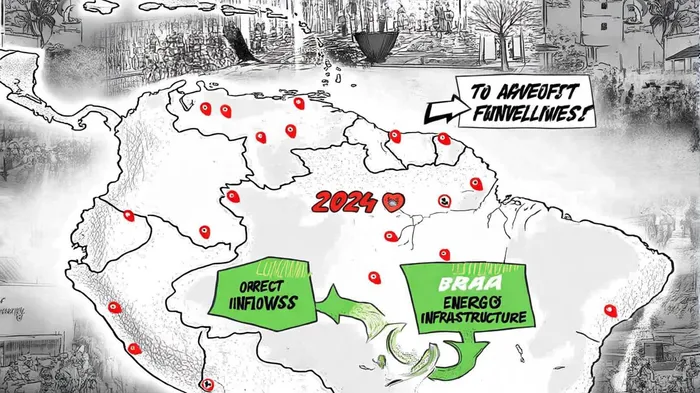
In 2024, INTERPOL's EL PACCTO 2.0 initiative, supported by the European Union, arrested 58 high-risk fugitives across Latin America, the Caribbean, and Europe, targeting individuals linked to drug trafficking, sexual violence, and organized crime [1]. These operations, part of a broader effort to strengthen cross-border fugitive investigative networks, have disrupted transnational criminal enterprises that siphon an estimated $400 billion annually through illicit financial flows [2]. By reducing the operational capacity of these networks, such efforts indirectly enhance regional security and governance, factors that investors increasingly weigh when assessing risk.
However, the direct impact on foreign direct investment (FDI) remains nuanced. While 2024 saw a 12% decline in FDI to Latin America and the Caribbean, driven by reduced inflows to Argentina, Brazil, and Chile, greenfield investments in renewable energy and infrastructure sectors showed resilience [3]. This suggests that while fugitive arrests may not immediately reverse broader economic trends, they contribute to a more stable environment that could attract sector-specific capital over time.
U.S. Policy Responses and Their Dual Edges
The U.S. has adopted a multifaceted approach to counter Latin American crime, including sanctions against the Sinaloa Cartel—designated a Foreign Terrorist Organization—and the Merida Initiative, which allocates resources to Mexican law enforcement [4]. These measures, alongside the “Remain in Mexico” policy and Temporary Protected Status (TPS) revocations, reflect a strategic shift toward security-centric engagement. While such policies aim to curb migration and drug trafficking, they also risk alienating regional partners and exacerbating economic instability, as seen in Nicaragua's 18% tariff hike and Venezuela's GDP contraction [5].
For investors, these policies create a dual-edged sword. On one hand, U.S. sanctions and enhanced AML frameworks (e.g., Gafilat's virtual asset guidelines) signal a commitment to curbing corruption, potentially improving long-term governance [6]. On the other, punitive immigration policies and economic coercion may deter investment in countries reliant on remittances and trade with the U.S.
Fugitive Apprehension and the Paradox of Investor Confidence
High-profile fugitive cases also influence investor behavior through indirect channels. A study on Chinese firms reveals that extradition treaties—by reducing the ability to evade home-country institutional constraints—can deter FDI in host countries [7]. While this dynamic is specific to China, it highlights how interstate cooperation on fugitive apprehension can alter risk perceptions. In Latin America, the arrest of MS-13 leaders and Sinaloa Cartel associates may reduce the perceived risk of state capture, encouraging investments in sectors less vulnerable to criminal infiltration, such as renewable energy [3].
Yet, the broader economic costs of crime—estimated at 3.5% of Latin America's GDP in 2022—persist as a drag on growth [8]. Businesses in high-crime areas allocate significant resources to security, reducing capital available for expansion. Thus, while fugitive arrests address symptoms, systemic reforms in governance and judicial efficiency are needed to sustainably attract FDI.
Policy Implications for Emerging Market Investors
For investors, the key takeaway is the importance of distinguishing between short-term volatility and long-term structural shifts. The 2024 INTERPOL operations and U.S. sanctions demonstrate that geopolitical interventions can stabilize regional security but are insufficient on their own to reverse declining FDI trends. Emerging market strategies should prioritize:
1. Sectoral Diversification: Targeting resilient sectors like renewable energy and critical minerals, where Latin America's natural resources and proximity to the U.S. offer competitive advantages [3].
2. Geopolitical Hedging: Balancing exposure to U.S.-aligned partners (e.g., El Salvador, Argentina) with diversification into non-U.S. corridors, such as China's Belt and Road Initiative, to mitigate policy risks [5].
3. Engagement with Local Institutions: Supporting regional AML frameworks and corporate compliance programs to align with evolving regulatory standards [6].
Conclusion
High-profile fugitive cases in Latin America, while not directly reversing FDI declines, signal a broader trend toward international cooperation in combating transnational crime. For emerging market investors, the challenge lies in navigating the interplay between these efforts and U.S. policy shifts, which can both stabilize and destabilize regional economies. A nuanced approach—focusing on sectoral resilience, geopolitical diversification, and institutional engagement—will be critical to capitalizing on opportunities in this dynamic region.







Comentarios
Aún no hay comentarios