
Geopolitical Risk and Digital Asset Resilience: How Emerging Market Crises Shape Crypto Markets and Investor Strategies
In 2025, the interplay between geopolitical instability and digital asset markets has reached a critical inflection point. Leadership crises in emerging markets-exemplified by Venezuela's contested elections and Ukraine's ongoing conflict-have not only accelerated crypto adoption but also reshaped investor strategies. These events, coupled with regulatory shifts in major economies like the United States, underscore the dual role of cryptocurrencies as both a refuge during turmoil and a volatile asset class.
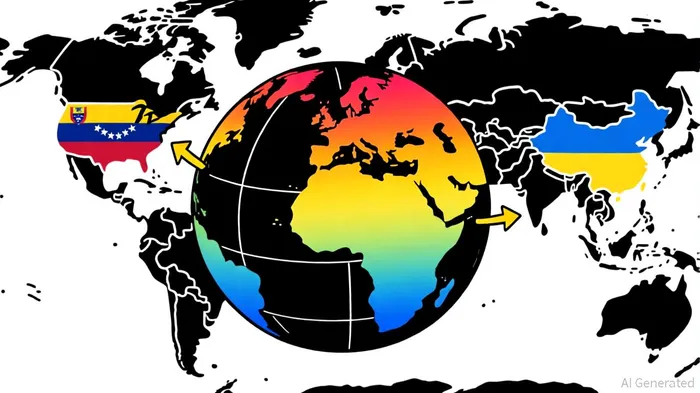
Emerging Market Crises as Catalysts for Crypto Adoption
Venezuela's 2024 political crisis, marked by internet censorship and hyperinflation (229% annual inflation as of May 2025), has driven a 110% year-on-year surge in crypto adoption, according to a Forbes report. Stablecoins like USDTUSDT-- and USDCUSDC-- have become lifelines for Venezuelans, facilitating remittances, legal defense funding, and cross-border transactions, per a CoinMetro analysis. Chainalysis, as summarized in a Newsworthy report, finds Venezuela now ranks 13th globally in crypto adoption, with 56% of transactions involving stablecoins. This shift reflects a broader trend: when traditional financial systems fail, digital assets fill the void.
Similarly, the Russia-Ukraine war has highlighted crypto's utility in crisis scenarios. Ukraine's use of BitcoinBTC--, EthereumETH--, and stablecoins to fund military and humanitarian efforts-raising over $100 million in donations by mid-2024-was documented in a Cointelegraph report. However, the conflict also exposed vulnerabilities, including volatility and cyber fraud risks, which Cointelegraph later noted have tempered institutional enthusiasm.
Regulatory and Policy Shifts: A Double-Edged Sword
The U.S. re-elected TrumpTRUMP-- administration's pro-crypto policies, including the launch of the $TRUMP token and a Crypto Task Force, have injected optimism into markets, as noted in the Forbes report. Yet, these initiatives coexist with protectionist tariffs on China, Canada, and Mexico, creating a paradoxical environment where crypto innovation is encouraged but global trade is constrained, according to CoinMetro. This duality has led to mixed investor sentiment, with Bitcoin ETFs and Ethereum ETFs gaining traction while broader market caution persists, per a Post-SEC analysis.
Meanwhile, regulatory clarity in other regions has had transformative effects. The August 2025 resolution of the SEC vs. Ripple lawsuit, which cleared the way for a US-listed XRP ETF, has spurred institutional adoption, as discussed in the Post-SEC analysis. Conversely, the CFTC's leadership crisis has left a vacuum in oversight, heightening uncertainty for digital asset markets, as the Newsworthy report outlines.
Investor Strategies in a Volatile Landscape
Investors navigating this environment are adopting nuanced strategies. In Venezuela, diaspora communities are leveraging decentralized platforms to bypass sanctions and traditional banking restrictions, while local users prioritize stablecoins for wealth preservation, as described in the Forbes report. In Ukraine, retail investors have shown a preference for altcoins like ADAADA-- and BNBBNB--, which exhibited significant price fluctuations during the conflict, a trend documented by Cointelegraph.
Globally, institutional players are increasingly viewing crypto as a diversification tool. The approval of Bitcoin and Ethereum spot ETFs in the U.S. has legitimized digital assets as part of mainstream portfolios, according to CoinMetro. However, caution remains: Moody's warnings-reported by Cointelegraph-suggest that rapid stablecoin adoption in emerging markets risks destabilizing banking systems through reserve runs and deposit erosion.
Challenges and the Path Forward
Despite these developments, challenges persist. Regulatory fragmentation-exemplified by the CFTC's instability and G7 calls for tighter crypto controls-threatens to stifle innovation, as noted in the Newsworthy report. Additionally, the reliance on stablecoins in economies like Venezuela raises questions about long-term sustainability, since these assets depend on trust in centralized reserves, a concern highlighted in the Forbes report.
For investors, the key lies in balancing opportunism with risk management. Diversifying across asset classes, prioritizing stablecoins in high-inflation environments, and hedging against regulatory shifts are becoming standard practices, according to the Post-SEC analysis.
Conclusion
The 2025 crypto landscape is defined by resilience in the face of geopolitical risk. Emerging market crises have proven to be both catalysts and stress tests for digital assets, revealing their potential as safe-haven tools while exposing systemic vulnerabilities. As leadership instability persists and regulatory frameworks evolve, investors must remain agile, leveraging crypto's strengths while mitigating its inherent volatility.






Comentarios
Aún no hay comentarios