
Geopolitical Risk and Defense Sector Opportunities: How U.S. Military Aid Statements Shape Market Dynamics and Investment Strategies
The defense sector has emerged as a critical battleground for investors navigating the intersection of geopolitics and capital markets. Recent U.S. political statements on military aid-ranging from emergency funding for Ukraine to strategic modernization efforts targeting China-have directly influenced defense contractor valuations, creating both volatility and long-term opportunities. This analysis examines how U.S. policy decisions shape market dynamics, explores regional instability as a catalyst for investment, and evaluates the structural shifts redefining the sector.
Short-Term Volatility and Long-Term Gains: The Impact of Military Aid Announcements
U.S. military aid announcements have historically triggered sharp, short-term gains in defense stocks. For instance, following the Hamas attack on Israel in October 2023, the iShares U.S. Aerospace & Defense ETF surged nearly 6% within days as investors anticipated increased demand for missile systems and combat aircraft, as Forbes reported. Similarly, the suspension of military aid to Ukraine in 2025 intensified investor interest in global defense stocks, with ETFs like ITA and SHLD posting year-to-date gains amid heightened uncertainty, as reported by Rocky Mountain Dispatch.
However, these gains are often ephemeral. Analysts at Bernstein caution that without sustained budget increases, such market reactions tend to plateau or reverse, a point Forbes also noted. This was evident in 2024, when defense stocks initially spiked on news of a $6 billion supplemental funding bill but later stabilized as investors focused on companies' ability to execute large-scale contracts. Lockheed MartinLMT-- (LMT) and Northrop GrummanNOC-- (NOC), for example, saw their valuations rise in tandem with confirmed orders for hypersonic missiles and Columbia-class submarines, reflecting a shift from speculative trading to fundamentals-driven investing, as Rocky Mountain Dispatch observed.
Strategic Budgets and Structural Shifts: The FY 2025 Defense Budget as a Catalyst
The FY 2025 U.S. defense budget, totaling $849.8 billion, has been a cornerstone of long-term sector growth, according to the DoD release. Emphasizing modernization and deterrence-particularly in the Indo-Pacific and European theaters-the budget allocated $167.5 billion for procurement and $143.2 billion for R&D, directly benefiting firms like Raytheon Technologies (RTX) and General DynamicsGD-- (GD). By early 2025, these allocations had translated into measurable revenue gains: LMT's defense revenue hit $71 billion, while NOC's backlog swelled to $91.5 billion, driven by programs like the B-21 Raider bomber, as noted by Rocky Mountain Dispatch.
The budget's focus on "integrated deterrence" has also reshaped investor sentiment. As BlackRock noted, global defense spending reached $2.7 trillion in 2024, with over 100 countries increasing budgets-a trend projected to accelerate as the U.S. defense budget accounts for 5% of GDP by 2035, according to the DoD release. This structural shift has outpaced other megatrends, including artificial intelligence, creating a unique value proposition for defense stocks. Yet, the sector remains underrepresented in major indices: the S&P 500 offers just 3.5% exposure to defense-related equities, suggesting untapped alpha potential for active investors, as detailed in the DoD release.
Regional Instability and Trading Strategies: Balancing Risk and Reward
Regional instability has further complicated the investment landscape. The war in Ukraine, tensions in the Middle East, and China's military expansion have all acted as tailwinds for defense stocks. For example, the U.S. Indo-Pacific Command's $11 billion in unfunded priorities-submitted to Congress in 2025-highlighted the region's strategic importance, with companies like RTXRTX-- securing contracts for advanced air-and-missile defense systems, an effect observers have linked to market moves reported by Forbes.
Investors have responded by adopting a dual strategy: hedging against geopolitical risks while capitalizing on sector-specific growth. Defense ETFs, such as ITA, have become popular tools for diversification, while individual stocks like LMTLMT-- and NOCNOC-- offer exposure to high-margin, long-duration contracts. However, this approach requires caution. The suspension of Ukraine aid in 2025, for instance, initially boosted defense stocks but also exposed vulnerabilities in export-dependent firms, underscoring the need for diversified portfolios-a dynamic explored by Rocky Mountain Dispatch.
The Road Ahead: Opportunities and Challenges
The defense sector's future hinges on its ability to balance short-term volatility with long-term strategic investments. While the FY 2025 budget and rising global defense spending provide a strong foundation, challenges such as inflation-adjusted budget shortfalls and political gridlock could temper growth. For example, the DoD's $134 billion in unfunded priorities from 2020–2025-driven by inflation and shifting priorities-remind investors that even robust budgets face execution risks, a point highlighted in Forbes coverage.
Nonetheless, the sector's structural tailwinds remain compelling. As the U.S. and its allies prioritize military readiness, defense contractors with expertise in AI, cybersecurity, and next-generation platforms are well-positioned to outperform. For investors, the key lies in identifying firms with strong backlogs, diversified international contracts, and a clear alignment with national security priorities.
Conclusion
The defense sector stands at a crossroads, shaped by U.S. political statements on military aid, regional instability, and evolving global threats. While short-term market reactions to geopolitical events remain unpredictable, the long-term trajectory of defense spending-driven by modernization imperatives and rising global budgets-presents a compelling case for strategic investment. For those willing to navigate the sector's complexities, the rewards could be substantial.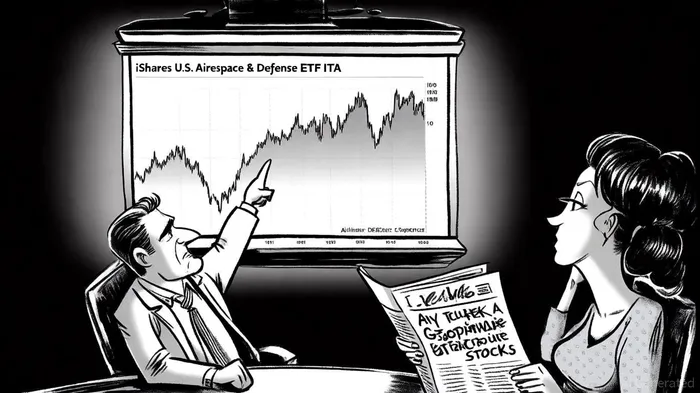





Comentarios
Aún no hay comentarios