
Geopolitical Risk and Defense Sector Opportunities in the Middle East: Strategic Investment in a Fractured Landscape
The Middle East remains a focal point of global geopolitical risk, with Israel's conditional withdrawal from Gaza and the U.S.-backed Trump-Netanyahu peace plan reshaping defense sector dynamics and reconciliation-driven economic opportunities. As tensions between Israel and Hamas persist, investors are recalibrating portfolios to capitalize on both the immediate military-industrial boom and the long-term potential of post-conflict reconstruction. This analysis explores how Netanyahu's conditional withdrawal statement—tied to demilitarization, international stabilization, and phased troop reductions—creates a dual narrative of risk and reward for defense stocks, sovereign wealth funds, and regional infrastructure plays.
Defense Sector: A New Spending Supercycle
The Trump-Netanyahu 20-point plan, unveiled in September 2025, has accelerated a global defense spending supercycle driven by U.S. military aid to Israel and NATO allies' commitments to increase defense budgets to 5% of GDP by 2035, according to a Morningstar analysis. The U.S. has authorized a $7 billion arms sale to Israel, including advanced munitions like 2,000-pound bombs, directly benefiting defense contractors such as Lockheed MartinLMT-- and Raytheon Technologies, as reported in an AP News report. These companies are also positioned to profit from the deployment of an “International Stabilization Force” in Gaza, as outlined in the plan's full text on Al Jazeera, which requires rapid mobilization of security infrastructure.
Regional dynamics further amplify demand. Germany's 2025 defense budget of $110 billion and France's renewed focus on strategic autonomy—driven by Trump-era tariffs on European steel and electronics—have spurred domestic defense production. European firms like Rheinmetall and Saab are securing contracts for armored vehicles and drone systems, while U.S. firms dominate in AI-driven surveillance and cybersecurity solutions, per RBC Capital Markets. The sector's resilience is underscored by its positive correlation with the VIX volatility index and gold prices, making it a hedge against geopolitical uncertainty, according to BlackRock.
Reconciliation Plays: Gaza's Reconstruction and Special Economic Zones
While the defense sector thrives on conflict, the Trump plan's emphasis on Gaza's demilitarization and reconstruction introduces a parallel investment opportunity. The World Bank estimates $53 billion in damages, with $30 billion required to repair housing, commercial infrastructure, and critical utilities like the Gaza Power Plant. A proposed “special economic zone” with preferential tariffs and access rates aims to attract foreign direct investment (FDI), though challenges remain. Movement restrictions and security concerns have historically stifled private sector growth, and the Trump administration's Gaza Reconstitution, Economic Acceleration, and Transformation (Great) Trust—a $324 billion, decade-long vision—faces skepticism from Arab neighbors and the UN, as discussed in The Conversation.
Investors with a long-term horizon may target firms involved in infrastructure rebuilding, such as Bechtel Group or Vinci SA, which could secure reconstruction contracts. Additionally, the plan's “Board of Peace,” chaired by Trump and Tony Blair, may catalyze public-private partnerships for humanitarian aid and governance reforms, according to The New York Times. However, geopolitical risks—such as Hamas's rejection of demilitarization terms or Israeli right-wing resistance to Palestinian statehood—could delay these initiatives, as noted by PBS NewsHour.
Market Trends and Investor Sentiment
The defense sector's appeal is further bolstered by its underrepresentation in the S&P 500 (3.5% exposure), creating a gap as global defense spending nears 5% of GDP by 2035. Exchange-traded funds (ETFs) like the iShares Global Defense ETF (IXN) and regional indices such as the MSCI Gulf Cooperation Council Index have seen inflows, reflecting growing confidence in the sector's earnings resilience. Meanwhile, sovereign wealth funds from the UAE and Saudi Arabia are pivoting toward technology and energy projects, leveraging the India-Middle East-Europe Economic Corridor (IMEC) to diversify away from oil, according to PwC's TransAct update. BlackRock's insights on sector positioning have also informed institutional allocations.
Conclusion: Balancing Risk and Reward
Netanyahu's conditional withdrawal statement and the Trump-Gaza plan encapsulate a paradox: conflict fuels defense sector growth, while reconciliation efforts open avenues for reconstruction and economic integration. Investors must navigate this duality by hedging against short-term volatility with long-term infrastructure bets. For those willing to endure political uncertainty, the Middle East's fractured landscape offers a unique confluence of military-industrial demand and post-conflict rebirth.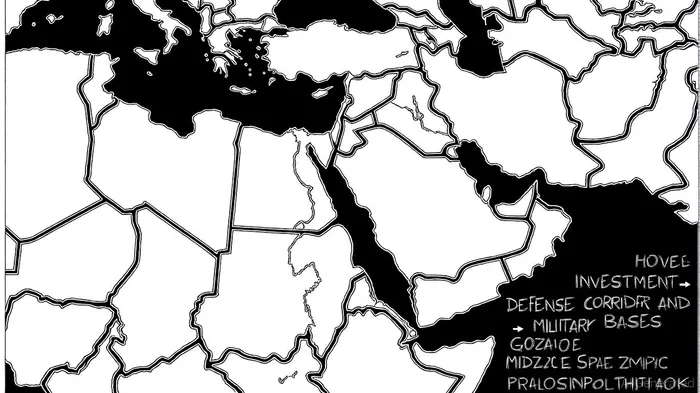





Comentarios
Aún no hay comentarios