
Geopolitical Risk and Defense Equity Opportunities in the NATO-Ukraine Security Buildup: A Strategic Investment Analysis
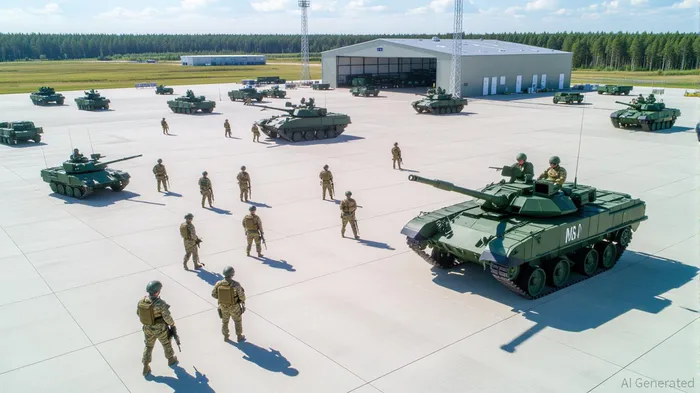
The NATO-Ukraine Comprehensive Assistance Package (CAP) has emerged as a cornerstone of global security strategy in 2025, with EUR 1.1 billion allocated to the Ukraine CAP Trust Fund as of June 2025. This funding, part of a EUR 40 billion baseline pledge from NATO allies, underscores a sustained commitment to Ukraine's defense modernization and regional stability. For investors, this represents a unique intersection of geopolitical risk and long-term equity opportunities in the military-industrial complex and infrastructure sectors.
The Defense Industrial Boom: Sustained Demand and Innovation
The CAP's focus on non-lethal military assistance, infrastructure recovery, and institutional reforms has created a fertile ground for defense contractors. Key beneficiaries include firms supplying communication systems, CBRN equipment, and logistics solutions. For example, companies like Lockheed Martin (LMT) and BAE Systems (BAESF) have seen increased demand for satellite communication systems and demining technologies.
The NATO-Ukraine Joint Analysis, Training and Education Centre (JATEC), established in 2025, further drives innovation in defense education and interoperability. This initiative aligns with a EUR 35 million NATO civil budget allocation for 2023–2025, targeting cyber defense, space operations, and AI-driven logistics. Investors should monitor firms specializing in these niche areas, such as Raytheon Technologies (RTX) and Northrop Grumman (NOC), which are positioned to capitalize on long-term procurement contracts.
Infrastructure and Regional Stability: A Dual-Track Investment Strategy
Beyond direct military aid, the CAP's emphasis on infrastructure recovery and human-centric programs offers opportunities in construction, energy, and healthcare sectors. For instance, the Human Centric Framework (HCF) has allocated funds for five medical rehabilitation centers, creating demand for medical equipment manufacturers and construction firms. Companies like General Electric (GE) and Balfour Beatty (BBY) could benefit from these projects.
Regional stability investments also extend to energy infrastructure, particularly in the Black Sea region, where NATO has increased maritime cooperation with Ukraine. Energy firms with exposure to renewable energy and grid modernization, such as NextEra Energy (NEE), may see growth as Ukraine rebuilds its energy networks.
Geopolitical Risk Hedging: Balancing Exposure
While the CAP's multi-year structure provides predictability, the uncertainty of a peace process and potential Russian escalation necessitates a hedging strategy. Investors should diversify across defense equities and regional stability-focused assets. For example, iShares Global Aerospace & Defense ETF (ITA) offers broad exposure to the sector, while iShares MSCI EMIM Global Infrastructure ETF (IGF) targets infrastructure resilience.
Conclusion: Strategic Allocation in a Volatile Landscape
The NATO-Ukraine security buildup is not merely a geopolitical imperative but a catalyst for long-term growth in defense and infrastructure sectors. Investors who align with this trend—by prioritizing innovation-driven defense contractors and regional stability projects—can mitigate geopolitical risks while capitalizing on sustained demand. As the CAP evolves into a multi-year program, a balanced portfolio emphasizing both hard power and soft infrastructure investments will be key to navigating this dynamic landscape.
Investment Advice:
- Core Holdings: Allocate 40% to defense equities (e.g., LMT, RTX) and 30% to infrastructure-focused firms (e.g., NEENEE--, BBY).
- Satellite Holdings: 20% in regional stability ETFs (e.g., IGF) and 10% in hedging instruments (e.g., gold or treasury bonds).
- Monitor: Track NATO's quarterly reports on CAP implementation and geopolitical developments in the Black Sea region.
By integrating these strategies, investors can position themselves to thrive amid the interplay of geopolitical risk and strategic opportunity in the NATO-Ukraine security ecosystem.





Comentarios
Aún no hay comentarios