
Geopolitical Risk and Cybercrime Extradition: How Prisoner Diplomacy Reshapes International Justice
The intersection of cybercrime, extradition, and geopolitical strategy has become a defining feature of 21st-century international relations. As cyber-enabled crimes transcend borders, nations increasingly leverage diplomatic tools-prisoner swaps, sanctions, and treaties-to enforce justice or advance strategic interests. For investors, understanding these dynamics is critical to navigating risks in global markets, where legal outcomes in cybercrime cases can ripple through geopolitical alliances, trade agreements, and corporate cybersecurity strategies.
The Rise of Cybercrime as a Geopolitical Battleground
Cybercrime is no longer confined to the shadows of the digital underworld; it has become a proxy for statecraft. The U.S. Justice Department's 2025 arrest of Chinese national Xu Zewei in Italy-linked to state-sponsored hacking campaigns like HAFNIUM-exemplifies how nations pursue cybercriminals across jurisdictions. Yet, such efforts often collide with diplomatic realities. In 2024, the U.S. secured the release of journalist Evan Gershkovich and Marine Paul Whelan by trading Russian-German national Arthur Petrov, a cyber-smuggling suspect. These cases underscore a key trend: cybercrime extradition is increasingly mediated by prisoner diplomacy, where individuals are exchanged to de-escalate tensions or secure strategic gains.
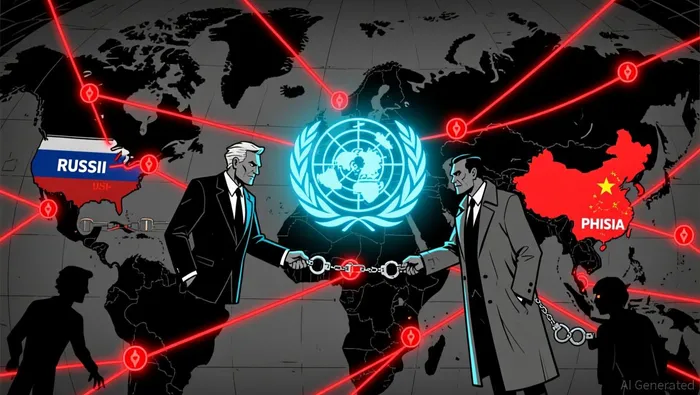
The 2024 U.S.-Russia prisoner swap, which included cybercriminals Vladislav Klyushin and Roman Seleznev, further illustrates this dynamic. Both men, serving U.S. prison sentences for hacking and financial crimes, were repatriated to Russia in exchange for Western detainees. While the U.S. framed the swap as a humanitarian gesture, cybersecurity experts warned of the risks of returning skilled cybercriminals to a regime accused of harboring such actors. This duality-treating cybercriminals as both justice targets and geopolitical assets-complicates traditional extradition frameworks.
The UN Cybercrime Treaty: A New Legal Architecture
The 2024 adoption of the marks a pivotal shift in global governance. This treaty, ratified by 65 nations as of October 2025, introduces a universal framework for cross-border cooperation, including the "extradite-or-prosecute" requirement, which obligates signatories to either extradite cybercriminals or prosecute them domestically. For investors, this mechanism reduces jurisdictional arbitrage, where cybercriminals exploit weak legal systems to evade justice.
However, the treaty's negotiation process reveals deep geopolitical divides. While the U.S., Canada, and New Zealand advocated for narrow, rights-protective language, countries like Russia and China pushed for broader definitions of cybercrime that could criminalize dissent. The final text attempts to balance these priorities, but its effectiveness will depend on enforcement. Nations with adversarial relationships-such as the U.S. and China-may still use extradition as a bargaining chip, undermining the treaty's intent.
Economic Sanctions as a Complement to Extradition
When diplomatic channels falter, economic sanctions emerge as a potent tool. The U.S. and UK's 2025 sanctions on Cambodia-based cybercriminal network the Prince Group-linked to $300 million in fraud and human trafficking-demonstrate how financial pressure can disrupt cybercrime ecosystems. Similarly, sanctions on Russian "bulletproof hosting" providers like Media Land highlight a shift toward targeting the enablers of cybercrime.
For investors, these actions signal a growing willingness to weaponize economic tools against cybercrime. However, sanctions also carry risks. For example, the U.S. Treasury's CYBER4 sanctions tag, used to target cyber-enabled activities, could inadvertently impact legitimate tech firms operating in sanctioned jurisdictions. This underscores the need for nuanced compliance strategies in global markets.
The Dark Covenant: Cybercriminals as State Assets
Perhaps the most insidious trend is the normalization of cybercriminals as geopolitical assets. Recorded Future's "Dark Covenant 3.0" analysis reveals how Russia has shifted from tolerating cybercrime to selectively co-opting it for state interests. Cybercriminals like Seleznev, repatriated in 2024, may now serve as proxies for Russian intelligence operations, blurring the line between criminality and statecraft. This dynamic complicates extradition efforts: repatriating cybercriminals to adversarial states risks empowering them as tools of geopolitical leverage.
Investment Implications: Navigating the New Normal
For investors, the convergence of cybercrime, extradition, and diplomacy creates both risks and opportunities:
1. Geopolitical Risk Arbitrage: Nations with robust cybercrime laws and extradition cooperation (e.g., EU members under the UN treaty) may attract investment, while those entangled in prisoner diplomacy (e.g., Russia, Iran) face heightened uncertainty.
2. Cybersecurity as a Growth Sector: The UN treaty's emphasis on cross-border evidence sharing and 24/7 cooperation networks will likely drive demand for cybersecurity firms specializing in international compliance and threat intelligence.
3. Sanctions-Resilient Portfolios: Investors should prioritize companies with diversified supply chains and compliance frameworks to withstand sanctions shocks, particularly in sectors like fintech and cloud infrastructure.
Conclusion
The 2020s have redefined extradition as a geopolitical chess game, where cybercriminals are both pawns and power players. As the UN Cybercrime Treaty enters force and economic sanctions evolve into strategic tools, investors must grapple with a world where justice is increasingly transactional. The key takeaway? Geopolitical risk is no longer confined to traditional statecraft-it now includes the shadow wars fought in code, where extradition agreements can be as much about diplomacy as about law.







Comentarios
Aún no hay comentarios