
Geopolitical Risk and Crypto: Navigating Short-Term Chaos for Long-Term Gains
The cryptocurrency market has long been a barometer for global uncertainty. In 2024-2025, geopolitical turbulence-from U.S. presidential elections to Middle East conflicts-has amplified crypto's volatility, creating both panic and opportunity. For investors, understanding this duality is key: while geopolitical risks trigger short-term selloffs, they also carve out long-term buying opportunities for those who can weather the storm.
Short-Term Selloffs: When Geopolitical Shocks Strike
Cryptocurrencies are hyper-sensitive to geopolitical events, often reacting faster and more drastically than traditional assets. The 2024 U.S. presidential election, for instance, initially acted as a bullish catalyst, with BitcoinBTC-- surging to $89,000 following Donald Trump's victory, according to a FinancialContent review. However, this optimism unraveled swiftly as U.S.-China trade tensions escalated in early 2025. By April 8, 2025, Bitcoin had plummeted below $78,000, reflecting a cumulative 16% decline, as that review later notes.
The Israel-Hamas conflict in June 2025 further underscored crypto's fragility. Within hours of heightened hostilities, Bitcoin's price dipped below $100,000, erasing over $35 billion in market capitalization, the FinancialContent review reported. Such events highlight how geopolitical shocks-regardless of their geographic scope-can trigger mass liquidations, particularly in leveraged crypto positions. Data from OKX reveals that during the Israel-Iran tensions, over $1 billion in crypto positions were liquidated in 24 hours, with long Bitcoin and EthereumETH-- positions bearing the brunt.
Long-Term Opportunities: Buying the Dip in a Fractured World
While geopolitical risks create chaos, they also expose undervalued assets. History shows that cryptocurrencies often rebound strongly post-crisis, especially when geopolitical narratives shift toward resolution or adaptation. For example, after the U.S.-China trade war selloff in early 2025, Bitcoin found strong support at $60,000, with QCP Capital noting sustained demand for risk-on assets amid global uncertainty, as reported by The Financial Analyst. By Q4 2025, Bitcoin had clawed back to pre-crisis levels, aided by dovish central bank policies and BRICS-driven de-dollarization efforts, a trend highlighted by Analytics Insight.
The BRICS expansion itself exemplifies this dynamic. As the bloc edged toward a common currency and alternative payment networks, Bitcoin and Ethereum experienced 10-15% swings around major announcements, the FinancialContent review observed. XRPXRP--, in particular, gained 12% year-to-date as investors speculated on cross-border payment use cases, the review added. These swings, while volatile, reflect growing institutional and retail confidence in crypto as a tool for financial resilience.
Investor Strategies: Hedging and Harvesting Volatility
Navigating geopolitical-driven volatility requires a blend of caution and contrarian thinking. During crises, defensive strategies-such as hedging with Bitcoin or Ethereum options-can mitigate downside risk. Conversely, post-crisis, quantitative models leveraging momentum and value factors have shown promise in capturing rebounds, according to an MDPI study. For instance, weekly rebalancing strategies tailored to crypto's 24/7 nature outperformed traditional monthly approaches during the 2025 market corrections, the study found.
Institutional adoption also plays a role. Q4 2025 saw a surge in Bitcoin ETF inflows, with Ethereum's Layer-2 upgrades reducing transaction costs and boosting utility, as Analytics Insight noted. Regulatory clarity, such as the EU's MiCA framework, further stabilized investor sentiment, reducing crypto's correlation with speculative assets, Analytics Insight added.
The Path Forward: Volatility as a Feature, Not a Bug
Geopolitical risk will remain a defining factor for crypto markets. However, as the sector matures, its role as both a speculative asset and a hedge against traditional market risks is becoming clearer. For investors, the key lies in distinguishing between transient panic and structural opportunities. 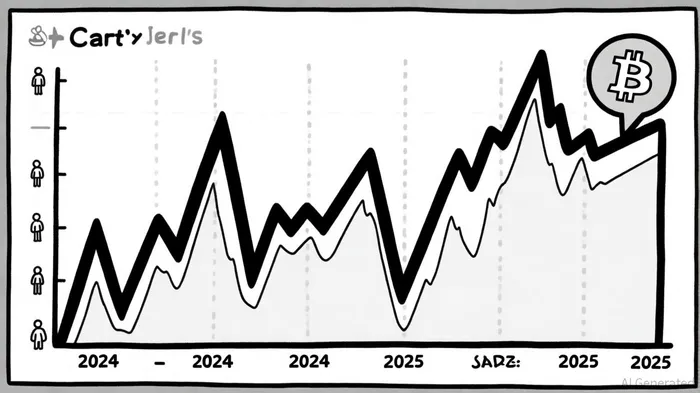






Comentarios
Aún no hay comentarios