
Geopolitical Risk and the Crypto Market: A Volatile Dance of Liquidation Dynamics
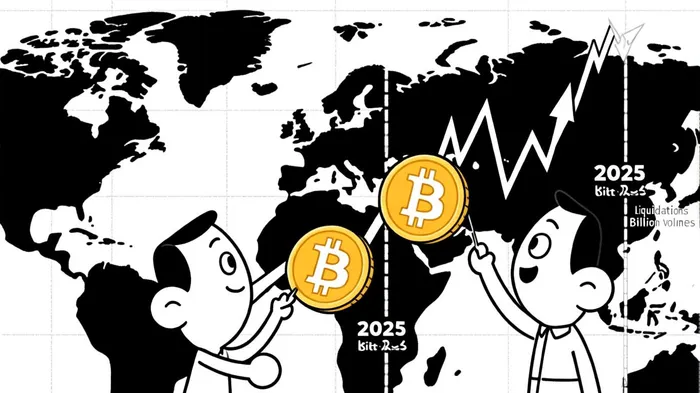
The cryptocurrency market has long been a barometer for global uncertainty, but the period from 2023 to 2025 has underscored just how deeply geopolitical events can amplify volatility and trigger cascading liquidation dynamics. From the Russia-Ukraine War to U.S.-China trade tensions and Middle East conflicts, the interplay between macro events and crypto markets has created a volatile landscape where leveraged positions, DeFi protocols, and systemic feedback loops have turned minor shocks into full-blown crises.
Geopolitical Catalysts: From Conflict to Chaos
The Russia-Ukraine War, which began in early 2022, set a precedent for how geopolitical events could destabilize crypto markets. Studies show that actual escalations in the conflict-such as the invasion of Kyiv in February 2022-led to sharper declines in cryptocurrency returns and liquidity than mere threats of escalation, according to an Altrady analysis. By 2024, the war's lingering effects were compounded by the U.S. Presidential Election. Donald Trump's pro-crypto stance and victory in November 2024 acted as a bullish catalyst, propelling BitcoinBTC-- to an all-time high of $89,000, according to a FinancialContent review. However, this optimism was short-lived.
In early 2025, U.S.-China trade tensions escalated as both nations imposed large-scale tariffs, triggering a $19 billion liquidation event. Bitcoin plummeted below $78,000, with over $16 billion in losses recorded as leveraged long positions were forcibly closed, the FinancialContent review reported. The interconnectedness of DeFi protocols and leveraged positions exacerbated the crisis, as forced selling created a self-reinforcing cycle of price declines, as an Encrypthos guide explains. Similarly, the Israel-Hamas conflict and U.S. strikes on Iranian nuclear sites in June 2025 caused Bitcoin to dip below $100,000, with total liquidations reaching $656 million, the Altrady analysis reported.
Cascading Liquidations: The Feedback Loop of Fear
The mechanics of cascading liquidations are rooted in automated trading systems and DeFi protocols. When collateral values fall below thresholds, smart contracts initiate forced sales to cover debts. This initial selling pressure drives prices lower, triggering further liquidations-a feedback loop that can spiral out of control. For example, during the March 2020 market crash, the reliance on Bitcoin as collateral across leveraged positions amplified the sell-off, the Altrady analysis notes. In 2025, this dynamic repeated itself on a larger scale.
September 2025's "Red Monday" (Sept 22) exemplified this phenomenon. Over $1.5 billion in leveraged positions were liquidated in a single day as traders adjusted to heightened geopolitical risks, the Encrypthos guide documented. The interconnectedness of DeFi platforms meant that liquidations in one protocol could trigger undercollateralized positions in another, creating a domino effect, as an MDPI study found. High leverage ratios (20x to 50x) and self-referential crypto-to-crypto collateral further amplified these risks, the Altrady analysis observed.
Systemic Risk and the Role of Stablecoins
While Bitcoin and EthereumETH-- are primary sources of systemic risk, stablecoins like TetherUSDT-- (USDT) and DAIDAI-- have emerged as both victims and saviors. During geopolitical crises, stablecoins often see increased demand as users seek digital alternatives to traditional currencies, particularly in sanctioned economies, the Encrypthos guide observed. However, the same interconnectedness that drives demand can also create fragility. For instance, during the U.S.-China trade war, stablecoin outflows from exchanges spiked as traders liquidated positions to meet margin requirements, the FinancialContent review reported.
Governance and DeFi tokens, such as UNI and MKR, have also become net transmitters of systemic risk. Their volatility and reliance on leveraged positions make them particularly susceptible to shocks during periods of geopolitical stress, the MDPI study found. Conversely, assets like gold and the U.S. dollar have maintained their safe-haven status, often moving in negative correlation with crypto during crises, the Altrady analysis notes.
Strategies for Navigating the Volatility
For investors, the key to surviving these turbulent dynamics lies in proactive risk management. Conservative leverage (e.g., 2x–3x instead of 10x+) and collateral diversification can mitigate the impact of sudden price drops, as the Encrypthos guide recommends. Real-time monitoring of health factors-such as liquidation thresholds and margin ratios-is also critical. At the protocol level, innovations like partial liquidations, liquidation penalties, and dynamic risk parameters are being developed to reduce systemic fragility, according to the Encrypthos guide.
Moreover, understanding macroeconomic and geopolitical developments is essential. For example, the BRICS bloc's de-dollarization efforts and expansion introduced new uncertainties, with analysts predicting 10–15% price swings in Bitcoin and Ethereum around major announcements, the Altrady analysis reports. Similarly, regulatory developments, such as U.S. SEC actions and Bitcoin ETF approvals, have historically contributed to volatility, as shown in a Taylor & Francis article.
Conclusion: A Resilient Future?
While the crypto market's susceptibility to geopolitical shocks remains a challenge, its resilience has also been tested and proven. By July 2025, Bitcoin stabilized and rallied past $113,700, with $579 million in short liquidations signaling a potential upward trend, the Altrady analysis reported. The future will likely depend on how effectively the market adapts to systemic risks-through better risk management tools, improved oracle technology, and a more diversified collateral base. For now, investors must remain vigilant, recognizing that in the age of geopolitical uncertainty, crypto's volatility is both a risk and an opportunity.






Comentarios
Aún no hay comentarios