
Geopolitical Risk and the Crypto Imperative: How U.S.-Iran Tensions Could Catalyze Bitcoin's Institutional Adoption as a Geopolitical Hedge
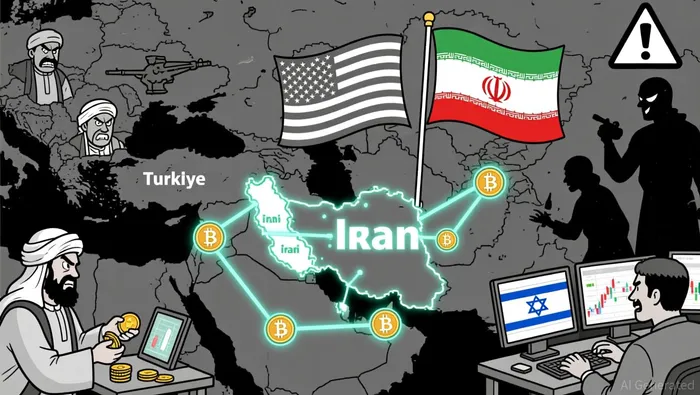
The intersection of geopolitical risk and cryptocurrency markets has never been more critical. As global tensions between the U.S. and Iran escalate, history provides a clear blueprint for how institutional actors will respond: by accelerating BitcoinBTC-- adoption as a hedge against systemic instability. From Türkiye's economic collapse to Israel's post-October 7 cryptoBTC-- surge, the pattern is consistent-when traditional financial systems falter, digital assets emerge as both a lifeline and a strategic tool. The U.S.-Iran dynamic, now teetering on the brink of renewed conflict, is poised to replicate and amplify this trend.
The Precedent: Crisis-Driven Institutional Adoption
Institutional Bitcoin adoption has surged in crisis-affected regions, driven by the need to circumvent failing fiat systems. Türkiye, for instance, saw institutional demand for Bitcoin rise as its currency lost 90% of its value between 2020 and 2024. According to a report by SSGA, institutional investors turned to Bitcoin not just as a store of value but as a functional alternative to unreliable banking infrastructure. Similarly, Israel's crypto volumes spiked following the October 7 attacks in 2023, with digital assets serving as a "financial refuge" during acute national crisis according to Chainalysis. These examples underscore a universal truth: when trust in centralized systems erodes, decentralized alternatives thrive.
Iran's experience offers an even starker case study. Between 2020 and 2025, U.S. sanctions and economic mismanagement caused the Iranian rial to collapse, prompting $4.18 billion in crypto outflows in 2024 alone-a 70% annual increase as Chainalysis reports. While ordinary citizens used Bitcoin to preserve wealth, the Iranian regime weaponized crypto for sanctions evasion, funneling funds to proxies like Hezbollah and Hamas according to Chainalysis. This dual adoption-by both citizens and state actors-highlights Bitcoin's versatility as a tool for financial survival and geopolitical subterfuge.
The U.S.-Iran Scenario: A Catalyst for Institutional Adoption
The potential for renewed U.S. military action against Iran represents a perfect storm for Bitcoin's institutional ascent. Historical data from Chainalysis reveals that sanctioned jurisdictions received $15.8 billion in cryptocurrency in 2024, with Iran accounting for a significant share. If hostilities escalate, we can expect three key developments:
- Capital Flight Acceleration: As seen in Iran's 2024 crisis, economic uncertainty drives institutional capital into Bitcoin. A U.S. military strike would likely trigger immediate rial devaluation, forcing Iranian institutions to adopt Bitcoin at scale to preserve liquidity.
- Global Institutional Spillover: Beyond Iran, U.S. allies and adversaries alike may view Bitcoin as a hedge against sanctions. Institutions in oil-producing nations, for example, could adopt Bitcoin to diversify revenue streams away from U.S.-dollar exposure.
- Regulatory Arms Race: While adoption rises, so will enforcement. U.S. agencies like OFAC and global blockchain monitoring tools will intensify efforts to track illicit flows, creating a paradox: stricter regulation could both suppress and legitimize Bitcoin's role as a geopolitical hedge.
Strategic Implications for Investors
For institutional investors, the lesson is clear: Bitcoin is no longer a speculative asset but a strategic reserve. The collapse of the rial and the Iranian regime's reliance on crypto demonstrate that Bitcoin's value proposition-decentralization, censorship resistance, and portability-directly counters the risks of geopolitical conflict.
Data from Chainalysis further validates this thesis: global enforcement actions reduced Iranian crypto exposure by 23% between 2022 and 2024. Yet, despite these pressures, adoption persisted. This resilience suggests that Bitcoin's institutional appeal transcends short-term regulatory noise, making it an essential component of any crisis-resilient portfolio.
Conclusion: Bitcoin as the New Geopolitical Insurance
The U.S.-Iran standoff is not an outlier-it is a microcosm of a broader trend. As geopolitical risks become the new normal, Bitcoin's role as a hedge will only deepen. From Türkiye to Israel to Iran, the data is unequivocal: institutions are betting on Bitcoin to navigate the chaos of the 21st century. For investors, the imperative is simple: allocate accordingly.






Comentarios
Aún no hay comentarios