
Geopolitical Risk as a Catalyst: Regulatory Shifts in Emerging Markets and Their Impact on Crypto Assets
In the evolving landscape of global finance, emerging markets have become both a battleground and a beacon for cryptocurrency adoption. Regulatory shifts in these regions are increasingly intertwined with geopolitical risks, creating a dynamic interplay that shapes investment flows and market resilience. From Argentina's inflation-driven crypto surge to Nigeria's structured regulatory frameworks, the crypto sector is proving to be a critical tool for navigating economic and political instability. This analysis explores how geopolitical risks act as a catalyst for regulatory innovation in emerging markets and how these changes are redefining the role of crypto assets as both a hedge and an investment vehicle.
Geopolitical Risks as a Driver of Crypto Adoption
Geopolitical instability-whether through sanctions, trade conflicts, or political crises-has historically accelerated the adoption of cryptocurrencies in emerging markets. For instance, countries like Venezuela and Argentina, grappling with hyperinflation and currency devaluation, have seen BitcoinBTC-- and stablecoins emerge as alternative stores of value. In Venezuela, where the bolívar has lost over 99% of its value since 2016, crypto adoption has surged as citizens seek to preserve purchasing power. Similarly, Argentina's government has permitted foreign crypto ETFs to provide citizens with diversified investment options amid persistent economic volatility.
Sanctions also play a pivotal role. Russia's 2022 invasion of Ukraine triggered a wave of financial isolation, prompting the country to legalize crypto mining and facilitate cross-border payments via digital assets. 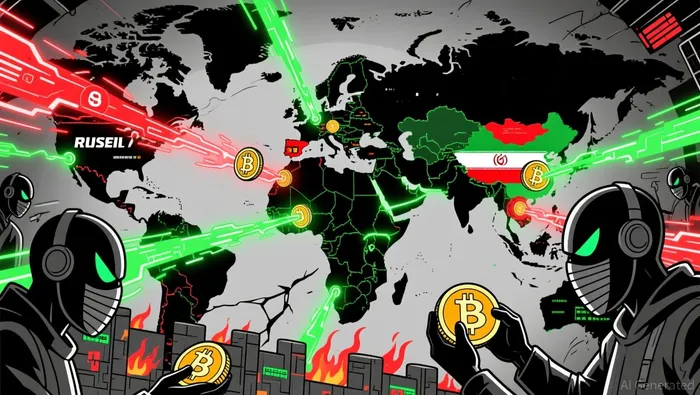 This trend is not unique to Russia; countries under U.S. sanctions, such as Iran and North Korea, have similarly explored cryptocurrencies to circumvent traditional banking restrictions. According to a 2025 study, an increase in country-level geopolitical risk correlates with a rise in crypto exchange rate premiums, signaling heightened capital flight through digital assets.
Regulatory Responses: Balancing Innovation and Control
Emerging markets are responding to these dynamics with a mix of caution and innovation. Nigeria, for example, has strengthened its crypto regulatory framework to address financial crime while fostering market growth. The Central Bank of Nigeria's 2025 regulations now require crypto firms to comply with anti-money laundering (AML) standards and customer identification protocols, reflecting a shift toward structured oversight. This approach mirrors global efforts by bodies like the Financial Action Task Force (FATF) to harmonize crypto regulations across jurisdictions.
India's regulatory evolution offers another case study. By 2025, India had 156 million active crypto users, supported by a regulatory sandbox and clear tax frameworks that attracted institutional investors. However, geopolitical tensions, such as the May 2025 India-Pakistan military escalation, temporarily disrupted market confidence. The subsequent Indo-U.S. trade negotiations, however, stabilized investor sentiment, illustrating how geopolitical outcomes can directly influence crypto markets.
In contrast, Pakistan's regulatory environment remains fraught. Despite legalizing crypto and introducing a flat capital gains tax in 2025, the country faces FATF grey-listing risks due to inadequate oversight of illicit activities. This highlights the delicate balance emerging markets must strike between fostering innovation and ensuring compliance with international standards.
Investment Implications: From Safe Havens to Systemic Integration
The interplay of geopolitical risk and regulation is reshaping investment strategies in emerging markets. Cryptocurrencies are increasingly viewed as safe-haven assets during crises. For example, Bitcoin's performance during the 2022-2025 period demonstrated resilience in markets experiencing political turmoil, while newer tokens showed greater volatility. This trend has been amplified by institutional adoption, with Bitcoin ETFs and regulated exchanges providing liquidity and legitimacy.
However, regulatory clarity remains a double-edged sword. Brazil's 2025 crypto framework, which imposed stringent capital requirements and AML compliance on virtual asset service providers, initially dampened market enthusiasm but ultimately attracted institutional investors seeking a stable environment. Similarly, Indonesia's transition of crypto oversight to its Financial Services Authority (OJK) in 2025 signaled a commitment to integrating digital assets into the formal financial system, boosting investor confidence.
Geopolitical events also create ripple effects. The 2025 U.S.-China summit, for instance, triggered market corrections in crypto assets as investors recalibrated risk perceptions. Such volatility underscores the need for disciplined investment strategies that account for macroeconomic and geopolitical contexts beyond traditional metrics like interest rates.
Conclusion: A New Paradigm for Emerging Market Investing
The convergence of geopolitical risk and regulatory innovation in emerging markets is redefining the crypto asset class. As countries like Kenya, Indonesia, and Brazil demonstrate, structured regulatory frameworks can mitigate risks while unlocking growth opportunities. For investors, the key lies in understanding how geopolitical events-whether trade wars, sanctions, or political instability-shape both regulatory trajectories and market dynamics.
In 2025, crypto assets are no longer a speculative niche but a critical component of financial resilience in emerging markets. As regulatory clarity and geopolitical shifts continue to intersect, the crypto sector will likely remain a pivotal arena for capital flight, innovation, and systemic transformation.






Comentarios
Aún no hay comentarios