
Geopolitical Resilience in Russia's Petrochemical Sector: Navigating Sanctions and Strategic Shifts
In the shadow of relentless geopolitical pressures, Russia's petrochemical sector has emerged as a case study in strategic adaptation. From 2023 to 2025, the sector has weathered Western sanctions, trade realignments, and infrastructure modernization efforts, all while recalibrating its global footprint. This analysis explores how Russia's focus on technological sovereignty, infrastructure resilience, and market diversification is reshaping its petrochemical landscape-and what this means for investors navigating a fractured global energy market.
Infrastructure Resilience: Modernization as a Survival Strategy
Russia's petrochemical sector has prioritized infrastructure upgrades to counteract external shocks. Sibur, the country's largest petrochemical company, has spearheaded initiatives to reduce reliance on imported technology. In Q2 2025, Sibur launched a polymerization catalysts plant in Nizhnekamsk, producing over 1,000 tons of catalysts annually. This move, supported by the Industrial Development Fund, aims to achieve full domestic production of critical inputs, a step toward "technological sovereignty" [1]. Similarly, the Irkutsk region's new polymer plant-invested with ₽250 billion-now produces 650,000 tons of polymers yearly, underscoring the sector's push to scale high-value-added outputs [2].
Government-backed public-private partnerships (PPPs) have further accelerated modernization. For instance, Osnova Holding's ₽1.9 billion investment in petrochemical equipment parts, coupled with R&D integration, highlights a broader trend: localized production to insulate against supply chain disruptions [3]. These projects are not merely defensive but aspirational, aligning with projections to double polymer production by 2030 [1].
Geopolitical Risks: Sanctions and the Pivot to Asia
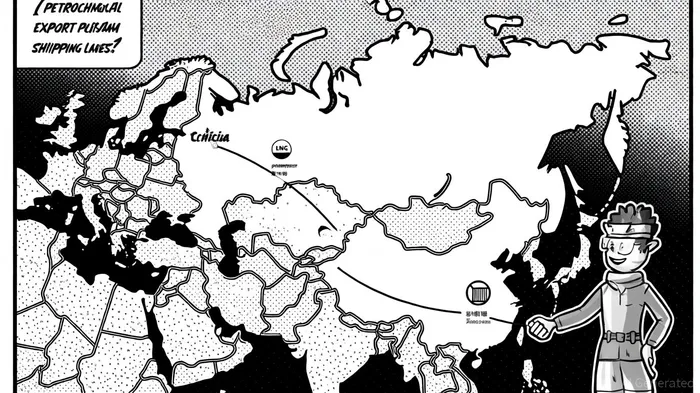
The U.S. and EU have imposed sweeping sanctions on Russia's energy sector, including a ban on "petroleum services" and a dynamic oil price cap. By mid-2025, the EU's 18th sanctions package reduced the price cap on Russian crude to $47.60 per barrel, while prohibiting refined product imports derived from Russian crude [4]. These measures have forced Russia to pivot to Asian markets, where China and India now account for over 63% of crude oil and 85% of coal exports [5].
However, this pivot is not without cost. Discounted oil prices have slashed revenues, with Russian fossil fuel export earnings dropping 18% year-on-year in Q2 2025 [6]. China, Russia's largest oil customer, has capitalized on lower prices, but the transactional nature of these partnerships raises questions about long-term stability. Meanwhile, India's role as a middleman-importing 1.92 million barrels per day of Russian oil by April 2025-has drawn scrutiny from the U.S., which threatened tariffs on Indian goods to curb circumvention of sanctions [5].
Financial Realities: ROI, Risk, and Growth Projections
Despite sanctions, Russia's petrochemical sector has shown surprising resilience. State budget revenues from oil and gas fell 24% in 2023 compared to 2022, but seaborne crude exports to Asia surged 42% in March 2025, partially offsetting losses [7]. Gazprom's financial struggles-its first annual loss in two decades-contrast with Sibur's expansion, illustrating the sector's bifurcation between legacy energy giants and agile petrochemical innovators [8].
Growth projections remain cautiously optimistic. The Russian petrochemical market is expected to expand at a compound annual growth rate (CAGR) of 5.8% from 2025 to 2031, driven by demand for specialty chemicals and polymers in Asia and Africa [9]. Government incentives, such as the "International Cooperation and Export" program, are bolstering non-resource exports, with petrochemicals poised to benefit from this reorientation [10].
Strategic Implications for Investors
For investors, the Russian petrochemical sector presents a paradox: high risk amid pockets of opportunity. While sanctions and inflationary pressures persist, the sector's pivot to Asia and focus on high-value-added products offer long-term potential. Key considerations include:
- Technological Sovereignty: Companies like Sibur that reduce import dependencies are better positioned to withstand sanctions.
- Market Diversification: Exposure to Asian and African markets, though volatile, provides a buffer against Western trade restrictions.
- Government Support: PPPs and state-backed R&D initiatives will likely remain critical for large-scale projects.
However, risks remain. The EU's 2026 ban on petroleum products from third countries using Russian crude could further strain export channels [4]. Additionally, China's energy diversification strategy limits Russia's ability to fully replace lost European revenues [11].
Conclusion
Russia's petrochemical sector is a testament to the interplay between geopolitical adversity and strategic adaptation. While sanctions have reshaped trade flows and revenue models, the sector's investments in infrastructure, innovation, and market diversification signal a path toward resilience. For investors, the challenge lies in balancing the sector's long-term potential with its exposure to geopolitical volatility-a calculus that will define the next phase of global energy dynamics.







Comentarios
Aún no hay comentarios