
The Geopolitical Reallocation of Bitcoin Mining: Strategic Opportunities in a Post-Xinjiang Landscape
The global BitcoinBTC-- mining landscape is undergoing a seismic shift. Following China's 2021 ban and subsequent crackdowns in 2025, particularly in Xinjiang, the industry has fragmented into a patchwork of emerging hubs. While China's underground mining sector persists-leveraging surplus hydro and wind power in Sichuan and Xinjiang-it now competes with a new frontier of energy-rich regions in Africa, Southeast Asia, and Latin America. These areas are repurposing underutilized infrastructure and renewable energy surpluses to create cost-competitive mining ecosystems. For investors, this reallocation represents a critical inflection point: undervalued energy assets and strategic infrastructure projects in these regions are poised to redefine the economics of Bitcoin mining.
The Post-Xinjiang Vacuum and China's Resilient Shadow Mining
China's recent crackdown in Xinjiang-shutting down 400,000–500,000 mining machines-caused a 10% global hashrate drop, yet the country's shadow mining industry remains robust. By late 2025, China's hash rate had rebounded to 14% of the global total, driven by Sichuan's seasonal hydropower and Xinjiang's coal and wind surpluses. Local governments, incentivized by economic returns, have quietly repurposed state-owned infrastructure for mining during low-demand periods. This resilience underscores a key insight: Bitcoin mining will persist in regions where energy costs are low and enforcement is inconsistent. However, the Xinjiang crackdown also exposed vulnerabilities. Miners forced to sell Bitcoin to cover liquidity gaps and the 8% hashrate plunge highlight the risks of operating in a regulatory gray zone.
The Rise of Undervalued Energy Assets in Emerging Hubs
As China's underground mining industry stabilizes, the focus is shifting to regions where energy infrastructure is either underutilized or newly developed. These areas offer two advantages: cheap, renewable energy and strategic alignment with Bitcoin's energy demands.
Africa: Hydropower as a Mining Catalyst
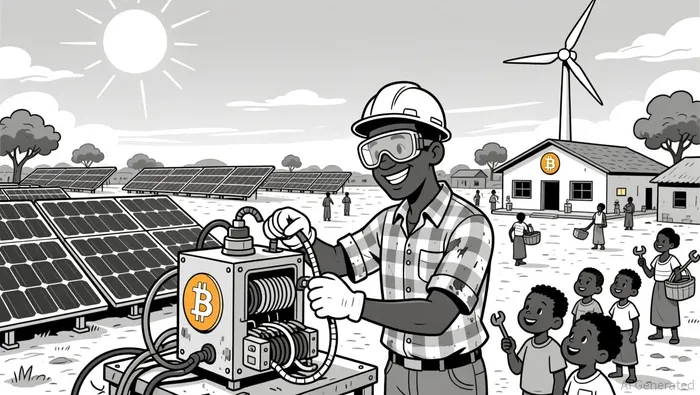
Ethiopia's Grand Ethiopian Renaissance Dam (GERD) exemplifies this trend. With a 5,150MW capacity, the GERD generates 15,000 gigawatt-hours annually-enough to power mining operations while leaving surplus for grid expansion. Phoenix Group and Sazmining have already established 30MW mining hubs in Addis Ababa, sourcing 90% of their power from the dam. At three to four cents per kilowatt-hour, Ethiopia's energy costs are a fraction of the global average, enabling a 2.5% share of the global hashrate. However, the Ethiopian Electric Power (EEP) has signaled a phase-out of mining as grid strain and equity concerns grow. This creates a paradox: while mining generates immediate revenue (in ten months), it risks diverting power from underserved populations. For investors, the opportunity lies in supporting hybrid projects that pair mining with rural electrification, such as Zambia's Zengamina Hydro Power Plant, which uses Bitcoin mining to sustain operations while powering 15,000 locals.
Southeast Asia: Renewable Surpluses and Strategic Diversification
Bhutan's hydropower surplus-over 1,200MW-has been leveraged by Bitdeer to establish a green mining hub. This aligns with Bhutan's broader economic diversification strategy, as mining provides a stable revenue stream for excess energy that would otherwise go unused. Similarly, Indonesia and Vietnam are exploring solar and wind projects to attract Bitcoin miners, capitalizing on their tropical climates. These regions offer a dual benefit: Bitcoin mining acts as an anchor tenant for energy projects, while the industry's demand for cooling infrastructure (e.g., data centers) drives ancillary investments.
Latin America: Geothermal Potential and Regulatory Hurdles
Paraguay's energy surplus-stemming from its 90% hydroelectric grid-has made it a mining hotspot, with companies like BitFarmsBITF-- establishing operations. However, the region's potential is uneven. El Salvador's attempts to use geothermal energy for mining have faltered due to high costs (13–20 cents per kilowatt-hour) and public backlash over energy equity. Brazil and Argentina, meanwhile, are experimenting with private-sector partnerships to integrate renewables into grid infrastructure, creating a more stable environment for mining. The key challenge here is regulatory clarity: unlike Ethiopia or Bhutan, Latin American governments are still grappling with how to balance Bitcoin's energy demands with social priorities.
Strategic Investment Opportunities
The reallocation of Bitcoin mining to these regions is not merely a geographic shift-it's a reconfiguration of energy markets. Investors should prioritize three categories of assets:
- Undervalued Renewable Infrastructure: Projects like Ethiopia's GERD or Zambia's Zengamina Hydro Power Plant offer dual returns-Bitcoin mining revenue and grid expansion. These assets are particularly attractive in regions where energy subsidies or underutilized capacity create arbitrage opportunities.
- Grid Modernization in Emerging Markets: As Bitcoin mining scales, so does the need for cooling systems, data centers, and transmission upgrades. In Bhutan and Ethiopia, mining firms are already funding these upgrades, creating a blueprint for private-sector-led infrastructure development.
- Policy-Resilient Jurisdictions: Countries with clear regulatory frameworks-such as Bhutan or Paraguay-will attract long-term capital. Conversely, regions with inconsistent enforcement (e.g., China's shadow mining hubs) remain high-risk, high-reward bets.
Conclusion: A New Energy-Driven Paradigm
The post-Xinjiang era has accelerated Bitcoin mining's migration to energy-rich, underdeveloped regions. While China's shadow industry will persist, the future of the sector lies in countries that can align mining with sustainable energy strategies. For investors, the key is to identify projects that not only capitalize on cheap energy but also address systemic challenges-such as rural electrification in Africa or grid modernization in Southeast Asia. As Bitcoin's energy footprint grows, so does its potential to reshape global infrastructure. The question is no longer where mining will go, but who will profit from its next phase.





Comentarios
Aún no hay comentarios