
Geopolitical Protectionism and the Tariff Paradox: Navigating Trump-Era Trade Policies in a Fractured Global Economy
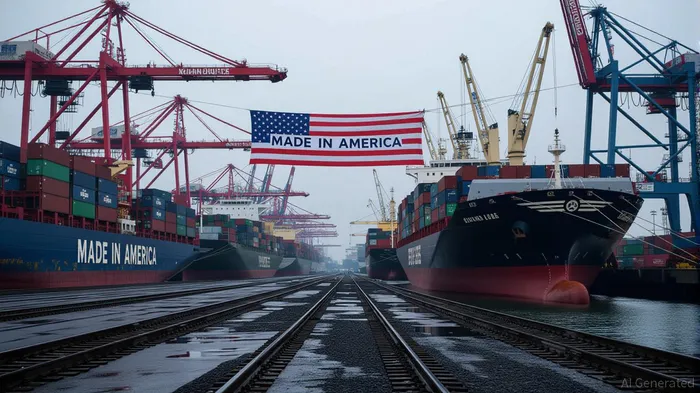
The Trump-era tariffs, spanning 2023–2025, represent a bold experiment in geopolitical-driven protectionism. By imposing sweeping duties on steel, aluminum, autos, pharmaceuticals, and semiconductors, the administration sought to revive domestic manufacturing and reduce trade deficits. While these policies initially bolstered politically connected industries and aligned with populist economic narratives, their long-term economic risks—ranging from retaliatory tariffs to inflationary pressures—have created a complex landscape for investors. This article dissects the short-term political gains versus systemic vulnerabilities, evaluates the role of state-specific lobbying, and offers actionable insights for navigating the evolving trade environment.
Short-Term Political Gains: A Populist Victory for Manufacturing Hubs
The tariffs' immediate political appeal was undeniable. By shielding industries like steel and aluminum from foreign competition, the administration delivered on a core campaign promise to manufacturing-dependent states such as Pennsylvania, Ohio, and Michigan. For example, the 50% tariff on steel and aluminum (expanded in June 2025) temporarily boosted domestic producers, with companies like U.S. Steel reporting margin improvements. Similarly, the 25% tariff on autos, paired with exemptions for U.S.-sourced components, provided a lifeline to automakers like StellantisSTLA--, which faced temporary production halts due to supply chain disruptions.
State-specific lobbying efforts amplified these gains. Firms like Reyes Holdings, a Coca-Cola bottler, leveraged ties to the Trump administration to secure exemptions for critical inputs (e.g., PET resin). Lobbying firms such as Ballard Partners and Sandler, Travis & Rosenberg became conduits for corporate interests, with political donations and strategic exemptions reinforcing the perception that trade policy was tailored to regional economic priorities. This localized approach resonated with voters in manufacturing hubs, cementing the administration's base while masking broader economic costs.
Long-Term Economic Risks: Retaliation, Inflation, and Structural Weaknesses
The long-term risks of these policies, however, are profound. The Tax Foundation General Equilibrium Model estimates that the IEEPA-based tariffs reduced U.S. GDP by 1.0% by mid-2025, with an additional 675,000 jobs lost due to retaliatory measures from China, Canada, and the EU. For instance, Canada's 25% tariffs on U.S. agricultural exports and the EU's retaliatory duties on autos eroded export revenues, undermining the very industries the tariffs aimed to protect.
Import-dependent sectors faced compounding challenges. The 50% tariff on copper (effective August 2025) raised costs for construction and electronics firms, squeezing profit margins. Similarly, the 100% tariff on semiconductors, while intended to boost domestic production, disrupted supply chains for downstream manufacturers. The pharmaceutical sector, threatened with 250% tariffs on imported drugs, saw increased costs for raw materials, raising concerns about affordability and regulatory backlash.
Investment Implications: Winners, Losers, and the Inflation Conundrum
The tariffs' sectoral impact has been uneven. Steel and aluminum producers (e.g., U.S. Steel, Alcoa) have seen short-term margin gains, but their long-term viability depends on global demand and the resolution of legal challenges to IEEPA tariffs. Automakers like Ford and General MotorsGM-- initially benefited from reduced foreign competition but faced margin compression due to higher input costs and retaliatory tariffs.
Import-dependent sectors—autos, construction, and electronics—remain vulnerable. For example, the 50% copper tariff has increased costs for companies like CaterpillarCAT-- and Siemens, which rely on copper for industrial machinery. Inflation-sensitive assets, including real estate and durable goods, have also been affected. Tariffs on construction materials have driven up development costs, indirectly supporting property values but increasing rents for tenants.
Navigating the Tariff Paradox: Strategic Investment Recommendations
- Diversify Exposure to Tariff-Protected Sectors: While steel and aluminum producers may offer short-term gains, investors should balance these with hedging against retaliatory measures. Consider sector ETFs like XLB (Materials Select Sector SPDR) but monitor legal and geopolitical risks.
- Hedge Inflationary Pressures: Inflation-sensitive assets like real estate (REITs such as PrologisPLD-- or Equity Residential) may benefit from rising rents but face volatility. Diversify into inflation-linked bonds or commodities to offset risks.
- Prioritize Supply Chain Resilience: Companies investing in domestic production (e.g., Intel's semiconductor expansion) or dual-sourcing strategies may outperform in a fragmented trade environment.
- Monitor Legal and Policy Shifts: The potential invalidation of IEEPA tariffs could reduce effective tariff rates to 4.1% (from 27%), altering sector dynamics. Stay attuned to court rulings and trade negotiations.
Conclusion: A Delicate Balance Between Populism and Pragmatism
The Trump-era tariffs highlight the tension between short-term political gains and long-term economic stability. While localized lobbying efforts have secured temporary protections for key industries, the broader costs—retaliation, inflation, and supply chain fragility—pose systemic risks. For investors, the path forward lies in balancing exposure to tariff-protected sectors with hedging against macroeconomic headwinds. As global trade policies continue to evolve, agility and diversification will be paramount in navigating the new era of geopolitical-driven protectionism.





Comentarios
Aún no hay comentarios