
The Geopolitical Pipeline: Enbridge's Alaska Project and Canada's UAE Pivot as Energy Investment Cornerstones
In an era of shifting global energy dynamics, Enbridge's $8 billion Alaska gas pipeline project and Canada's deepening strategic allianceAENT-- with the United Arab Emirates (UAE) are emerging as twin pillars of North American energy infrastructure resilience. Together, they redefine how investors should view energy investments—not merely as commodity plays, but as geopolitical stabilizers and engines of economic diversification. For investors seeking exposure to this transformation, EnbridgeENB-- stands at the vanguard, while broader opportunities lie in firms leveraging Middle Eastern partnerships.
The Alaska Pipeline: A Bridge Between Energy and Geopolitics
Enbridge's Alaska gas pipeline, now advancing under a partnership with Glenfarne Group, is more than an infrastructure project—it's a geopolitical chess move. The 807-mile pipeline aims to transport natural gas from Alaska's North Slope to Southcentral markets, addressing the Cook Inlet energy crisis while laying the groundwork for LNG exports. Phase 1, expected to begin construction by late 2025, promises 3.1–3.3 billion cubic feet of daily capacity, with a terminal in Nikiski capable of exporting up to 20 million tons of LNG annually.
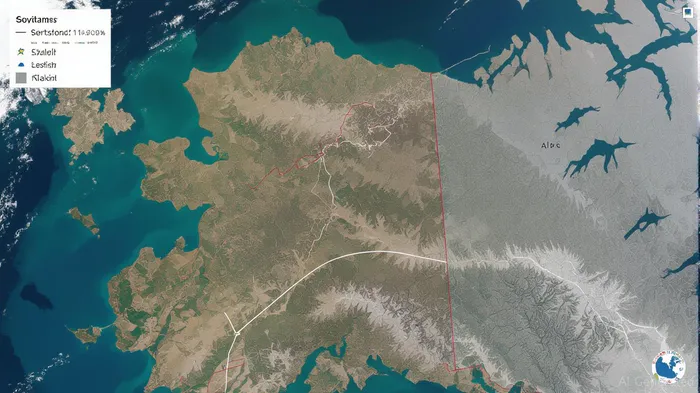
The project's strategic value lies in its timing and positioning. With Wood Mackenzie confirming its economic viability and AIDEA backing FEED studies, the pipeline is poised to reduce Alaska's reliance on volatile oil revenues while creating a direct supply chain to Asian markets. But its geopolitical significance is equally critical: by diversifying energy routes away from Russia and the Middle East, it strengthens North America's energy independence.
Canada's UAE Pivot: A New Axis of Energy Diplomacy
While Enbridge builds pipelines, Canada is forging diplomatic ties with the UAE that could redefine energy trade corridors. The UAE's Vision 2030 aims to position itself as a global energy hub, and its $40 billion investment in Canada's energy sector—through firms like Mubadala—signals a strategic alignment. Key moves include:
- LNG Export Partnerships: The UAE is securing long-term contracts for Canadian LNG, leveraging its Middle Eastern market access.
- Infrastructure Funding: Emirati sovereign wealth funds are exploring equity stakes in projects like Enbridge's Alaska pipeline, reducing reliance on traditional U.S. financing.
- Technology Collaboration: UAE firms are investing in Canadian carbon capture projects, aligning with Canada's net-zero goals.
This synergy is no coincidence. Canada's pivot to the UAE—bolstered by Prime Minister Trudeau's frequent visits and a 2024 bilateral investment treaty—creates a geopolitical buffer against supply chain disruptions. For investors, this means reduced risk: Middle Eastern capital mitigates financing gaps, while UAE-backed trade routes offer stability in volatile markets.
Why This Matters for Investors
The Alaska pipeline and UAE alliance together form a compelling investment thesis:
- Reduced Geopolitical Risk: Diversified export routes (Alaska to Asia via UAE logistics) insulate energy firms from regional conflicts.
- Scalable Returns: The pipeline's $2 billion annual revenue potential (from LNG exports and in-state gas sales) aligns with Canada's GDP growth.
- Emission Mitigation: The Arctic Carbon Capture plant—reinjecting 2.3 billion tons of CO₂—positions the project as a “green” LNG source, appealing to ESG investors.
Investment Opportunities: Beyond Enbridge
While Enbridge is the prime beneficiary, other firms with North American-Middle Eastern ties warrant attention:
- Suncor Energy (SU): Partnering with ADNOC on Canadian oil sands projects.
- TC Energy (TRP): Expanding LNG infrastructure with UAE-backed financing.
- Mubadala's Portfolio: Firms like Cenovus Energy (CVE), which received UAE equity stakes in 2023.
Risks to Consider
- Cost Overruns: The Alaska project's $44 billion estimate (versus the $8B headline) could strain budgets.
- Environmental Opposition: Lawsuits by groups like the Center for Biological Diversity may delay timelines.
- Policy Shifts: A potential U.S. administration change could alter LNG export incentives.
Conclusion: A Strategic Bet on Energy Resilience
Enbridge's Alaska pipeline and Canada's UAE pivot exemplify a new investment paradigm: energy infrastructure as a geopolitical stabilizer. For investors, this is not just about gas reserves—it's about securing a stake in a world where energy security and diplomatic agility drive long-term returns. Enbridge's stock, supported by its Q2 2025 distributable cash flow of $1.9 billion, offers a direct entry point. Beyond that, firms with Middle Eastern partnerships and ESG-aligned projects will thrive in this reshaped energy landscape.
In this era of energy nationalism, the winners will be those who see pipelines as bridges—not just to markets, but to geopolitical stability.







Comentarios
Aún no hay comentarios