
Geopolitical Narratives and Capital Flows: The Impact of Political Discourse on Emerging Markets
The interplay between political narratives and investor sentiment has become a defining feature of emerging market dynamics, particularly in the context of geopolitical crises. The Russia-Ukraine war, now in its fourth year, has reshaped global economic alignments, with countries in the Global South-such as India and Brazil-navigating complex trade-offs between geopolitical solidarity and economic pragmatism. These narratives, in turn, have influenced capital flows, investor risk perceptions, and market volatility, offering critical lessons for investors in an increasingly fragmented world.
Political Narratives and Investor Sentiment: The Case of India
India's response to the Russia-Ukraine war exemplifies how political narratives can stabilize or disrupt capital flows. By maintaining a neutral stance and leveraging discounted Russian oil imports, India positioned itself as a strategic actor in global energy markets. This approach bolstered investor confidence, driving foreign direct investment inflows to $81.04 billion in FY 2024–25, a 14% increase from the previous year. However, this strategy also exposed vulnerabilities: India's reliance on Russian energy raised concerns about overdependence on a single supplier, while quarterly capital flow deficits in early 2025 highlighted the volatility of international capital movements.
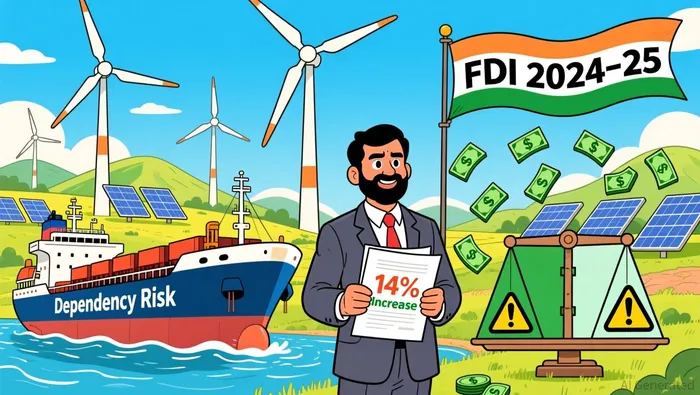 The Indian government's emphasis on energy security and economic resilience has shaped a narrative of long-term stability, reflected in the Nifty 50 index's post-war gains. Yet, as geopolitical risks persist-particularly U.S.-China tensions- investors remain wary of potential disruptions to India's export-driven growth model.
Brazil's Multi-Alignment Strategy and Capital Flow Volatility
Brazil's foreign policy of "multi-alignment" has allowed it to balance relationships with the U.S., China, and Russia while avoiding overt confrontation over the Ukraine conflict. This diplomatic flexibility has attracted investors seeking stability in a multipolar world. However, Brazil's capital flows have been uneven. U.S. tariffs on Brazilian goods in late 2025, for instance, triggered a 17% and 20% decline in exports to the U.S. in August and September, respectively. To offset this, Brazil redirected agricultural exports to China, which rose by 29% and 15% in the same period.
Despite these adjustments, Brazil's fiscal challenges- exacerbated by a 15% interest rate and a 78% debt-to-GDP ratio-have constrained growth. The depreciation of the Brazilian real by 27% in 2024 further illustrates how geopolitical risks, combined with global monetary tightening, can destabilize emerging markets. Brazil's experience underscores the dual-edged nature of political narratives: while its non-confrontational stance has preserved trade ties, it has also exposed the country to external shocks.
Broader Implications for Emerging Markets
The Russia-Ukraine war has amplified the role of geopolitical narratives in shaping capital flows. Emerging markets, particularly those in the Global South, are increasingly viewed as both beneficiaries and casualties of shifting alliances. For instance, China's capital inflows have declined since 2022 due to heightened geopolitical risk, while India and Brazil have maintained relatively stable flows-albeit with periodic volatility.
Investors must now contend with asymmetric market responses to geopolitical risks. Emerging market equities, for example, have shown resilience in some contexts but face heightened uncertainty in others, such as U.S.-China trade disputes. This volatility is compounded by the interplay between domestic policy and external factors.
Conclusion: Navigating a Multipolar Investment Landscape
For investors, the lessons from India and Brazil highlight the importance of parsing political narratives alongside traditional economic indicators. In a world where geopolitical realignments are the norm, capital flows will increasingly reflect not just macroeconomic fundamentals but also the perceived stability of a country's geopolitical positioning. Diversification across regions and sectors, coupled with a nuanced understanding of political discourse, will be critical for managing risk in emerging markets.
As the Russia-Ukraine war enters its fourth year, the Global South's role as both a buffer and a battleground for geopolitical influence is likely to intensify. Investors who recognize the power of political narratives-whether in India's energy strategy or Brazil's diplomatic balancing act-will be better positioned to navigate the uncertainties ahead.







Comentarios
Aún no hay comentarios