
The Geopolitical and Monetary Risks of Stablecoin Adoption: Navigating Central Bank Challenges and Investor Opportunities
The rise of stablecoins has introduced a seismic shift in global finance, challenging the long-standing dominance of central banks while reshaping monetary systems, capital flows, and investor strategies. By 2025, stablecoins-digital assets pegged to fiat currencies like the U.S. dollar-have grown to a market capitalization exceeding $150 billion, accounting for nearly 70% of decentralized finance (DeFi) transaction volume according to market analysis. This rapid adoption, driven by efficiency, transparency, and regulatory clarity in some jurisdictions, has sparked a critical debate: How do stablecoins threaten central bank authority, and what strategies should investors adopt to navigate this evolving landscape?
The Erosion of Central Bank Dominance
Stablecoins pose a dual threat to central banks: monetary sovereignty and policy effectiveness. In high-inflation economies like Venezuela, Nigeria, and Pakistan, dollar-backed stablecoins have become de facto alternatives to local currencies. For instance, Venezuela's government has increasingly used TetherUSDT-- (USDT) to receive oil payments, bypassing U.S. sanctions and circumventing capital controls. Similarly, in Nigeria, stablecoins facilitate cross-border remittances and FX transactions, reducing reliance on the Central Bank of Nigeria's (CBN) managed exchange rates.
This trend undermines central banks' ability to control money supply and implement monetary policy. As Governor Lael Brainard of the U.S. Federal Reserve noted, stablecoins could alter the demand for U.S. Treasury bills and exert downward pressure on the neutral interest rate (r*) over the long term according to Federal Reserve analysis. In emerging markets, stablecoins further complicate monetary policy by accelerating capital flight and eroding domestic currency demand. For example, in Pakistan, stablecoins are now integral to B2B settlements, enabling businesses to hedge against FX volatility.
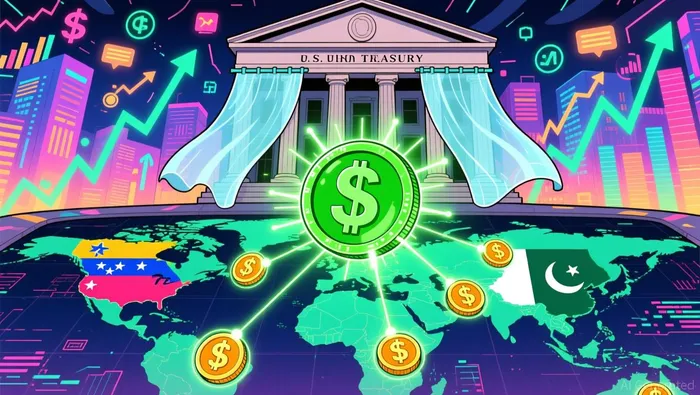
Geopolitical Case Studies: Central Bank Responses
The regulatory responses to stablecoins vary widely, reflecting divergent priorities and capacities. In the U.S., the GENIUS Act (July 2025) mandates that stablecoins be fully backed by U.S. dollars or short-term Treasuries, aiming to legitimize them as financial instruments while mitigating systemic risks. The European Union's Markets in Crypto-Assets (MiCA) regulation similarly enforces transparency and reserve requirements, ensuring compliance with global standards according to ECB policy analysis.
However, in jurisdictions with weaker institutional frameworks, central banks struggle to adapt. Nigeria's CBN, for instance, has observed a surge in stablecoin adoption for remittances and savings, complicating efforts to manage inflation and currency stability. To address this, central banks in emerging markets are increasingly advocating for real-time supervisory tools to monitor fast-moving digital assets, as traditional quarterly reporting mechanisms prove inadequate.
Venezuela's experience underscores the geopolitical risks. The Maduro government's reliance on USDT for oil exports has enabled it to circumvent U.S. sanctions, raising concerns about financial crime and sanctions evasion. This highlights the need for cross-border regulatory cooperation, as emphasized by the Financial Stability Board (FSB), which warns that inconsistent global standards could exacerbate financial instability.
Investor Strategies: Balancing Innovation and Compliance
For investors, the stablecoin landscape presents both opportunities and risks. The GENIUS Act and MiCA have created regulatory clarity, enabling institutional adoption for cross-border payments, real-time settlements, and liquidity management. However, investors must remain agile in navigating evolving rules, particularly in secondary markets and foreign jurisdictions.
Key strategies include:
1. Regulatory Readiness: Institutions must align with frameworks like the GENIUS Act, ensuring stablecoin reserves are transparent and backed by eligible assets. This includes robust governance and independent attestation of reserves.
2. Technological Infrastructure: Leveraging blockchain for 24/7 cross-border transactions and dynamic collateral management can enhance efficiency, particularly in underbanked regions.
3. Diversification: While stablecoins offer a hedge against inflation in volatile economies, their non-interest-bearing nature under the GENIUS Act limits their role as direct substitutes for bank deposits. Investors should balance stablecoin exposure with traditional assets.
Emerging markets present unique opportunities. In Nigeria and Pakistan, stablecoins are being integrated into mobile money systems and trusted payout networks, enabling faster, lower-cost remittances. Investors can capitalize on this by supporting platforms that bridge stablecoins with existing financial infrastructure.
Conclusion: A New Era of Monetary Competition
Stablecoins are not merely a technological innovation but a catalyst for redefining monetary systems. While they threaten central bank dominance, they also offer tools to enhance financial inclusion and efficiency. For investors, the path forward lies in strategic alignment with regulatory frameworks, technological agility, and geopolitical awareness. As central banks adapt their policies and global regulators push for consistency, the interplay between stablecoins and traditional finance will shape the next decade of monetary evolution.






Comentarios
Aún no hay comentarios