
Geopolitical Mediation and Emerging Market Opportunities: South Africa's Evolving Role in Global Conflict Resolution and Its Impact on Regional and Commodity Markets
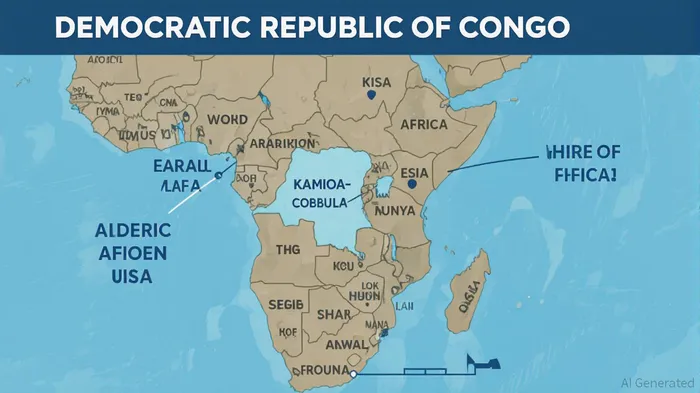
In 2025, South Africa's geopolitical mediation efforts in the Democratic Republic of the Congo (DRC) have become a focal point for investors seeking to navigate the intersection of regional stability and commodity markets. As the world grapples with a six-year low in global commodity prices and a shifting balance of power in international governance, South Africa's dual role as a regional peacekeeper and economic actor is reshaping investment dynamics in Africa's most resource-rich nations.
The DRC: A Strategic Crossroads
The DRC, home to 70% of the world's cobalt and significant copper reserves, remains a linchpin for global supply chains in electric vehicles and renewable energy. However, the resurgence of the M23 rebel group and the collapse of Goma in early 2025 have created a volatile environment. South Africa's military and diplomatic interventions, under the Southern African Development Community Mission in the DRC (SAMIDRC), aim to stabilize the region. While these efforts have faced domestic criticism over troop casualties and resource allocation, they underscore South Africa's strategic interest in ensuring the uninterrupted flow of critical minerals.
For investors, the DRC's mining sector offers both risk and reward. The Kamoa-Kakula copper-cobalt mine, for instance, is expanding production despite geopolitical headwinds. Yet, the DRC's economy remains vulnerable to price swings and conflict-related disruptions. South Africa's mediation efforts, while imperfect, provide a degree of predictability for firms operating in the region.
South Africa's Geopolitical Leverage
South Africa's engagement in the DRC is not purely altruistic. The country's economic ties to the region are deep, with South African firms controlling significant stakes in DRC mining operations and infrastructure projects. By stabilizing the DRC, South Africa safeguards its access to these resources and reinforces its position as a regional hub for trade and logistics. The Port of Durban, a critical transit point for DRC exports, exemplifies this interdependence.
However, South Africa's role is complicated by its alignment with China's International Organization for Mediation (IOMed), launched in May 2025. As a founding member, South Africa is positioning itself as a bridge between African and Chinese interests, offering an alternative to Western-dominated institutions like the WTO. This partnership could reshape dispute resolution mechanisms and trade routes, potentially reducing reliance on traditional corridors like the Lobito Corridor, which connects the DRC to Angola's ports.
Investment Opportunities in a Shifting Landscape
For investors, the key lies in balancing geopolitical risks with long-term opportunities:
1. Mining and Infrastructure: South African and DRC-based firms involved in copper, cobalt, and coltan extraction are well-positioned to benefit from the global energy transition. Companies with strong regional partnerships, such as Anglo American and Glencore, could see growth as demand for critical minerals stabilizes.
2. Regional Trade Hubs: South Africa's ports and logistics networks are critical for DRC exports. Investments in port modernization and rail connectivity (e.g., the SADC-led Trans-Kalahari Corridor) could yield returns as regional trade volumes increase.
3. Diversification into Clean Energy: Both countries are pivoting toward renewable energy and green hydrogen projects. South Africa's renewable energy auctions and the DRC's untapped hydroelectric potential present opportunities for firms in solar, wind, and battery storage.
Navigating the Risks
While the potential is vast, investors must remain cautious. The DRC's political instability and South Africa's domestic economic challenges—such as energy shortages and high unemployment—could derail progress. Additionally, the U.S. and EU's push for supply chain diversification may redirect investments away from Africa, favoring Latin America or Southeast Asia.
China's growing influence through IOMed also introduces complexity. While Beijing's investments in DRC mining offer capital, they risk creating dependency. South Africa's ability to balance its relationships with China, the U.S., and the EU will be critical in maintaining its role as a neutral mediator and economic gatekeeper.
Conclusion: A Calculated Bet on Stability
South Africa's evolving role in global conflict resolution is a double-edged sword for investors. On one hand, its mediation efforts in the DRC and partnerships with China create a more predictable environment for resource extraction and trade. On the other, the region's fragility and shifting geopolitical alliances demand careful risk management.
For those willing to navigate these complexities, the DRC and South Africa represent a unique confluence of geopolitical strategy and economic potential. By investing in resilient infrastructure, diversifying supply chains, and supporting regional peace initiatives, investors can position themselves to capitalize on a continent in transition.







Comentarios
Aún no hay comentarios