
Geopolitical Illusions and Strategic Realities: Why Defense and Energy Stocks Are the New Hedges in a Fractured World
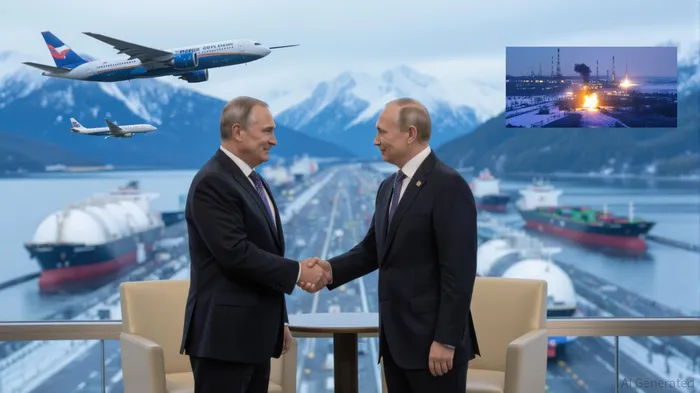
The Trump-Putin summit in Alaska, held on August 15, 2025, was billed as a potential turning point in the Ukraine-Russia war. Yet, as the dust settled, it became clear that the meeting was less a breakthrough and more a theater of empty gestures. The absence of a concrete ceasefire agreement, coupled with Russia's continued military escalation in Ukraine, has exposed the fragility of diplomatic optimism in a world where geopolitical risk is no longer a background concern but a dominant force. For investors, this instability underscores a critical shift: defense and energy sectors are no longer peripheral plays but essential hedges against a fractured global order.
The Illusion of Peace and the Resilience of Defense Stocks
The summit's failure to secure a ceasefire has left the defense sector in a peculiar position. On one hand, the war in Ukraine has become a proving ground for advanced military technology, driving demand for AI-driven logistics, cyber warfare systems, and unmanned platforms. U.S. defense giants like Lockheed MartinLMT-- (LMT) and Raytheon Technologies (RTX) have seen a 22% surge in NATO-related revenue since 2024, reflecting this trend. However, the diplomatic posturing at the summit introduced volatility. European defense firms, such as Germany's Rheinmetall (RHMGF), saw an 8% stock price drop post-summit as investors recalibrated expectations for de-escalation.
The key takeaway for investors is that defense stocks are now dual-purpose assets: they benefit from sustained conflict but also face headwinds when geopolitical optimism spikes. This duality demands a nuanced approach. Overweighting companies with diversified exposure to both traditional arms manufacturing and next-gen capabilities—such as PalantirPLTR-- Technologies (PLTR) for AI-driven analytics or General DynamicsGD-- (GD) for cyber infrastructure—is prudent. Additionally, monitoring congressional budget signals will be critical, as shifts in R&D spending could amplify sector performance.
Energy Markets in the Shadow of BRICS and Parallel Economies
The energy sector's transformation post-summit is equally striking. Russia's pivot to India and China has created a parallel energy economy, with India now sourcing 36% of its crude oil from Moscow. This shift has undermined Western sanctions and created niche opportunities for logistics and insurance firms operating in non-sanctioned markets. Meanwhile, U.S. energy infrastructure—particularly LNG terminal developers like Kinder MorganKMI-- (KMI) and energy ETFs such as XLE—has emerged as a strategic play.
However, the sector's long-term volatility remains a concern. The delay of U.S. sanctions on Russian oil triggered a short-term price rally, but the lack of a durable peace in Ukraine means energy markets will remain sensitive to geopolitical shocks. Investors should prioritize energy infrastructure plays over cyclical fossil fuel producers, as underinvestment in critical projects—such as grid modernization and LNG storage—could create bottlenecks in the coming years. Uranium, too, is gaining traction as a hedge, with companies like CamecoCCJ-- (CCJ) benefiting from renewed nuclear energy interest.
Cybersecurity: The Unseen Frontline
As U.S.-Russia relations pivot toward “strategic stability” talks, the digital battlefield remains active. The Trump administration's reluctance to label Russia a “major cyber threat” has emboldened Moscow, while U.S. firms scramble to bolster defenses. Cybersecurity stocks like CrowdStrikeCRWD-- (CRWD) and Darktrace (DRKTF) have seen a 40% revenue surge since 2023, driven by AI-powered threat detection. With the 2026 U.S. elections looming, cybersecurity is no longer a niche sector but a core component of national resilience.
Investors should consider ETFs focused on cybersecurity infrastructure or individual plays with strong R&D pipelines. The sector's growth is likely to accelerate as hybrid warfare becomes the norm, making it a compelling long-term bet.
A Call to Action: Overweight Defense, Energy, and Infrastructure
The Trump-Putin summit has crystallized a new era of geopolitical risk. The illusion of peace in Alaska was quickly dispelled by continued Russian aggression, leaving investors with a stark reality: infrastructure underinvestment and fragmented global alliances will define the next decade. To navigate this landscape, portfolios must be rebalanced to prioritize defense, energy, and cybersecurity equities.
Avoid cyclical sectors like consumer discretionary and tech, which remain vulnerable to inflationary shocks. Instead, focus on inflation-protected assets and infrastructure plays that align with the new geopolitical order. The war in Ukraine may not have a clear end in sight, but for investors, the path forward is clear: hedge against instability by doubling down on the sectors that will shape the future.





Comentarios
Aún no hay comentarios