
Geopolitical Fragility and Investment Risks in the DRC-Rwanda Critical Minerals Corridor
The June 2025 peace agreement between the Democratic Republic of the Congo (DRC) and Rwanda, brokered by the United States, represents a pivotal but fragile attempt to stabilize a region critical to global supply chains for critical minerals. While the deal has spurred optimism about economic integration and infrastructure development, the underlying geopolitical tensions, security challenges, and governance gaps continue to pose significant risks for investors.
Commodity Sector: Strategic Opportunities Amid Persistent Risks
The DRC's vast reserves of cobalt, copper, lithium, and rare earth minerals are central to the global transition to clean energy and advanced technologies. According to a CSIS report, the U.S.-brokered peace deal explicitly links regional stability with responsible mineral sourcing, aiming to counter China's dominance in the sector and attract Western investment. The DRC attracted $130.7 million in mineral exploration funding in 2024, the highest in Africa, driven by demand for resources essential to electric vehicles and renewable energy systems, according to the 2025 Investment Climate Statement.
However, the sector remains fraught with risks. A USIP analysis highlights that over 100 armed groups, including the M23 rebel faction, continue to operate in eastern DRC, disrupting mining operations and fueling illicit trade. Illicit mining and smuggling have cost the DRC an estimated $1 billion annually while inflating Rwanda's mineral exports, according to a LinkedIn analysis. The peace deal's exclusion of M23 from disarmament commitments further undermines its long-term effectiveness, as an Al Jazeera opinion argues that the group's control of mining zones generates significant revenue for its operations.
Infrastructure Development: A Double-Edged Sword
Post-peace deal cooperation between the DRC and Rwanda has prioritized infrastructure projects to enhance regional connectivity and economic integration. Rwanda allocated $430 million in its 2025/2026 fiscal year for transport, energy, and water infrastructure, including the Bugesera International Airport and Rusizi Port on Lake Kivu, as reported by Further Africa. The DRC-Rwanda economic framework also emphasizes cross-border infrastructure, such as the U.S.-backed Lobito Corridor, to diversify trade routes and reduce dependency on Chinese investments, according to an Al Jazeera report.
Yet, infrastructure projects face persistent risks. An Atlantic Council piece notes that security instability in eastern DRC, coupled with weak governance and corruption, could derail these initiatives. For instance, the Ruzizi III hydropower project-a joint DRC-Rwanda venture-requires sustained political will and international oversight to avoid becoming a casualty of regional tensions, according to a State Department release. Moody's recent upgrade of Rwanda's credit outlook, reported by Evrim Agaci, reflects confidence in its infrastructure plans but cautions that the DRC's budgetary constraints and security challenges remain major headwinds.
Geopolitical Realities and Investor Caution
The peace deal's success hinges on the U.S. and other global stakeholders maintaining pressure for accountability. As Chatham House argued, corporate America's risk appetite for investing in the DRC's mineral sector will determine whether the agreement translates into tangible economic benefits. However, the risk of resource exploitation under the guise of "economic cooperation" looms large. An Al Jazeera opinion warns that without robust transparency mechanisms, the deal could prioritize foreign corporate interests over local communities, exacerbating inequality and fueling future conflicts.
Conclusion: Balancing Hope and Prudence
The DRC-Rwanda peace deal offers a rare window of opportunity to transform the region's critical mineral sector and infrastructure landscape. Yet, investors must navigate a complex web of security, governance, and geopolitical risks. While the U.S. and international partners have signaled strong support, sustained engagement and stringent oversight are essential to ensure that the peace deal delivers on its promises. For now, the region remains a high-reward, high-risk proposition-one where strategic patience and adaptive risk management will be paramount.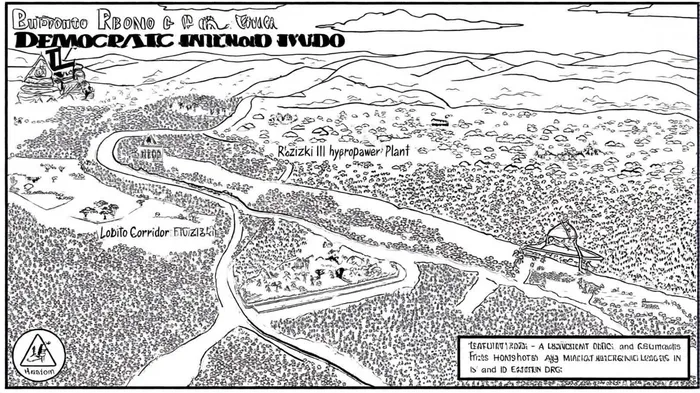







Comentarios
Aún no hay comentarios