
Geopolitical and Environmental Risks: Shaping the Gold Sector's IPO Landscape and Investor Sentiment in 2025
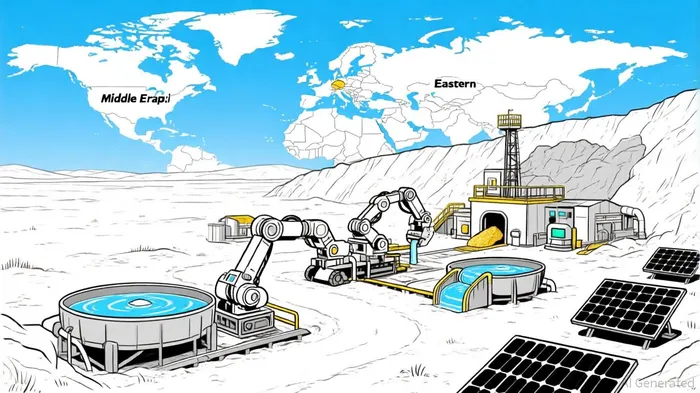
The gold sector in 2025 is navigating a complex web of geopolitical and environmental risks that are reshaping IPO strategies and investor sentiment. As global uncertainties escalate—from conflicts in the Middle East to the Russia-Ukraine war—gold's role as a safe-haven asset has intensified, driving demand and influencing the timing of initial public offerings (IPOs). Simultaneously, environmental, social, and governance (ESG) pressures are compelling mining companies to adopt innovative risk management practices to secure financing and public trust. This analysis explores how these dual forces are redefining the gold sector's IPO landscape and investor behavior.
Geopolitical Risks and Gold's Safe-Haven Appeal
Geopolitical tensions have become a dominant driver of gold prices and IPO activity. According to a report by the World Gold Council, a 100-unit increase in the Geopolitical Risk (GPR) index historically correlates with a 2.5% rise in gold returns[1]. In 2025, this dynamic has been amplified by conflicts such as the Israel-Palestine war and renewed hostilities in Eastern Europe, which have spurred central banks to purchase record amounts of gold. For instance, China, India, and Türkiye added 1,037 tonnes of gold to their reserves in 2023 alone, signaling a strategic shift toward hedging against currency devaluation and geopolitical instability[2].
These trends have directly influenced the timing of gold sector IPOs. Companies in politically stable jurisdictions, such as Canada and Australia, have seen heightened investor interest. Notably, Navoi Mining and Metallurgical Co., Uzbekistan's fourth-largest gold producer, is set to launch a $550 million IPO in Q3 2025, leveraging its alignment with international reporting standards and a $1.2 billion syndicated loan to mitigate geopolitical exposure[3]. Such cases underscore how geopolitical risks are not only driving gold prices but also shaping the geographic and strategic priorities of mining firms seeking public capital.
Environmental Risks and ESG-Driven Innovation
Environmental challenges, particularly under ESG frameworks, have emerged as critical hurdles for gold miners. A 2025 report by the Gold Standard highlights that while aggregate carbon emissions in the sector have declined, emissions intensity has worsened due to declining ore grades and energy-intensive extraction methods[4]. Water usage and toxic waste generation remain contentious issues, with mining operations contributing to water contamination in regions like South America and Sub-Saharan Africa[5].
To address these risks, companies are adopting cutting-edge technologies and sustainable practices. Newmont Corporation's Borden Mine in Canada, for example, became the world's first mine to operate entirely on battery-powered equipment, reducing greenhouse gas emissions by 30%[6]. Similarly, AngloGold Ashanti's Siguiri Mine in Guinea has integrated water recycling systems and renewable energy sources, cutting diesel dependency and improving community relations[7]. These initiatives not only mitigate environmental harm but also align with investor expectations for ESG compliance, which has become a prerequisite for securing financing and permits[8].
Strategic Risk Management: Balancing Geopolitical and Environmental Pressures
Strategic risk management in the gold sector now hinges on a dual focus: geopolitical agility and environmental resilience. Companies are diversifying supply chains to avoid reliance on politically unstable regions and investing in digital tools like AI-driven supply chain visibility systems to monitor disruptions[9]. For example, the Fekola Mine in Mali employs real-time monitoring and adaptive geological modeling to enhance operational efficiency while minimizing environmental footprints[10].
Governance frameworks are also evolving to address these challenges. The World Gold Council's Responsible Gold Mining Principles (RGMPs), which include 51 independently verified standards, have become a benchmark for ESG performance[11]. Firms adhering to these principles, such as Zijin Mining, have demonstrated improved stakeholder trust and reduced regulatory risks, even in volatile markets[12].
Investor Reactions: ESG and Geopolitical Sentiment in Focus
Investor sentiment toward gold sector IPOs in 2025 is increasingly tied to ESG performance and geopolitical preparedness. A 2024 study by Accenture found that 63% of investors would divest from gold miners failing to meet decarbonization targets, while 59% expect miners to lead in reducing Scope 3 emissions[13]. This shift is evident in the success of ESG-focused IPOs, such as the Borden Gold project, which attracted $4 billion in Canadian equity financing by emphasizing its zero-emission operations[14].
Geopolitical uncertainties have further amplified gold's appeal as a portfolio diversifier. With global gold production projected to peak in 2025 before declining, investors are prioritizing projects with strong geopolitical buffers and sustainable practices[15]. Digital innovations, including tokenized gold and blockchain-based traceability, are also gaining traction, enabling fractional ownership and enhancing transparency for risk-averse investors[16].
Conclusion: A Resilient Future for Gold Sector IPOs
The interplay of geopolitical and environmental risks in 2025 has created both challenges and opportunities for the gold sector. While geopolitical tensions drive demand for gold as a safe-haven asset, ESG pressures necessitate innovative risk management strategies. Companies that successfully balance these factors—through technological adoption, sustainable practices, and geopolitical diversification—are poised to attract investor capital and secure long-term viability. As the sector navigates an uncertain future, strategic alignment with ESG and geopolitical resilience will remain paramount for IPO success.





Comentarios
Aún no hay comentarios