
The Geopolitical and Energy Shifts in Venezuela and Their Impact on Global Oil Markets and U.S. Energy Giants
The U.S. military intervention in Venezuela and the subsequent removal of President Nicolás Maduro in early 2026 have triggered a seismic shift in global energy dynamics. Venezuela, a nation with the world's largest proven oil reserves (303 billion barrels), has long been a geopolitical flashpoint due to its strategic role in oil markets and its alignment with China and Russia. The U.S. takeover of Venezuela's state oil company, PDVSA, and its infrastructure has raised critical questions for investors: How will this reshape global oil supply? What are the risks and opportunities for U.S. energy giants like ChevronCVX--, Exxon MobilXOM--, and Schlumberger? And what does this mean for the long-term stability of the global energy sector?
Geopolitical Shifts and the New Energy Order
The U.S. intervention has upended Venezuela's geopolitical alliances, shifting the country from a China-centric energy partnership to a U.S.-aligned model. For years, China dominated Venezuela's oil exports, receiving discounted crude in exchange for economic and political support to the Maduro regime. The U.S. now controls PDVSA, a move that could reduce China's leverage in the region while deepening U.S. influence. However, this shift has not come without friction. Russia and China have condemned the intervention, warning of a precedent for U.S. military actions in Latin America. Analysts at Allianz GI note that the geopolitical fallout could destabilize regional markets, with ripple effects on energy investments and trade routes.
The U.S. also faces a complex challenge in balancing its energy ambitions with broader geopolitical goals. While restoring Venezuela's oil production could bolster U.S. energy security and lower global prices, it risks alienating allies in the Global South who view the intervention as neocolonial. This tension underscores the need for U.S. energy companies to navigate not only technical and financial hurdles but also a volatile geopolitical landscape.
U.S. Energy Giants: Rebuilding a Broken Sector
Venezuela's oil infrastructure is in dire need of modernization. Current production of approximately 934,000 barrels per day-less than 1% of global supply-pales in comparison to its peak output of 3.5 million barrels per day in the early 2000s. U.S. energy companies, including Chevron, Exxon Mobil, and Schlumberger, are now positioned to lead a multiyear restoration effort. According to a report by , Halliburton and Schlumberger are expected to play key roles in upgrading drilling and production technologies, while Chevron, the only U.S. major still operating in Venezuela, is already producing a quarter of the country's oil.
However, the path to recovery is fraught with challenges. Former Chevron executive Ali Moshiri estimates that restoring production to 1.5 million barrels per day would require $7 billion in investment and 18 months of work. Meanwhile, Exxon Mobil and ConocoPhillips, which have long-standing claims, will need clear legal frameworks and political stability before committing capital. The Trump administration has pledged to facilitate these investments, but analysts caution that years of underinvestment and infrastructure decay will slow progress.
Market Implications: Oversupply and Strategic Value 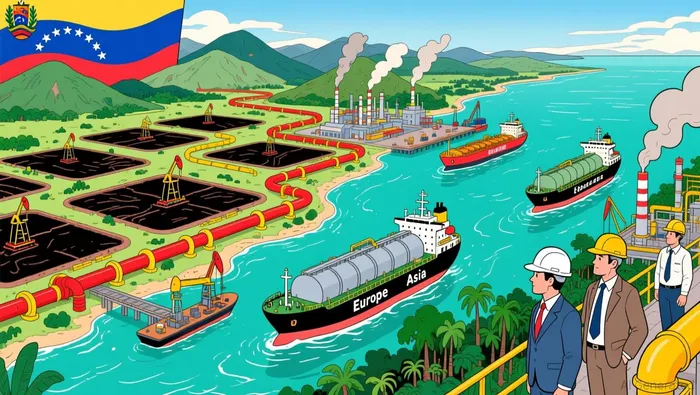
The global oil market is already oversupplied, with new production from the U.S., Brazil, and Guyana projected to deepen the surplus in 2026. This context means that even a full restoration of Venezuela's production to 2–3 million barrels per day would not trigger immediate price volatility. Cornelia Meyer, an oil analyst, notes that such an increase would still represent less than 1% of global supply, insufficient to disrupt markets. However, the type of crude Venezuela produces-heavy oil-gives it unique strategic value. U.S. Gulf Coast refineries are optimized for heavy crude, and a steady supply from Venezuela could reduce reliance on imports from politically unstable regions.
That said, the environmental and economic viability of heavy crude is under scrutiny. As global markets shift toward cleaner energy, the long-term demand for Venezuela's oil remains uncertain. David Goldwyn of Goldwyn Global Strategies warns that U.S. companies must balance short-term gains with the realities of a decarbonizing economy.
Geopolitical Risks for Investors
The most pressing risk for U.S. energy companies is political instability. Venezuela's transition from a socialist regime to a U.S.-aligned government is untested, and any reversal could jeopardize investments. Additionally, the precedent set by the U.S. intervention has raised concerns about regional security. As noted by Capital Economics, the move could embolden other nations to challenge U.S. influence, creating a ripple effect of instability in Latin America.
For investors, this means diversifying exposure and hedging against geopolitical shocks. U.S. energy stocks initially surged after the intervention, but long-term returns will depend on the stability of Venezuela's new government and the global oil price trajectory. Allianz GI analysts emphasize that meaningful production increases are unlikely before 2027, given the need for infrastructure repairs and regulatory clarity.
Conclusion: A High-Stakes Gamble
The U.S. intervention in Venezuela represents a high-stakes gamble for both energy companies and global markets. While the potential rewards-access to vast reserves, reduced oil prices, and strategic control over heavy crude-are significant, the risks-geopolitical backlash, infrastructure decay, and market oversupply-cannot be ignored. For U.S. energy giants, the key to success lies in patience, political agility, and a long-term vision that aligns with the realities of a rapidly evolving energy landscape.
As the world watches Venezuela's oil sector unfold, one thing is clear: the interplay of geopolitics and energy will remain a defining force in global markets for years to come.





Comentarios
Aún no hay comentarios