
The New Geopolitical Economy: How Middle Eastern SWFs Are Redefining Risk and Reward in 2025
The warnings from Qatar and Kuwait's sovereign wealth funds (SWFs) in early 2025 are not mere cautionary notes—they are seismic signals for global capital allocation. With combined assets exceeding $1.5 trillion, the Qatar Investment Authority (QIA) and Kuwait Investment Authority (KIA) are now framing a stark reality: the era of unchecked optimism in private markets is over, and geopolitical fragmentation is reshaping every investment calculus. For investors, this is a clarion call to reallocate capital toward sectors and regions that can withstand—and profit from—their vision of a fractured world.
The Alarms Ringing in the Gulf
Qatar's QIA has sounded the loudest on private credit risks. Its CEO, Mohammed AlAL-- Sowaidi, warned that today's crowded private credit markets mask a deeper truth: many deals now function as de facto equity investments, with illiquid exits and valuation bubbles. The QIA's response? A pivot to fewer, larger-scale investments—a strategy that hints at a broader shift toward quality over quantity. Meanwhile, Kuwait's KIA, under Managing Director Sheikh Saoud Salem Al-Sabah, issued even starker warnings about private equity's structural flaws. Large buyouts and overvalued continuation vehicles, he argued, risk becoming “time bombs” for investors expecting liquidity.
These warnings are not theoretical. The Credit Suisse collapse—linked to $40 billion in Middle Eastern exposures—has crystallized Gulf SWFs' fears of systemic instability. Now, they are urging investors to prepare for a world where geopolitical volatility and regulatory overreach (e.g., Switzerland's post-Credit Suisse scrutiny) threaten even the most sophisticated portfolios.
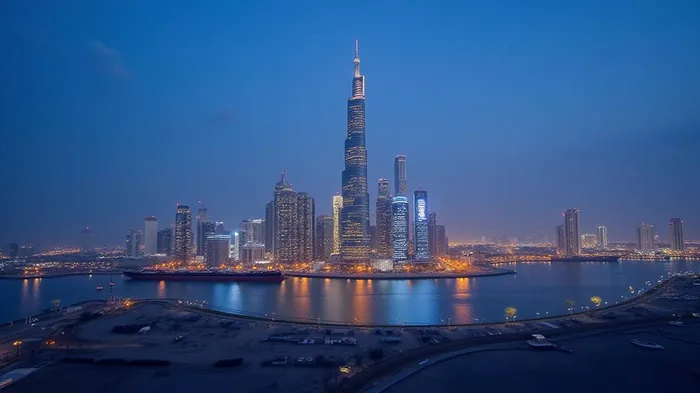
The Three Frontiers of Risk and Opportunity
1. Geopolitical Realignment and Energy Transition
The Gulf's diversification push—from Qatar's Wall Street-style financial hub to Saudi Arabia's NEOM megaproject—reveals a clear priority: reduce reliance on oil while maintaining energy dominance. This creates two investment vectors:
- Energy Transition Plays: Renewable infrastructure in the Gulf (solar, green hydrogen) and energy storage tech globally.
- Defensive Assets: Sovereign bonds of Gulf states, which now offer higher yields amid fiscal prudence and diversified economies.
2. Regional Infrastructure and Financial Hub Competition
Qatar's $524 billion QIA is pouring capital into attracting global financial firms to Doha, while the UAE's ADIA bolsters Abu Dhabi's status as a tech and logistics hub. Investors should prioritize:
- Infrastructure Funds: Those focused on GCC countries' 10-year diversification plans, including transport and tech.
- Regulatory Arbitrage: Emerging markets like Mauritius (tax-friendly, stable) may siphon capital from risk-averse Gulf investments—watch for opportunities in such “second-tier” hubs.
3. Private Markets' New Reality
The SWFs' warnings underscore a critical shift: private credit and equity must now prove their defensive merits. Look to:
- Liquid Alternatives: Real estate or private debt vehicles with shorter lockup periods.
- Continuation Vehicles: Avoid them unless they can demonstrate capital return clarity—most cannot.
Why This Matters Now
The urgency is underscored by the SWFs' own actions. Qatar's $500 billion pledge to China and Kuwait's push for U.S. investment growth highlight a global realignment. Meanwhile, their warnings about private markets reflect a systemic reckoning—investors ignoring these signals risk being left behind as capital flees overvalued assets.
The takeaway is clear: 2025 is the year to reallocate away from crowded private bets and toward geographically diversified, liquid assets that align with Gulf SWFs' vision of a fragmented world. Those who act swiftly will position themselves to capitalize on the next wave of geopolitical and economic shifts.
In the words of Sheikh Saoud Salem Al-Sabah: “The clock is ticking.” The question is no longer whether to adjust—but how fast you can.
This article synthesizes actionable insights from the region's most influential capital allocators. For investors, the message is unequivocal: adapt or be overtaken by the new geopolitical economy.







Comentarios
Aún no hay comentarios