
The Geopolitical and Economic Risks of Trump's Iran Policy: Implications for Global Markets
The U.S. approach to Iran under President Donald Trump, characterized by the 2018 withdrawal from the Joint Comprehensive Plan of Action (JCPOA) and the imposition of "maximum pressure" sanctions, has left a lasting imprint on global markets. This policy, aimed at curbing Iran's nuclear ambitions and regional influence, has triggered significant volatility in energy markets, reshaped defense sector dynamics, and introduced complex geopolitical risks. For investors, understanding these interlinked factors is critical to navigating opportunities and mitigating risks in energy, defense, and regional stability.
Energy Sector: Volatility, OPEC+ Adjustments, and Future Uncertainty
Trump's sanctions on Iran's oil exports, which reduced Iranian output from 2.3 million barrels per day in 2018 to 260,000 bpd by late 2019, created immediate supply shocks. Global oil prices surged to four-year highs as markets priced in the risk of further disruptions. OPEC+ responded by adjusting production strategies to stabilize markets, but the policy's long-term implications remain uncertain. A potential rollback of sanctions-should a renewed nuclear deal materialize-could reintroduce Iranian oil into global markets, potentially depressing prices and straining U.S. shale producers and Gulf exporters with high production costs.
Recent geopolitical tensions, such as the June 2025 aerial bombardment in the Middle East, briefly spiked oil prices to $76 per barrel before retreating. While the market now assigns a low probability (14%) to a Strait of Hormuz closure, the region's fragility underscores the need for energy investors to hedge against sudden supply shocks. Additionally, reduced Asian demand-particularly from China-has weakened the historical correlation between Middle East tensions and oil price spikes, suggesting markets may adapt to alternative supply routes and lower consumption growth.
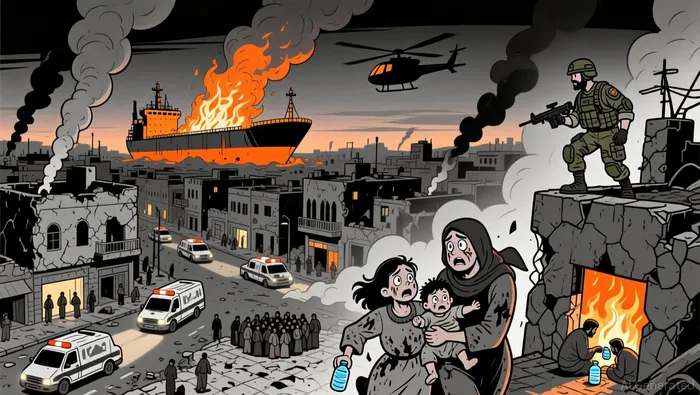
Defense Sector: Arms Sales, Military Spending, and Strategic Partnerships
Trump's Iran policy catalyzed a surge in U.S. arms sales to Gulf allies, most notably the $110 billion 2017 deal with Saudi Arabia. These sales, part of a broader "maximum pressure" strategy, aimed to bolster regional partners' capabilities to counter Iranian influence. The defense sector benefited indirectly from heightened tensions, as Gulf states prioritized military modernization. For instance, the U.S. accounted for nearly 45% of Middle Eastern arms imports from 2015 to 2019, with advanced systems like missile defense and cybersecurity technology driving demand.
However, the financial impact on U.S. defense firms was not uniform. While sanctions on Iran's military-related activities reinforced U.S. dominance in regional security dynamics, the policy's focus on economic pressure rather than direct military engagement limited immediate revenue gains. Instead, opportunities emerged through long-term contracts and partnerships, such as the U.S.-Gulf collaboration on artificial intelligence and semiconductor technology. These dual-use technologies, critical for both defense and economic diversification, highlight evolving investment opportunities in the sector.
Regional Stability: Geopolitical Risks and Market Resilience
The Middle East remains a flashpoint for geopolitical risk, with Trump's Iran policy contributing to a cycle of escalation and de-escalation. The 2020 assassination of Iranian General Qasem Soleimani and subsequent missile attacks on U.S. bases in Iraq exemplify the volatility inherent in this strategy. Despite these tensions, global markets have demonstrated resilience. For example, the S&P 500 remained near record highs during the 2025 Middle East conflicts, and oil price spikes were short-lived.
Investors must weigh the likelihood of renewed hostilities against broader trends. The region's strategic importance persists, but diversification in energy sources and shifting demand patterns have reduced the economic stakes of any single conflict. Moreover, Trump's potential openness to diplomatic solutions-should he return to office-could introduce further uncertainty, as a new nuclear deal might alter both energy and defense investment landscapes.
Conclusion: Navigating a Complex Landscape
Trump's Iran policy has created a multifaceted environment for investors. In energy, the interplay of sanctions, OPEC+ adjustments, and geopolitical risks demands a nuanced approach to hedging and diversification. The defense sector offers opportunities through regional arms sales and technological partnerships but requires careful assessment of long-term contracts. Regional stability remains a wildcard, with markets increasingly resilient to shocks but still vulnerable to sudden escalations.
For investors, the key lies in balancing exposure to these sectors while monitoring policy shifts and geopolitical developments. As the U.S. and its allies navigate the legacy of Trump's Iran strategy, adaptability will be paramount in capitalizing on opportunities and mitigating risks.







Comentarios
Aún no hay comentarios