
The Geopolitical and Economic Implications of Russia's Bitcoin Mining Growth on the Ruble and Global Crypto Markets
Russia's BitcoinBTC-- mining sector has emerged as a strategic asset in its economic arsenal, reshaping the country's approach to currency stability and global trade. With the legalization of mining in late 2024 and a reported $1.3 billion investment in infrastructure, Russia is positioning itself as a key player in the global crypto economy. This shift not only diversifies its export-style revenue streams but also introduces a novel mechanism for stabilizing the ruble amid ongoing international sanctions.
Assessing Output and Revenue Growth
Russia's Bitcoin mining output has surged in recent years, with industry estimates suggesting 55,000 BTC mined in 2023 and 35,000 BTC in 2024. By Q4 2025, the country commands 15.5% of the global hashrate, second only to the United States. 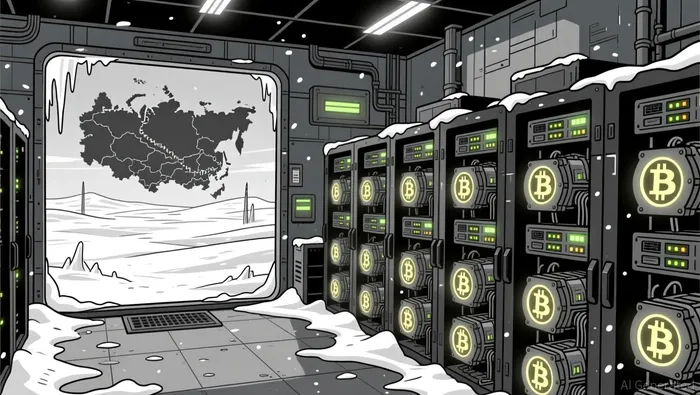 While precise 2025 revenue figures remain elusive, industry experts like Mikhail Brezhnev of 51ASIC estimate daily mining revenue at approximately 1 billion rubles-a-figure tied to Bitcoin's price and Russia's share of global computing power. This growth is underpinned by abundant energy resources, favorable climatic conditions, and a regulatory environment that now officially recognizes mining as an economic activity.
The government's embrace of mining as an "undervalued export project" underscores its potential to offset traditional export vulnerabilities. By converting energy surpluses into digital assets, Russia is effectively monetizing its natural resources in a decentralized, global market. This model bypasses conventional trade channels, offering a hedge against geopolitical volatility.
Regulatory Framework and Challenges
Legalization has brought structure to a previously shadowy industry. A 25% corporate tax on mining income and mandatory registration with the Federal Tax Service aim to formalize operations and curb illicit activity. However, illegal and semi-legal mining persists, draining the national grid and eroding tax revenues. The government's plan to introduce licensing for exchanges and enforce stricter controls by late 2026 signals a long-term strategy to integrate crypto into the formal economy.
These measures, while necessary, also highlight risks. Energy constraints and regulatory enforcement could dampen growth if not balanced with investment in grid infrastructure and legal clarity.
Impact on the Ruble and Currency Stability
Bitcoin mining's role in supporting the ruble is both symbolic and practical. The Central Bank of Russia has noted that mining has become "an additional factor" in the currency's recent resilience, though quantifying this effect remains challenging due to the sector's decentralized nature. By generating hard currency through Bitcoin sales, miners indirectly bolster the ruble's value, particularly as Bitcoin's adoption as a reserve asset grows.
This dynamic is especially significant in a sanctions-driven environment. Unlike oil or gas exports, Bitcoin mining operates outside traditional financial systems, offering a degree of autonomy. As Maxim Oreshkin, a presidential economic advisor, observed, mining could serve as a "strategic tool" to stabilize the ruble.
Global Market Implications
Russia's ascent in Bitcoin mining has broader implications for the global crypto market. Its 15.5% hashrate share positions it as a key influencer in network security and price dynamics. This concentration of power raises concerns about centralization risks, though it also fosters competition with the U.S. and other mining hubs.
Moreover, Russia's integration into the global crypto economy could normalize state-backed mining operations, encouraging other nations to adopt similar strategies. The sector's growth also aligns with broader trends, such as Bitcoin's increasing recognition as a reserve asset, further cementing its role in global finance.
Risks and Future Outlook
Despite its promise, Russia's Bitcoin mining sector faces headwinds. Energy constraints and the need to address illegal operations remain critical challenges. Additionally, the sector's reliance on Bitcoin's price volatility introduces uncertainty. If the cryptocurrency's value dips, the economic benefits of mining could wane, undermining its role as a stable revenue stream.
Looking ahead, the government's 2026 integration plan will be pivotal. Success will depend on balancing regulation with innovation, ensuring that mining remains both profitable and compliant. For investors, the sector offers high potential but requires careful monitoring of geopolitical and market risks.
Conclusion
Russia's Bitcoin mining boom represents a bold reimagining of its economic strategy. By leveraging its energy advantages and regulatory adaptability, the country is transforming a once-marginalized industry into a cornerstone of its export portfolio. While challenges persist, the sector's potential to stabilize the ruble and influence global crypto markets is undeniable. As the world watches, Russia's experiment with digital exports may well redefine the future of resource-based economies.






Comentarios
Aún no hay comentarios