
Geopolitical Disruptions in Energy Markets: Assessing Long-Term Risks and Opportunities in Russian Seaborne Fuel Exports
The geopolitical landscape of energy markets has been irrevocably altered by Russia's invasion of Ukraine, Western sanctions, and the global push for decarbonization. For investors, understanding the long-term risks and opportunities in Russian seaborne fuel exports-oil and LNG-requires a nuanced analysis of shifting trade dynamics, infrastructure challenges, and the accelerating energy transition.
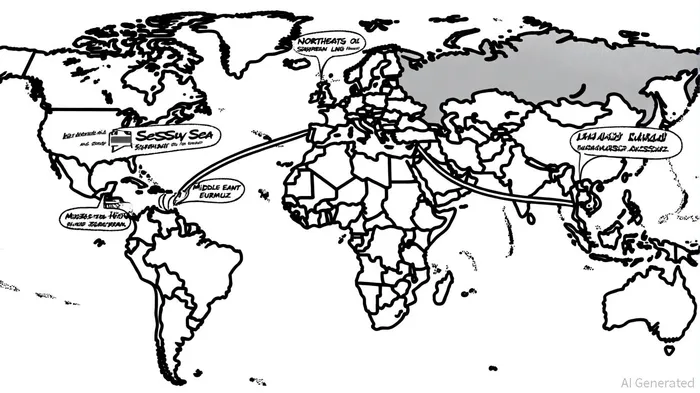
The Pivot to Asia: A Strategic Lifeline
Russian crude oil exports have undergone a dramatic realignment since 2022. According to an Energy and Clean Air analysis, China now accounts for 47% of Russia's crude oil exports, while India absorbs 37%. This pivot to Asia has allowed Moscow to offset the loss of European markets, but at a cost. Russian oil is now sold at significant discounts-often 30–40% below global benchmarks-to secure buyers. For instance, in January 2025, that analysis found Russian seaborne crude oil revenues rose 13% despite only a 2% increase in export volumes, driven by a shift toward refined products and higher volumes to Asia.
However, this strategy is not without vulnerabilities. The reliance on "shadow" tankers-vessels operating outside sanctioned networks-has become a double-edged sword. While these tankers enable continued exports, they expose Russia to heightened risks of vessel seizures and secondary sanctions on intermediary countries like Turkey and the UAE, as a Jamestown analysis notes.
LNG: A Mixed Bag of Opportunities
Russian LNG exports have also seen a strategic reorientation. According to Reuters data, in the first eight months of 2025, 9.5 million metric tons of LNG were shipped to Asia, compared to 9.2 million tons to Europe. Reuters data show France emerged as the largest European recipient, importing over 4 million tons of Russian LNG in this period. Yet, Russia's LNG ambitions face structural hurdles.
The country's LNG industry remains heavily dependent on Western technology for liquefaction and shipping, a dependency that has deepened since the withdrawal of European partners like ShellSHEL-- and TotalEnergiesTTE--. A Jamestown analysis also notes Russia's ability to expand LNG capacity is constrained by a lack of Arctic-ready carriers and delays in projects like Arctic LNG 2. Meanwhile, global LNG markets are becoming increasingly competitive, with the U.S. and Qatar ramping up exports. By 2030, Russia's share of global LNG trade could stagnate unless it secures long-term contracts with Asian buyers, the Jamestown analysis warns.
Energy Transitions: A Looming Headwind
The global energy transition poses a fundamental challenge to Russia's long-term export prospects. Net-zero policies in Europe and Asia are accelerating the decline of fossil fuel demand. For example, China's Five-Year Plan emphasizes renewable energy deployment, which could reduce its reliance on Russian oil and gas by 2040, according to a Nature study. Similarly, India's push for solar and wind energy, while still reliant on coal, may limit its appetite for discounted Russian hydrocarbons in the long run, the Nature study suggests.
Russia's own energy strategy acknowledges these risks. The country aims to triple natural gas exports by 2050, but this goal assumes a world where gas remains a bridge fuel. If green hydrogen and electrification displace gas in sectors like power and industry, Russia's pipeline and LNG investments could face stranded asset risks, Reuters reported.
Geopolitical Wild Cards
Emerging markets and regional conflicts add further volatility. Brazil and Saudi Arabia have emerged as key buyers of Russian oil products, with Brazil importing €443 million worth of Russian fossil fuels in June 2025, according to The Ins report. Meanwhile, conflicts in the Middle East-such as the Iran–Israel standoff-threaten critical transit routes like the Strait of Hormuz, which could disrupt global oil flows and indirectly impact Russian exports by altering trade rerouting strategies, a Trends Research analysis warns.
International agreements also play a pivotal role. The EU's oil embargo and G7 price cap have forced Russia to innovate. For example, Moscow has circumvented the $60 price cap by using intermediary companies in the UAE and Hong Kong, generating an additional $53 billion in revenues in 2024, the The Ins report found. However, these workarounds are temporary. A proposed reduction of the price cap to $45 per barrel could slash Russian revenues by 28% in 2025, the Energy and Clean Air analysis estimates.
Conclusion: Balancing Resilience and Risk
For investors, Russian seaborne fuel exports present a paradox: short-term resilience amid long-term uncertainty. In the near term, Russia's ability to pivot to Asia and exploit discounted pricing ensures continued cash flows for its military and energy sectors. However, structural challenges-sanctions, technological bottlenecks, and the energy transition-threaten to erode these gains.
The key question is whether Russia can adapt its infrastructure and trade networks faster than global demand shifts. While Arctic port expansions and the Northern Sea Route offer logistical advantages, they cannot offset the declining profitability of oil and gas in a decarbonizing world. Investors should monitor two critical metrics: the pace of China's energy transition and the enforcement of Western sanctions on Russian shipping.
In the end, Russian seaborne exports will remain a geopolitical bellwether-a sector where energy, economics, and ideology collide.





Comentarios
Aún no hay comentarios