
Geopolitical Disruptions in Energy Infrastructure: Unconventional Tactics Reshape Security and Investment Risks
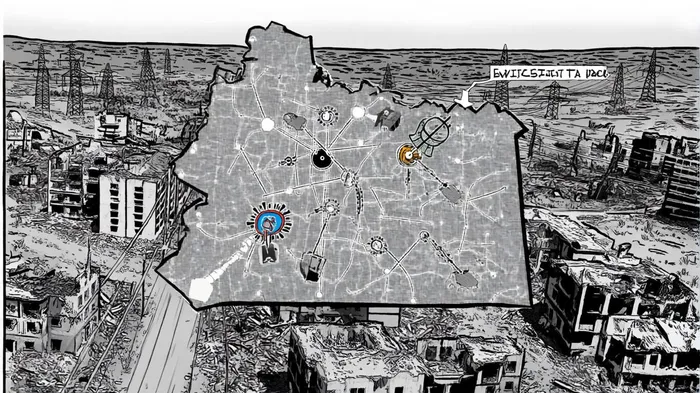
The global energy landscape in 2025 is defined by a new era of hybrid warfare, where unconventional military tactics—ranging from cyberattacks to hybrid aggression against critical infrastructure—are redefining energy security and investment risk paradigms. As nations grapple with the fallout of these tactics, investors and policymakers face a complex web of challenges that demand a rethinking of traditional energy strategies.
Case Studies: From Ukraine to the Baltic Shadows
The war in Ukraine has emerged as a stark example of how energy infrastructure is weaponized. Russian forces have systematically targeted transmission lines, power stations, and heating systems, inflicting over USD 47 billion in damages since 2022[3]. Despite these efforts, Ukraine's resilience—bolstered by NATO air defense support and international aid—has allowed it to maintain winter electricity supply[3]. However, the long-term implications are profound: Ukraine's “Build Back Better” plan now prioritizes renewable energy and nuclear expansion, reflecting a strategic shift toward decentralized, hard-to-target systems[3].
Simultaneously, Russia's shadow fleet has escalated hybrid aggression in the Baltic region. The 2024 sabotage of the EstLink 2 interconnector by the Eagle S—a vessel equipped with military-grade detection tools—exposed vulnerabilities in undersea infrastructure[2]. Such attacks underscore the need for proactive security measures, as reactive strategies like cable reinforcement prove insufficient against premeditated strikes[2].
Investment Risks: Geopolitical Volatility and Cyber Threats
Financial institutions are increasingly factoring unconventional military tactics into risk assessments. According to the KPMG 2024 Energy CEO Outlook, 55% of sector leaders cite geopolitical instability as their top challenge[2]. Tariff wars, supply chain disruptions, and synthetic volatility—tools of “financial warfare”—are eroding investor confidence and driving energy prices into a tailspin[4]. For instance, U.S. threats to impose punitive tariffs on Russian oil imports have created market uncertainty, while China's dominance in renewable manufacturing is reshaping global energy geopolitics[2].
Cybersecurity has emerged as a critical frontier. Trustwave's 2025 report highlights a 300% spike in ransomware attacks targeting energy utilities, with threat actors exploiting IT/OT convergence and AI-driven exploits[1]. DNV Cyber's Energy Cyber Priority 2025 report reinforces this, noting that 65% of energy professionals view cybersecurity as their greatest risk[1]. The energy transition itself has introduced new vulnerabilities, as decentralized systems and smart grids expand attack surfaces[1].
Strategic Shifts: Resilience Over Reactivity
The EU's response to these threats—reinforcing cables, enhancing surveillance, and accelerating repair timelines—has been criticized as insufficient for long-term resilience[2]. Instead, experts advocate for a fundamental redesign of energy infrastructure, embedding security from the planning phase. NATO's Energy Security Centre of Excellence (ENSEC CoE) emphasizes the dual-use nature of energy assets, urging integration of security into military training and operations[1].
Investors are adapting by prioritizing localized energy solutions and diversifying supply chains. Nuclear power, for example, has seen a resurgence in France and Japan, while China's renewable manufacturing dominance is enabling strategic market expansion[2]. Meanwhile, AI-driven data centers are spurring demand for natural gas-fired power plants to meet surging electricity needs[4].
Conclusion: Navigating a Fractured Energy Future
The convergence of unconventional military tactics and energy infrastructure has created a volatile investment environment. For stakeholders, the path forward lies in proactive resilience: integrating cybersecurity into energy planning, diversifying supply chains, and leveraging AI for threat detection. As the EU's EstLink 2 incident and Ukraine's energy war demonstrate, the era of reactive defense is over. Energy security—and by extension, investment stability—now hinges on anticipating the next move in a game where the rules are constantly rewritten.







Comentarios
Aún no hay comentarios