
The Geopolitical Crypto Play: How Stablecoins Are Reshaping Global Debt Dynamics
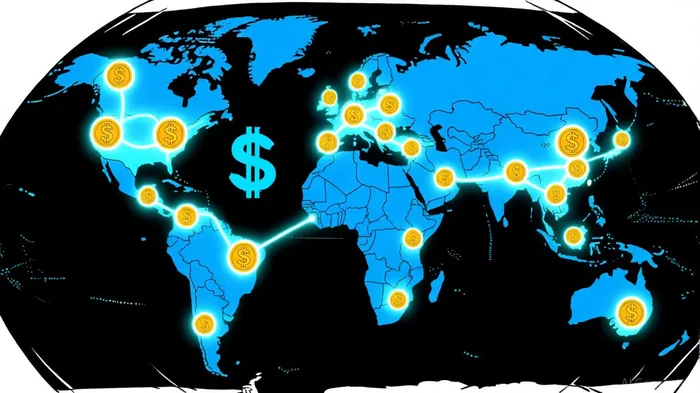
The global financial system is undergoing a quiet revolution. Stablecoins—cryptocurrencies pegged to fiat currencies or assets—are no longer just tools for crypto traders. They've become geopolitical weapons in the battle for monetary dominance, reshaping debt dynamics and redefining the role of central banks. For investors, understanding this shift is critical. Dollar-backed stablecoins like TetherUSDT-- (USDT) and USDCUSDC-- are entrenching the U.S. dollar in global finance, while alternatives like Russia's RUBC are challenging the dollar's hegemony. This is not just a crypto story; it's a macroeconomic and geopolitical one.
The U.S. Dollar's Digital Fortress
The U.S. has weaponized stablecoins to reinforce its financial supremacy. The GENIUS Act, passed in 2025, mandates that dollar-backed stablecoins hold 100% reserves in cash, short-term Treasuries, or government money market funds [1]. This legislation transforms stablecoin issuers into quasi-institutions that institutionalize demand for U.S. debt. By anchoring stablecoin reserves to Treasuries, the U.S. creates a structural bid for its bonds, effectively turning stablecoin holders into macroeconomic actors. This dynamic suppresses short-term yields and enhances fiscal flexibility for the U.S. government—a win for Treasury markets [2].
For investors, this means dollar-backed stablecoins are now more than just liquidity tools. They're embedded in the U.S. financial infrastructure, offering a yield-boosting mechanism for Treasuries. The market capitalization of stablecoins hit $232 billion in March 2025, with Tether and USDC controlling 86% of the market [3]. Tether's collateral shift to U.S. Treasuries (though still holding 18% in riskier assets) underscores its role as a de facto extension of U.S. monetary policy [4].
Russia's Digital Ruble Gambit
While the U.S. builds its digital fortress, Russia is constructing a parallel system. The RUBC (Russian Ruble Coin), part of Moscow's push for a multipolar financial order, aims to bypass Western sanctions and reduce reliance on the dollar. By 2026–2027, Russia plans to roll out a digital ruble, leveraging blockchain to facilitate cross-border trade with non-Western partners [5]. This mirrors China's digital yuan experiments but with a distinct geopolitical edge: RUBC could become a tool for countries seeking to avoid U.S. financial oversight.
For investors, RUBC represents a high-risk, high-reward play. While its adoption is currently limited, it could gain traction in regions like Africa and parts of Asia where dollar dominance is waning. However, RUBC's success hinges on Russia's ability to attract partners willing to bypass U.S. sanctions—a challenge given the dollar's entrenched role in global trade.
Market Dynamics: Stability or Speculation?
Stablecoins are not immune to macroeconomic shocks. The New York Fed notes that stablecoin inflows surge during BitcoinBTC-- price volatility, acting as a safe-haven asset [6]. This flight-to-safety dynamic mirrors traditional markets, where investors flee riskier assets during crises. However, the collateral backing stablecoins remains a concern. Tether's 18% allocation to non-Treasury assets—such as commercial paper and crypto loans—introduces liquidity risks [7].
Meanwhile, institutional adoption is accelerating. Intercontinental ExchangeICE-- (ICE) and Circle's collaboration to integrate USDC into derivatives markets signals a broader acceptance of stablecoins as financial infrastructure [8]. This could drive demand for USDC, which now circulates at $60 billion, backed by highly liquid reserves [9].
Strategic Investment Implications
For investors, the key is to balance exposure to dollar-backed and alternative stablecoins based on geopolitical trends:
- Dollar-Backed Stablecoins (USDT, USDC): These are ideal for investors seeking to capitalize on U.S. monetary policy. The GENIUS Act ensures regulatory clarity, making them safer than traditional crypto assets. However, risks persist if Tether's collateral mix destabilizes.
- Alternative Stablecoins (RUBC): These are speculative plays for investors betting on de-dollarization. While adoption is nascent, RUBC could gain traction in regions with anti-U.S. sentiment.
- Diversification: A hedged portfolio might include both dollar-backed and alternative stablecoins, balancing U.S. dominance with emerging multipolar trends.
Conclusion: The New Monetary Cold War
Stablecoins are the frontlines of a new monetary cold war. The U.S. is using them to cement dollar dominance, while Russia and others are building alternatives to challenge it. For investors, this is a rare opportunity to bet on the future of global finance. Dollar-backed stablecoins offer stability and regulatory tailwinds, but alternative stablecoins could disrupt the status quo. The key is to stay agile, monitor geopolitical shifts, and allocate capital accordingly. In this new era, stablecoins aren't just stable—they're strategic.






Comentarios
Aún no hay comentarios