
Geopolitical Crossroads: Sanctions on Iran and Houthi Entities Create Strategic Shifts in Asian Energy Logistics
The U.S. sanctions regime targeting Iranian oil flows and Houthi-linked entities has reached a critical inflection pointIPCX--, reshaping global energy logistics and creating both risks and opportunities for investors. Recent designations against Chinese firms like HUAYING PETROCHEMICAL and Houthi-aligned shipping networks underscore a strategic pivot to disrupt Iran's oil revenue streams. This article analyzes how these moves are altering Asian energy storage dynamics, maritime trade routes, and compliance-driven logistics—while identifying sectors poised to capitalize on the upheaval.
The Geopolitical Hammer: Sanctions on HUAYING PETROCHEMICAL and Houthi Shipping
On January 22, 2025, the U.S. Treasury sanctioned HUAYING HUIZHOU DAYA BAY PETROCHEMICAL TERMINAL STORAGE CO., a key Chinese terminal handling Iranian crude. The terminal was designated for accepting 1 million barrels of Iranian oil from the sanctioned tanker NICHOLA (formerly SPIRIT OF CASPER), which had transferred cargo via ship-to-ship deals with Iran's SALINA (linked to the National Iranian Tanker Company). This action, under Executive Order 13846, blocked all U.S.-related transactions with HUAYING, cutting off access to global banking and forcing Chinese refiners to seek alternative terminals.
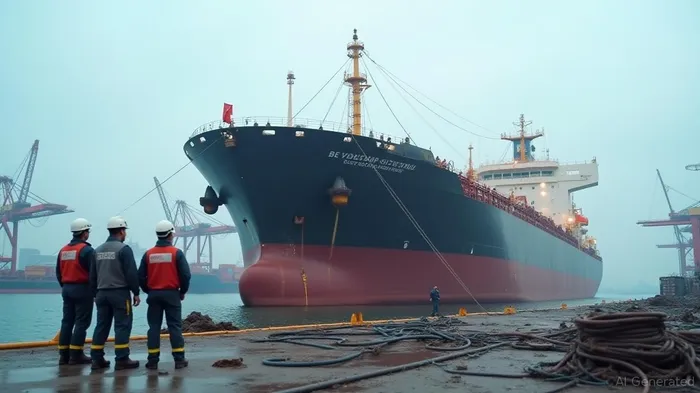
Simultaneously, sanctions on Houthi-linked entities—such as Zaas Shipping & Trading Co. (operator of the Tulip BZ) and Bagsak Shipping Inc. (owner of the Maisan)—targeted their role in smuggling refined petroleum to Houthi-controlled Yemeni ports like Ras Isa. These designations, tied to the Houthis' designation as a Foreign Terrorist Organization (FTO) in March 2025, aim to choke off revenue streams funding Houthi attacks on Red Sea shipping lanes.
Supply Chain Vulnerabilities: Asia's Energy Storage in Flux
The sanctions have exposed critical weaknesses in Asian oil logistics:
1. Terminal Capacity Crunch: HUAYING's terminal was China's second-largest Iranian crude offloading point, handling 7 of 9 Iranian shipments since 2021. Post-sanction, Chinese refiners have shifted to smaller terminals like Jinrun and Haixin Port Co., but these lack the scale to absorb all Iranian crude.
-
2. Shipping Risks: Tankers like NICHOLA and Maisan are now blacklisted, forcing Iran to rely on shadow fleets. This has led to delays and higher costs, with Iranian Light crude trading at $2.30–$2.40/bbl discounts to Brent as of June 2025.
3. Banking Barriers: State-owned banks like CNOOC have cut ties with sanctioned refiners, pushing them to use smaller lenders. This financial fragmentation increases default risks for projects tied to Iranian oil.
Investment Opportunities: Compliance-Driven Logistics and Infrastructure
The sanctions-driven chaos creates two clear investment themes:
1. Compliance-Focused Shipping Firms
- Target: Companies with robust anti-sanctions compliance protocols, such as CMA CGM or AP Moller-Maersk, which avoid engagement with sanctioned entities.
- Why Now?: As shippers face fines for violating U.S. sanctions, demand for “clean” logistics providers will surge.
2. Energy Infrastructure in Neutral Markets
- Target: Ports and storage facilities in non-aligned countries (e.g., Malaysia's Pengerang Terminal) positioned to handle Iranian oil without U.S. jurisdictional risk.
- Why Now?: Iran may reroute shipments to Southeast Asia, boosting demand for terminals with E.U.-style sanctions exemptions.
3. Red Sea Alternatives
- Risk Mitigation: Shipping firms investing in Suez Canal or East African route infrastructure could avoid Houthi-controlled chokepoints.
- Play: ETFs like the Global X Shipping ETF (SEA) offer exposure to firms diversifying away from Red Sea exposure.
Caution: The Limits of Sanctions Effectiveness
While the sanctions aim to strangle Iran's oil sales, several factors temper their impact:
- Market Resilience: Chinese “teapot” refiners like Shandong Shengxing Chemical have adapted by rerouting cargoes to smaller terminals, albeit at higher costs.
- Geopolitical Pushback: China and Russia continue to oppose U.S. sanctions, potentially creating loopholes via barter deals or crypto-based payments.
Final Take: Position for a Fragmented Energy Landscape
Investors should prepare for a world where:
1. Geopolitical Risk Pricing becomes a permanent factor in energy logistics valuations.
2. Compliance expertise is a key competitive advantage for shipping and storage firms.
3. Asia's energy storage hubs will bifurcate between “clean” (sanction-compliant) and “gray” (Iran-friendly) facilities.
Actionable Plays:
- Buy: Compliance-driven shipping stocks (e.g., CMA CGM) and energy infrastructure in neutral markets.
- Avoid: Firms with exposure to Houthi-linked Red Sea routes or Iranian terminals under U.S. scrutiny.
The sanctions saga is far from over—but for investors attuned to the logistical and geopolitical shifts, this volatility is a buy signal.







Comentarios
Aún no hay comentarios