
Geopolitical Crossroads: Navigating Risks and Rewards in Middle Eastern Infrastructure
The U.S.-Gaza aid plan’s collision with UN opposition has thrust the Middle East into a new era of geopolitical volatility. While this tension poses clear risks to regional stability—and thus to equities in markets like Israel and Lebanon—it also creates asymmetric opportunities in neutral economies. For investors, the key lies in identifying infrastructure plays in countries like Egypt and Turkey, paired with tactical hedging strategies to weather market turbulence.
The Geopolitical Tug-of-War
The U.S.-backed Gaza Humanitarian Foundation (GHF), designed to bypass UN oversight and Israeli military control, has sparked a diplomatic firestorm. The UN’s refusal to participate—citing violations of humanitarian neutrality—has left a vacuum in aid distribution. This standoff risks destabilizing Gaza further, with spillover effects into neighboring economies.
For Middle Eastern equities, the risks are stark. The MSCIMSCI-- Middle East Index has already seen volatility spike as geopolitical tensions rise. Disruptions to trade routes, tourism, and energy exports could amplify these swings. Investors in sectors like construction and real estate in Israel or Lebanon face heightened risks of capital flight and project delays.
Infrastructure Plays in Neutral Markets
While the Gaza crisis dominates headlines, the fallout has created an unexpected opening for investors to capitalize on infrastructure projects in countries insulated from direct conflict.
Egypt: Leveraging Geostrategic Hub Status
Egypt’s dual role as a Mediterranean-African bridge and a critical energy corridor offers a compelling entry point. The Suez Canal’s expansion plans—aimed at boosting capacity by 30%—and the East-West Gas Pipeline (connecting Mediterranean gas fields to African markets) are two prime examples of projects that benefit from Egypt’s neutrality.
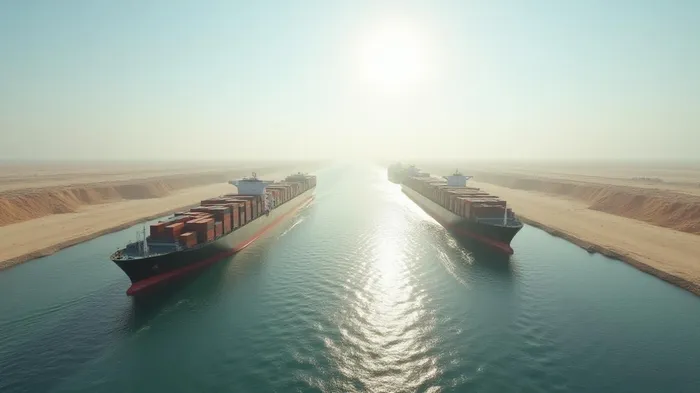
The government’s push to attract $10 billion in infrastructure investment annually until 2030 is further supported by its $15 billion IMF program. For investors, Egyptian bonds (e.g., EGX Bond Index) offer yields above 13%—a compelling risk-reward trade if geopolitical risks subside.
Turkey: Energy Transit and Maritime Ambitions
Turkey’s assertive maritime claims in the Eastern Mediterranean have drawn criticism but also positioned it as a critical transit hub. The TurkStream pipeline’s expansion, aimed at tripling its gas capacity to Europe by 2027, and the proposed Trans-Anatolian Natural Gas Pipeline (TANAP) extension to the Balkans, are infrastructure plays with long-term demand tailwinds.
Turkey’s energy sector stocks, such as Botas Holding (BOTAS.IS), have underperformed amid geopolitical jitters. However, their valuations now reflect a discount to their strategic importance. Meanwhile, the lira’s depreciation—driven by inflation—creates a currency tailwind for foreign investors.
Tactical Hedging: Currency and Bonds
The volatility stemming from Gaza’s crisis demands a defensive layer. Two strategies stand out:
Currency Hedging via ETFs:
The iShares MSCI Emerging Markets ETF (EEM) includes exposure to Middle Eastern markets but lacks direct hedging. Instead, pairing it with the WisdomTree Dreyfus Emerging Currency Strategy Fund (CEW) can mitigate FX risks. For Egypt-specific exposure, the EGX30 ETF (EGPT) offers direct equity access paired with inflation-linked Treasury bonds to hedge against lira volatility.Emerging Market Bond ETFs:
The J.P. Morgan Emerging Markets Bond Index (JACI) includes Egyptian and Turkish issuers, offering yields above 8%. The iShares J.P. Morgan EM Local Currency Bond ETF (LEMB) provides diversification while capturing interest rate differentials.
Conclusion: A Geopolitical Pivot Point
The Gaza aid plan’s impasse has created a paradoxical investment environment: risk for those tied to conflict zones, reward for those focused on infrastructure in neutral markets. Egypt and Turkey stand out as beneficiaries of geopolitical “creative destruction,” offering asymmetric returns in energy, logistics, and transit projects.
Investors should proceed with caution but act decisively. Allocate 5–10% of a global portfolio to Egypt and Turkey infrastructure plays, paired with hedging via EM bond ETFs. Monitor the GHF’s rollout—if it collapses entirely, the search for stability will drive capital toward these safe havens. The Middle East’s next chapter isn’t just about conflict—it’s about who builds the bridges to recovery.
Act now, but hedge wisely.







Comentarios
Aún no hay comentarios