
Geopolitical Crossroads: How Middle East Tensions Could Ignite the Next Oil Shock
The Middle East has long been a crucible of geopolitical volatility, but recent developments between the U.S., Israel, and Iran have pushed the region to a new inflection point. With oil prices swinging wildly in response to diplomatic spats, military posturing, and shifting alliances, investors must now grapple with an energy market increasingly tied to political risk. Here's how the escalating U.S.-Israel-Iran standoff could redefine the landscape for energy investments—and what to do about it.
Geopolitical Triggers: A Powder Keg of Tensions
The U.S. has intensified its diplomatic isolation of Iran and Palestinian statehood efforts, fracturing alliances with European partners like France and Saudi Arabia. This divide is not merely symbolic: European nations such as Britain and Canada have imposed sanctions on Israeli officials, while the U.S. has lobbied allies to reject “anti-Israel actions.” Meanwhile, Iran's defense minister has warned of striking U.S. bases in the region if tensions escalate—a direct challenge to American credibility.
The International Criminal Court's arrest warrants for Israeli leaders and reports of over 55,000 Palestinian deaths since October 2023 have further inflamed tensions. ESG-driven investors are now scrutinizing companies tied to the Gaza blockade, such as logistics firms and construction companies, leading to divestment pressures.
Oil Market Dynamics: A Balancing Act on a Fault Line
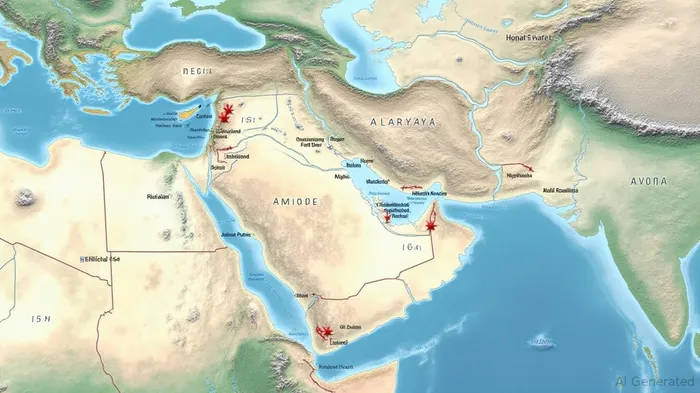
The oil market is caught between two extremes: a potential nuclear deal with Iran that could flood global markets with crude, or a military clash that could disrupt 30% of global seaborne oil trade via the Strait of Hormuz.
Recent Volatility:
Prices have swung from a 4% spike (to $72/barrel) on fears of conflict to a 1% drop as diplomatic hopes flickered. Analysts like JP Morgan's Natasha Kaneva warn that a full closure of the Strait of Hormuz—a historically untested scenario—could send prices to $120/barrel.
Key Scenarios:
1. Nuclear Deal Success: A revived U.S.-Iran nuclear agreement would allow Iranian oil exports to rebound, adding 1–2 million barrels/day to global supply. This would depress prices and benefit inverse oil ETFs like the ProShares UltraPro Short Oil ETF (SCO).
2. Military Escalation: A breakdown in talks could trigger strikes on Iranian nuclear sites or Gaza infrastructure, disrupting supply chains. Defense contractors such as Lockheed Martin (LMT) and Raytheon (RTX) might see demand surge as Gulf states bolster military spending.
Investment Implications: Navigating the Storm
The energy sector is now a high-risk arena, with geopolitical events overshadowing traditional supply-demand fundamentals. Investors must adopt strategies to mitigate exposure while capitalizing on asymmetric opportunities.
1. Hedge Against Oil Volatility
- Inverse Oil ETFs: Pair long energy positions with short exposure via SCO to buffer against sudden price spikes.
- Diversify Defensively: Consider ETFs like the Direxion Daily Aerospace & Defense Bull 3X Shares (DFEN) if military spending accelerates.
2. Avoid Fragile Sectors
- Energy Infrastructure: Firms involved in Middle Eastern pipelines or ports (e.g., energy service companies like Schlumberger) face disruption risks.
- Airlines: Fuel costs and supply chain delays could squeeze margins for carriers like Delta (DAL) and Emirates.
3. Monitor ESG Divestment Trends
Companies linked to the Gaza blockade or Israeli infrastructure (e.g., logistics firms like C.H. Robinson) may face capital flight as ESG-conscious investors reallocate.
Conclusion: Stay Nimble, Stay Informed
The Middle East's geopolitical volatility is not just a headline—it's a market-moving force. Investors must treat this landscape as a high-stakes balancing act:
- Watch diplomatic talks: A U.S.-Iran deal could cap oil prices, while failure could ignite a defense-sector rally.
- Avoid overexposure to regional equities: Middle Eastern stocks (e.g., Saudi Aramco) face sanctions risks and FDI delays.
- Leverage derivatives and ETFs: Use inverse oil exposure to protect portfolios and defensive plays to capitalize on military spending.
The energy market's next chapter hinges on whether diplomacy or conflict defines the region's future. For now, agility and risk-awareness are the only sure strategies.
Data as of June 2025. Past performance does not guarantee future results. Consult a financial advisor before making investment decisions.







Comentarios
Aún no hay comentarios