
Geopolitical Crossroads: How U.S.-Led Tensions Over the Israel-Palestine Conference Threaten Middle Eastern Energy Stability
The U.S. government's recent warnings against participation in the June 2025 UN conference on the Israel-Palestine conflict, co-hosted by France and Saudi Arabia, have underscored a deepening rift in global alliances. The conference, aimed at advancing a two-state solution, has become a flashpoint in a broader struggle over diplomatic influence and regional stability. For investors, the stakes extend far beyond geopolitics: the fallout from this diplomatic clash could reshape Middle Eastern energy investments and oil market dynamics in profound ways.
The Geopolitical Backdrop
The U.S. has explicitly threatened consequences for countries attending the conference or supporting unilateral Palestinian statehood recognition, particularly on October 7—the anniversary of Hamas's attack on Israel. This stance reflects the Trump administration's alignment with Israel's security interests, even as France and Saudi Arabia seek to leverage the conference to build momentum for a Palestinian state. The tension is not merely symbolic: Saudi Arabia, a key U.S. Gulf allyALLY--, faces pressure to choose between its co-hosting role and avoiding U.S. disapproval.
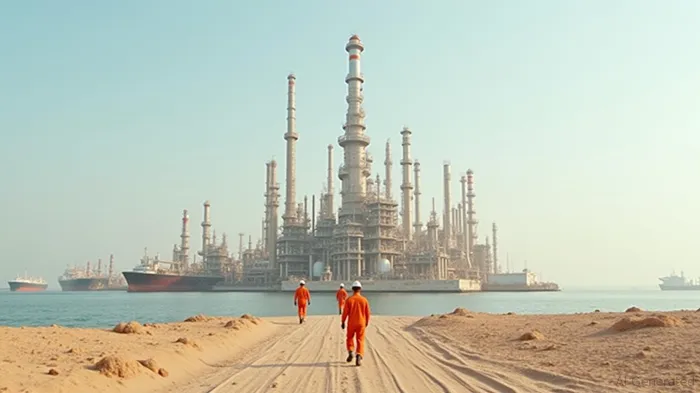
Energy Markets at a Crossroads
The geopolitical standoff threatens to destabilize Middle Eastern energy investments through three interlinked channels:
Lower Asian Demand, Higher Fiscal Strain
The U.S. has imposed global tariffs that have weakened Asian economies, which account for 55% of Saudi Arabia's oil exports. With the IMF revising global GDP growth down to 2.8% in 2025, Asian demand for Middle Eastern crude is already softening. . Prices now hover near $70/barrel—well below the $80–$90 range needed for fiscal stability in many Gulf states.OPEC+ Production Wars Undermine Price Stability
OPEC+'s decision to boost production by 2.2 million barrels/day by 2025 has sparked a market-share battle. Saudi Arabia, the only producer with spare capacity, faces a dilemma: ramp up to stabilize prices or let rivals overproduce and flood the market. The result? A race to the bottom that could push prices even lower.Iran's Wild Card
If U.S. sanctions on Iran are eased—a possibility if nuclear negotiations progress—the Islamic Republic could add 1 million barrels/day to global supply. This would exacerbate oversupply and further depress prices, destabilizing OPEC+'s fragile unity.
Investment Implications
The risks for energy investors are manifold:
- Gulf Sovereign Wealth Funds (SWFs): With Saudi Arabia projecting an additional $100 billion in debt by 2027, SWFs may curtail overseas investments—particularly in U.S. assets—to prioritize domestic stability. This could reduce capital flows into U.S. energy infrastructure projects.
- Oil Majors: Companies like ExxonMobil (XOM) and Chevron (CVX) face dual risks: lower oil prices and regulatory hurdles in Gulf states. Meanwhile, state-owned firms like Saudi Aramco (2222.SA) may see their growth plans constrained by fiscal pressures.
- Alternatives: Investors seeking exposure to Middle Eastern energy might consider plays insulated from geopolitical volatility, such as liquefied natural gas (LNG) exporters or renewable energy projects in the region.
The Bottom Line
The UN conference is more than a diplomatic showdown—it's a referendum on the future of Middle Eastern energy markets. If U.S.-Saudi tensions deepen, regional alliances could fracture, leading to prolonged oil oversupply and fiscal strain. Investors should prepare for volatility by diversifying portfolios and favoring companies with exposure to sectors less tied to crude prices, such as LNG or renewables. The path to stability remains uncertain, but one thing is clear: the Middle East's energy landscape is entering uncharted territory.
Investment Takeaway:
- Avoid overexposure to Gulf energy stocks amid fiscal pressures and geopolitical risks.
- Consider LNG exporters like Cheniere Energy (LNG) or regional renewables plays as safer bets.
- Monitor oil prices closely: A sustained drop below $70/barrel could trigger further market instability.
The geopolitical chessboard is set. Investors would be wise to play defensively until clarity emerges.







Comentarios
Aún no hay comentarios