
Geopolitical Crosshairs: How U.S. Surveillance of Musk's Visitors Impacts Tesla, SpaceX, and Investor Risk
The U.S. government's surveillance of foreign visitors to Elon Musk's properties—revealed in 2022–2023 reports and still reverberating in 2025—has thrust TeslaTSLA-- and SpaceX into a geopolitical spotlight. The investigation, led by agencies like the Department of Homeland Security, centered on concerns over foreign influence attempts on Musk, a figure whose companies underpin critical U.S. national security infrastructure. This scrutiny underscores a broader reckoning: firms led by globally influential figures now face unprecedented geopolitical risks, which investors must weigh when evaluating exposure to Musk-linked equities.
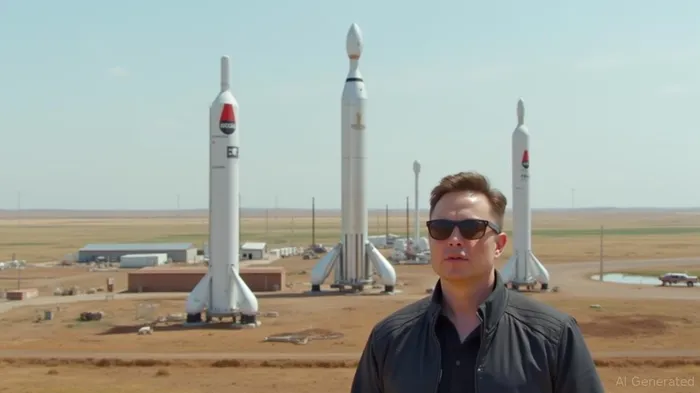
The Geopolitical Tightrope: Why Musk's Influence Matters
SpaceX's dominance in the space sector has made Musk a linchpin of U.S. national security. The company holds contracts worth billions, including a classified $1.8 billion deal with the National Reconnaissance Office for a military-grade version of Starlink. Meanwhile, Tesla's pivot toward government partnerships—such as supplying electric vehicles to municipal fleets—has deepened its ties to public institutions. However, Musk's high-profile feuds (e.g., with former President Trump) and public threats to disrupt services like Starlink's Ukrainian access or Dragon capsule launches expose vulnerabilities.
The U.S. government's reliance on SpaceX for 70% of global rocket launches and its sole control over crewed missions to the International Space Station creates a “single point of failure” scenario. If Musk's companies face penalties over national security concerns—or if political tensions escalate—the consequences could ripple through military operations, satellite communications, and even civilian infrastructure.
Corporate Governance in the Crosshairs
Musk's personal conduct has already triggered red flags. The 2024 installation of Starlink terminals at the White House without standard security protocols—a move orchestrated by Musk's satirical “Department of Government Efficiency” (DOGE)—exposed critical gaps in oversight. Whistleblowers later revealed similar unsecured installations at agencies like the National Labor Relations Board. Such incidents raise questions about governance: Can a company whose CEO prioritizes public theatrics over institutional stability reliably manage contracts with national security implications?
The surveillance reports add another layer. While the exact nature of foreign influence concerns remains classified, the fact that agencies like the Justice Department prioritized this investigation suggests Musk's international engagements are seen as a national security risk. This could lead to stricter compliance demands, delayed contracts, or even loss of clearances—a nightmare scenario for a firm as vertically integrated as SpaceX.
Implications for Tesla and Investor Confidence
For Tesla, the risks are dual. On one hand, its expansion into government contracts—such as supplying EVs to public transit systems or partnering on grid storage projects—could be jeopardized if Musk's companies face reputational or legal fallout. On the other, Tesla's stock has historically been volatile, reflecting investor sensitivity to Musk's provocations (e.g., the $44B Twitter acquisition, crypto bets).
The surveillance revelations, combined with geopolitical tensions (e.g., Russia's war in Ukraine), amplify these risks. A downgrade in SpaceX's security clearance, for instance, could stall its $2.9 billion NASA contract for the Artemis lunar program. For Tesla, the broader impact is a loss of institutional credibility, making it harder to secure long-term partnerships with risk-averse governments or enterprises.
Investment Strategy: Hedging Against Musk's Geopolitical Exposure
Investors holding Musk-linked equities face a confluence of risks: regulatory pushback, diplomatic friction, and operational dependency on a single leader. Here's how to navigate this landscape:
Reduce Exposure to Musk-Linked Stocks: Consider trimming Tesla shares (TSLA) or avoiding direct investments in SpaceX-backed ventures. The stock's beta of 2.1 (vs. the S&P 500's 1.0) reflects its sensitivity to external shocks.
Sector Rotation: Shift toward diversified defense contractors (e.g., Lockheed Martin, Raytheon) or traditional automakers (Ford, GM) with less reliance on individual leaders. These sectors offer stability amid geopolitical volatility.
Monitor Compliance Risks: Track regulatory actions targeting SpaceX's national security contracts. A delayed Starship certification or congressional hearings on Starlink's security could trigger sell-offs.
Consider Alternatives: For exposure to space innovation without Musk risk, look to competitors like Blue Origin (via Bezos' stakes in other firms) or government-backed initiatives like NASA's Artemis partners.
Conclusion: A New Era of Due Diligence
The surveillance of Musk's visitors marks a turning point: geopolitical risk is now a core factor in evaluating high-tech firms led by influential figures. For Tesla and SpaceX, the stakes are existential—their technologies are too critical to national security to remain in the hands of a CEO whose international engagements and public persona invite scrutiny. Investors must treat Musk-linked equities as high-risk, high-reward bets, hedging with broader sector exposure. In an era where corporate governance and geopolitical stability are intertwined, the message is clear: diversify or face fallout.





Comentarios
Aún no hay comentarios