
The Geopolitical Chessboard: How Russia's Mediation in Iran Could Tip Energy Markets and Defense Sectors
The Iran nuclear negotiations, now entering a critical phase, have become a high-stakes game of geopolitical chess. With Russia positioning itself as a potential mediator, the outcome could disrupt U.S.-Iran relations and send shockwaves through energy and defense markets. Here's how investors should navigate the opportunities—and risks—arising from this complex dynamic.
Russia's Double-Game: Mediator or Saboteur?
Russia's role in the talks is anything but altruistic. While publicly advocating for a peaceful resolution, its actions reveal a calculated strategy to maximize its influence. By prolonging the negotiations, Russia aims to keep Iran dependent on its political and economic support, ensuring a steady flow of Iranian hydrocarbon imports to counterbalance U.S. sanctions. Simultaneously, it avoids the risks of a collapsed deal, which could lead to U.S. military action destabilizing regional markets.
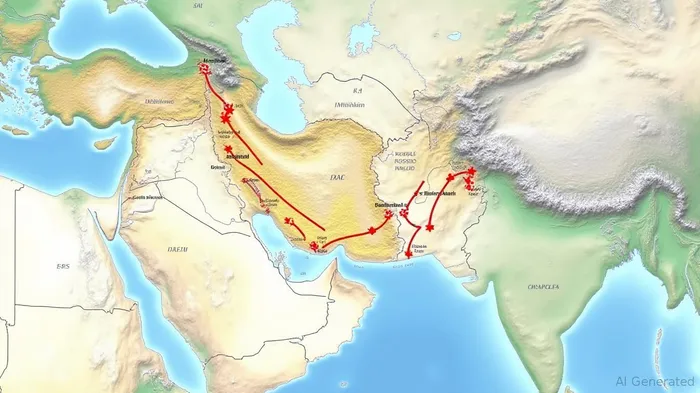
The Kremlin's dual objectives—maintaining leverage over both Iran and the U.S.—could prolong the stalemate. This uncertainty creates volatility in oil markets, favoring investors who bet on sustained geopolitical tension.
Energy Markets: A Balancing Act Between Sanctions and Supply
The current sanctions regime has limited Iran's oil exports to roughly 3.3 million barrels per day (MMbpd), but its shadow fleet of tankers and ship-to-ship transfers ensure a steady flow to buyers like China. If talks fail and tensions escalate, Iranian exports could drop further, tightening global supply. The International Energy Agency (IEA) projects a 600,000 bpd surplus in 2025, but this hinges on whether U.S.-Iran relations stabilize.
Scenario 1: Sanctions Remain or Intensify
Oil prices could climb toward $70–$75/bbl, benefiting majors like ExxonMobil (XOM) and Chevron (CVX). Investors might also look to OPEC+ members like Saudi Aramco, which could gain pricing power if Iran's supply is further curtailed.Scenario 2: Sanctions Are Lifted
A deal allowing Iran to re-enter global markets could add ~1 million bpd of supply, pushing prices back toward $60/bbl. This would pressure oil stocks but benefit refiners like Valero (VLO), which could access cheaper crude.
Defense Sector: A Surge in Spending, But Where?
The Gulf Cooperation Council (GCC) states, particularly Saudi Arabia, are ramping up defense spending to counter regional threats. Riyadh's 2025 defense budget of $78 billion—21% of its total government spending—reflects a push to localize production and reduce reliance on foreign suppliers.
Opportunity in Defense Tech
Companies like Raytheon (RTX) and Northrop Grumman (NOC), which supply advanced missile systems and cybersecurity tools, stand to benefit from GCC modernization efforts. Saudi Arabia's Vision 2030 targets 50% localization of defense spending by 2030, creating openings for firms partnering with local industries.Risk of Overinvestment
While defense spending is rising, fiscal constraints and the need for ROI in projects like the Red Sea Project may limit how much can be diverted to military initiatives. Investors should focus on firms with proven track records in GCC partnerships.
Investment Playbook: How to Capitalize on the Geopolitical Crossroads
- Oil Plays for the Risk Tolerant
- Long-term Bullish: Buy futures contracts tied to Brent crude (e.g., BNO ETF) if you believe Russia's mediation will prolong uncertainty.
Short-term Volatility: Consider inverse oil ETFs (e.g., DBO) if you anticipate a sudden deal breaking the deadlock.
Defense Sector Bets
- Hardware and Tech: Invest in firms like Raytheon (RTX) or General Dynamics (GD), which have strong ties to Saudi Arabia's military modernization plans.
Cybersecurity: Companies like CrowdStrike (CRWD) could gain traction as Gulf states seek to protect energy infrastructure from cyberattacks.
Avoid the Nuclear Gamble
Steer clear of pure-play Iran-focused ETFs (e.g., USIP) unless you're certain sanctions will ease. The path to a deal is fraught with U.S.-Russian mistrust, and a breakdown could trigger market selloffs.
Final Analysis: The Geopolitical Premium Is Here to Stay
Russia's role as both mediator and saboteur ensures that U.S.-Iran talks will remain contentious. Energy markets will oscillate between surplus and shortage, while defense spending in the Gulf will grow steadily. Investors should prioritize diversification—allocating to both oil equities and defense tech—to capture gains while mitigating risk. The next move in this geopolitical chess game won't just affect markets—it could redefine the rules of the game itself.
Stay tuned to developments in Vienna (where talks are held) and Moscow, where the next chess move will likely be made.







Comentarios
Aún no hay comentarios