
Geopolitical Asset Reconfiguration in Europe: Sovereign Wealth Fund Strategies Amid Ukraine-Related Frozen Assets
The war in Ukraine has triggered a seismic shift in European financial strategy, particularly in how sovereign wealth funds (SWFs) and institutional actors navigate the complex interplay of geopolitics and asset management. At the heart of this reconfiguration lies the $300 billion in Russian sovereign assets frozen globally, with approximately €185 billion held in Europe-primarily through Euroclear in Belgium, according to the Kyiv Independent. These immobilized assets have become a focal point for European leaders seeking to balance legal constraints, financial stability, and the urgent need to support Ukraine.
The EU's Legal and Financial Innovation
The European Union has pioneered a novel approach to leverage frozen Russian assets without direct confiscation. The proposed "reparation loan" mechanism involves redirecting cash balances from these assets to a Special Purpose Vehicle (SPV), backed by zero-coupon bonds issued by the European Commission, according to a Reuters explainer. This structure allows Ukraine to access up to €140 billion in funding, repayable only if Russia provides war reparations in a future peace agreement, as reported in an AP report. By framing the initiative as a loan rather than expropriation, the EU aims to circumvent legal challenges tied to state immunity and sovereign asset protections, as argued in a Verfassungsblog analysis.
This strategy reflects a broader trend in SWF behavior: the prioritization of geopolitical alignment over traditional investment returns. For instance, the EU's plan mirrors how SWFs like ADIA and PIF have shifted toward regionally anchored investments in sustainable infrastructure, emphasizing strategic resilience over pure profitability, as noted in the IFSWF Annual Review. However, the frozen asset dilemma introduces unique complexities, as the EU must navigate internal divisions and external retaliation risks.
Political and Legal Hurdles
Despite the ingenuity of the reparation loan model, political and legal hurdles persist. Belgium, as the host of Euroclear, has raised concerns about unilateral exposure to Russian retaliation, advocating for shared risk guarantees among EU member states, the Kyiv Independent reported. Similarly, Germany has emphasized that any funds released should be allocated strictly for military support, diverging from Ukraine's broader reconstruction needs, according to a Reason analysis. These tensions underscore the fragility of consensus in a bloc already fractured by divergent national interests.
Russia's response has further complicated the landscape. The Kremlin has denounced the plan as "theft" and warned of retaliatory measures, including the seizure of Western assets in Russia, the New York Times reports. While experts argue that such actions would require Russia to waive its own sovereign immunity-a legally fraught move-the threat remains a wildcard for European policymakers, according to an Al Jazeera report. This dynamic mirrors the risk mitigation strategies of SWFs, which increasingly rely on diversified portfolios and geopolitical risk assessments to navigate volatile environments, as highlighted by the Oxford SWF project.
Implications for Sovereign Wealth Fund Strategy
The frozen asset crisis has accelerated a strategic recalibration among European SWFs. While direct investment shifts tied to the Ukraine conflict remain limited, the broader geopolitical realignment has prompted SWFs to prioritize capital preservation and regional partnerships. For example, the IFSWF Annual Review 2024 notes a surge in European SWF investments in sustainable infrastructure projects, particularly in the Mediterranean and Middle East, as part of a broader effort to decouple from volatile global markets.
Moreover, the EU's use of frozen asset interest to fund the G7's $50 billion "Extraordinary Revenue Acceleration" loan to Ukraine highlights a growing trend: the weaponization of financial tools to enforce geopolitical objectives, according to a Brookings analysis. This approach aligns with SWF strategies that increasingly intertwine investment decisions with national security imperatives, as seen in the Middle East–Europe corridor's focus on renewable energy and digital infrastructure (as noted in the IFSWF Annual Review).
The Path Forward
As the EU finalizes its reparation loan framework, the implications for global financial norms and SWF behavior are profound. The success of this initiative could set a precedent for leveraging frozen assets in future conflicts, while its failure might reinforce the sanctity of sovereign immunity. For SWFs, the crisis underscores the need for agility in aligning portfolios with geopolitical realities-a lesson already embedded in the strategies of funds like Singapore's GIC and Norway's GPFG, as noted in a GlobeNewswire release.
Conclusion
The Ukraine conflict has redefined the role of frozen assets in geopolitical strategy, pushing European institutions and SWFs to innovate within legal and political constraints. While the reparation loan model represents a bold departure from traditional asset management, its long-term viability will depend on the EU's ability to unify member states and withstand Russian pushback. For SWFs, the crisis serves as a case study in the evolving intersection of finance and geopolitics-a domain where strategic foresight and legal ingenuity will determine future outcomes.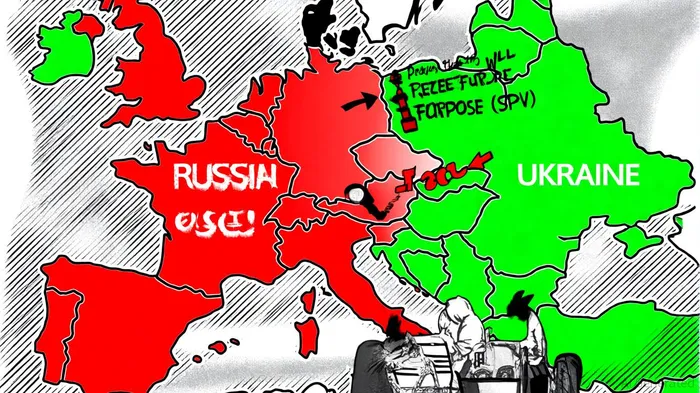







Comentarios
Aún no hay comentarios