
Genmin's Strategic Trading Halt: A Gateway to Unlocking Value in Gabon's Iron Ore Potential
Resource Nationalism: A New Paradigm in African Mining
Gabon's manganese export ban mirrors Indonesia's successful nickel export restrictions, which catalyzed a shift toward domestic processing and attracted foreign investment, as Africa Analyst notes. By requiring all manganese to undergo beneficiation before export, Gabon aims to capture higher-value economic returns and create jobs in regions like Haut-Ogooué. This approach reflects a broader trend in Africa, where governments are increasingly asserting control over their mineral resources to avoid the "resource curse" of commodity price volatility and underdevelopment.
The geopolitical stakes are high. Manganese, critical for steel production and battery technologies, accounts for 25% of global reserves in Gabon, as Africa Analyst notes. A temporary supply gap between 2029–2031 could drive price spikes unless processing infrastructure is rapidly scaled. This creates both risks and opportunities for investors, particularly those aligned with companies that can navigate regulatory shifts and build localized value chains.
Genmin's Strategic Position in Gabon's Iron Ore Sector
While Gabon's manganese policy dominates headlines, its iron ore sector is quietly undergoing a transformation. Genmin Ltd, an Australian mining firm, has secured non-binding offtake agreements with Chinese entities-including state-owned China Minmetals Corporation and Changzhou Dongfang Special Steel-for 3 million tonnes of fines and 1 million tonnes of lump iron ore annually, as Small Caps reports. These agreements, contingent on financing and regulatory approvals, underscore Genmin's alignment with China's green steel transition, which prioritizes low-carbon, high-grade iron ore, as Reuters reports.
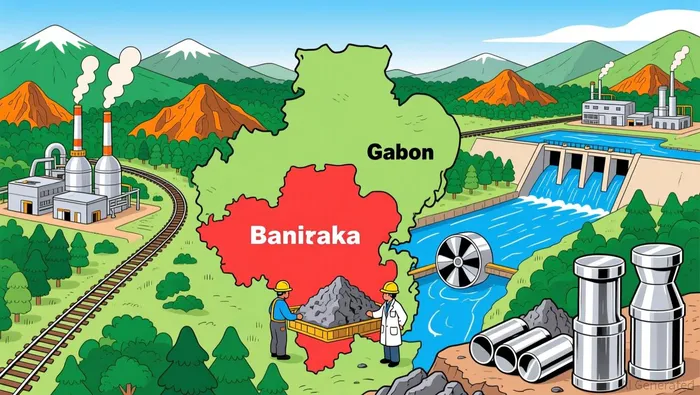
Genmin's Baniaka project in Gabon is designed to leverage existing infrastructure, including hydroelectric power and the Trans-Gabon Railway, to minimize costs and environmental impact, as Next Investors reports. The company's $200 million CAPEX target and mid-2025 production timeline, as Next Investors reports, position it to benefit from Gabon's broader industrialization agenda. By securing offtake agreements before production begins, Genmin mitigates market risks while aligning with the government's push for domestic processing-a strategy that could serve as a blueprint for other African mining ventures.
Geopolitical Dynamics and Investment Opportunities
The Simandou iron ore project in Guinea, recently launched with Chinese and Australian partners, illustrates the geopolitical interplay shaping African mining, as GMK reports. China's involvement in both projects-Simandou and Genmin's Baniaka-highlights its strategic interest in securing low-carbon iron ore for its green steel industry. For investors, this signals a shift from traditional commodity trading to partnerships that integrate resource extraction, processing, and decarbonization.
However, challenges persist. Infrastructure gaps, energy constraints, and governance transparency remain critical hurdles for Gabon's industrialization plan, as Africa Analyst notes. Genmin's success will depend on its ability to collaborate with local stakeholders and navigate these complexities. The company's focus on green energy and integrated logistics offers a compelling narrative for ESG-focused investors, who are increasingly prioritizing sustainability in resource sectors.
Conclusion: A Strategic Inflection Point
Genmin's trading halt and strategic pivot in Gabon's iron ore sector encapsulate the opportunities and risks of resource nationalism. By aligning with Gabon's industrialization goals and securing offtake agreements with Chinese partners, the company is positioning itself at the intersection of geopolitical strategy and market demand. For investors, this represents a rare opportunity to participate in a resource-driven transformation that balances national interests with global supply chain needs.
As Gabon's manganese export ban looms and the Simandou project gains momentum, the African mining landscape is poised for a renaissance. Companies that can adapt to this new paradigm-prioritizing value addition, sustainability, and geopolitical alignment-will emerge as leaders in a post-commodity export era.







Comentarios
Aún no hay comentarios