
Generali's Potential Acquisition of GamaLife: Strategic Value and Market Positioning in Asia's Life Insurance Sector
In the evolving landscape of global life insurance, Generali's potential acquisition of GamaLife-amid Apax Partners' reported sale plans-has sparked strategic intrigue. This analysis evaluates the transaction's viability by examining Generali's entrenched position in Asia's life insurance sector, GamaLife's financial robustness, and the synergies that could emerge from such a merger.
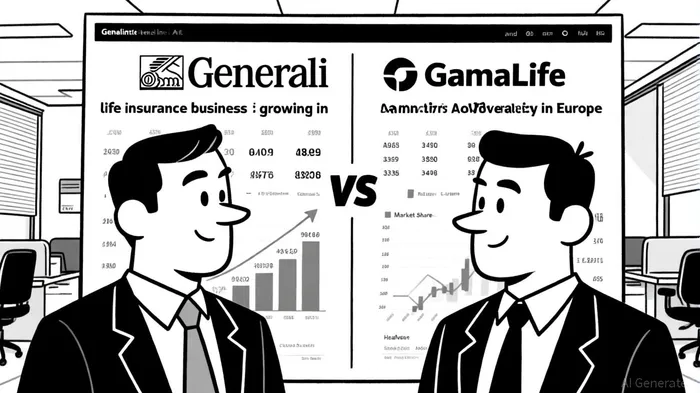
Generali's Strategic Position in Asia: A Foundation for Growth
Generali's Asia operations have demonstrated resilience and innovation, contributing significantly to the Group's global performance. In 2024, the Life segment achieved gross written premiums of €61.4 billion, with Asia driving a 19.2% growth in life insurance premiums, particularly in savings, protection, and unit-linked products[1]. By Q3 2025, Generali Asia's new business value (NBV) reached €204 million in the first half of the year, underscoring strong customer engagement[3]. The Group's "Lifetime Partner 27 – Driving Excellence" strategy emphasizes geographical diversification and client-centric innovation, positioning Asia as a key growth engine[5].
Asia's life insurance market, projected to grow at a 3.89% CAGR to $1.53 trillion by 2030[2], aligns with Generali's focus on retirement solutions and digital transformation. The company's 2025 Q1 results, despite a 4.5% decline in life premiums (due to a high 2024 base), still showed a €992 million operating profit, reflecting operational efficiency[1]. This foundation suggests Generali is well-positioned to absorb and integrate a strategic acquisition like GamaLife.
GamaLife's Financial and Strategic Profile: A European Success Story
GamaLife, a pan-European consolidator, has emerged as a high-performing entity under Apax's ownership. In 2024, it reported a net profit of €63 million and a return on equity exceeding 23%, supported by a conservative investment strategy and a solvency ratio of 246%[4]. Its 2024 total production of €490 million, driven by Portugal and Italy, highlights its ability to innovate in competitive markets-such as tripling sales of retirement products with profit-sharing[4].
While GamaLife has no direct operational presence in Asia, its European success demonstrates capabilities in product innovation, digital platforms, and financial discipline. These attributes could complement Generali's Asian ambitions, particularly in addressing the region's demand for tailored retirement solutions and hybrid products. Furthermore, GamaLife's acquisition of Zurich Insurance Group's Italian life and pensions back book in 2022[5] illustrates its strategic acumen in scaling operations-a trait valuable for navigating Asia's fragmented regulatory environments.
Strategic Synergies: Enhancing Generali's Asian Ambitions
An acquisition of GamaLife could offer Generali two critical advantages: financial flexibility and operational agility. GamaLife's strong solvency position and profitability provide a financial buffer that Generali could leverage to fund expansion in Asia, where capital-intensive initiatives like digital infrastructure and distribution network enhancements are critical[4]. Additionally, GamaLife's expertise in digital transformation-evidenced by its IT-driven product launches in Italy-could accelerate Generali's adoption of AI and automation in Asia, a region projected to lead in insurtech adoption[6].
Indirectly, GamaLife's European model of consolidating underperforming insurers could inspire Generali to pursue partnerships or minority stakes in Asian firms, bypassing regulatory hurdles in markets like China, where foreign ownership remains restricted. This approach aligns with broader industry trends, such as strategic licensing agreements in Asia-Pacific, which enable firms to access local expertise while mitigating risks[7].
Market Dynamics in Asia: Opportunities and Challenges
Asia's life insurance sector is shaped by rising disposable incomes, urbanization, and an aging population. In 2024, life insurance accounted for 61.3% of the Asia-Pacific market, with health insurance growing at a faster 7.89% CAGR[2]. Generali's focus on protection and unit-linked products resonates with these trends, but competition from regional giants like Ping An and Samsung Life remains intense[1].
GamaLife's European experience in navigating regulatory complexity could help Generali optimize its compliance frameworks in Asia, where diverse regulations across markets like Japan, India, and Southeast Asia pose challenges. Moreover, GamaLife's conservative investment strategy-yielding a 246% solvency ratio-could stabilize Generali's Asian operations amid volatile interest rates[4].
Conclusion: A Strategic Fit with Long-Term Potential
While GamaLife's direct absence in Asia limits immediate market synergies, its financial strength, innovation capabilities, and European consolidation model present long-term value for Generali. The proposed €600 million valuation[5], relative to Generali's 2024 Life segment operating profit of €3.98 billion[1], suggests a manageable investment that could enhance Generali's capital efficiency and innovation pipeline.
For Generali, the acquisition represents an opportunity to diversify its growth drivers beyond its core Asian markets, leveraging GamaLife's expertise to address retirement and health insurance gaps. In a sector where digital adoption and customer-centricity are paramount, the combined entity could emerge as a formidable player, navigating Asia's complexities with European precision.







Comentarios
Aún no hay comentarios