
Generali's $2.2 Trillion Natixis Partnership: A High-Stakes Bet on Scale, Risk, and Regulatory Navigation
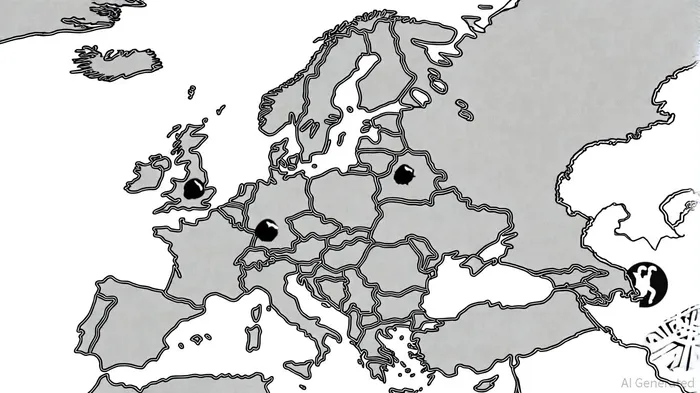
In the ever-shifting landscape of global asset management, the proposed 50-50 joint venture between Generali and Natixis Investment Managers—backed by BPCE—represents a bold attempt to create a European powerhouse. With combined assets under management (AUM) of €1.9 trillion ($2.2 trillion), the partnership would rank as the ninth-largest asset manager globally and the largest in Europe by revenue [1]. Yet, as with any megadeal in this sector, the strategic and financial viability of this venture hinges on navigating a treacherous mix of regulatory scrutiny, capital allocation efficiency, and the inherent risks of scaling a cross-border partnership.
Strategic Rationale: Scale and Synergy, But at What Cost?
The partnership's primary allure lies in its scale. By merging Generali Investments Holding (GIH) and Natixis Investment Managers, the joint venture would leverage complementary strengths: Generali's €600 billion in assets and expertise in insurance-linked investments, and Natixis' €1.3 trillion in AUM, particularly in fixed income and European markets [2]. The combined entity would also benefit from €15 billion in seed capital from Generali, earmarked for expansion into private assets—a sector poised for growth as institutional investors seek higher returns in a low-yield environment [3].
According to a report by McKinsey, the convergence of traditional and alternative asset management is a defining trend in 2025, with hybrid products unlocking trillions in new capital [4]. Generali's bet on private markets aligns with this shift, but the success of the venture will depend on its ability to execute cross-selling opportunities and reduce costs. Pro forma synergies of €210 million annually—primarily from operational efficiencies—suggest a compelling case for scale [5]. However, as PwC's 2024 Asset & Wealth Management Report notes, achieving such synergies requires seamless integration, a challenge even for firms with aligned cultures [6].
Regulatory Hurdles: A Political and Bureaucratic Minefield
The venture's path to realization is anything but smooth. Italy's insurance regulator, IVASS, has demanded additional details on governance and internal controls, signaling concerns about the protection of domestic assets and Generali's autonomy in asset allocation [7]. Meanwhile, the Italian government has explicitly warned that the deal must not erode the company's tax contributions—a rare intervention that underscores the political sensitivity of foreign partnerships involving Italian champions [8].
Regulatory risks are further compounded by the cross-border nature of the joint venture. The Alternative Investment Fund Managers Directive II (AIFMD II), set to take effect in April 2026, will impose stricter liquidity and delegation rules, requiring the new entity to overhaul compliance frameworks [9]. Failure to meet these standards could delay the deal's closure, currently targeted for early 2026 [10].
A €50 million penalty clause embedded in the agreement highlights the stakes: if either party withdraws without cause, the financial hit could deter smaller players but is a manageable cost for institutions of this size [11]. Still, the regulatory uncertainty raises questions about the venture's long-term stability, particularly in a sector where trust and continuity are paramount.
Capital Efficiency: A Double-Edged Sword
The joint venture's capital structure is designed to balance growth and risk. Generali's €15 billion seed investment—spread over five years—targets private assets, a high-growth but illiquid segment. While this aligns with industry trends, it also exposes the venture to liquidity mismatches if market conditions deteriorate [12].
Capital efficiency metrics, however, paint a more nuanced picture. The partnership's balanced governance model—equal ownership and decision-making rights—reduces the risk of misaligned incentives, a common pitfall in joint ventures [13]. Additionally, the 15-year contractual framework, including preferred dividend rights for BPCE in 2026-2027 and repayment tranches for Generali tied to its MGG acquisition, provides a degree of financial predictability [14].
Yet, as KPMG's 2025 outlook warns, asset managers must balance aggressive growth with prudent capital allocation to avoid overleveraging [15]. For Generali and Natixis, the challenge will be to ensure that the €15 billion seed money catalyzes returns without overcommitting either partner.
Conclusion: A Calculated Gamble in a High-Stakes Game
The Generali-Natixis partnership is a masterclass in strategic ambition: combining scale, complementary expertise, and a forward-looking focus on private assets. But its success will depend on navigating a labyrinth of regulatory and political challenges while maintaining capital discipline.
For investors, the venture represents both opportunity and risk. If executed well, it could redefine European asset management, creating a top-10 global player with unparalleled scale. If it falters, however, the fallout—whether from regulatory pushback, integration missteps, or market volatility—could serve as a cautionary tale for megadeals in an increasingly fragmented industry.







Comentarios
Aún no hay comentarios