
General Motors' Brand and Cultural Repositioning: Assessing Brand Value as a Tangible Asset in 2025
General Motors (GM) has long been a cornerstone of the U.S. automotive industry, but its 2025 performance underscores a strategic evolution that positions its brand as both a cultural and financial asset. According to a report by GM's investor relations division, the company led the U.S. auto industry in 2025 with a 6% year-over-year sales increase, driven by robust demand for full-size pickups and SUVs. The Chevrolet Silverado and GMC Sierra achieved their best combined sales in two decades, while GMGM-- maintained its dominance in the full-size SUV segment for the 51st consecutive year as reported. These metrics highlight not just operational success but a brand repositioning that aligns with shifting consumer preferences and technological trends.
Tangible Assets and the Evolution of Brand Value
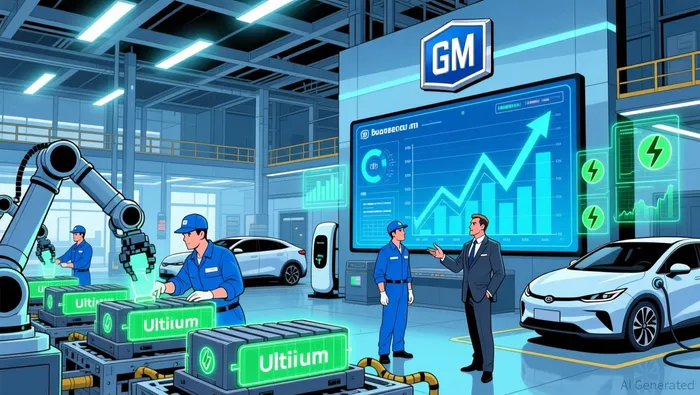
While GM's intangible assets-such as trademarks and patents-were valued at $4.5 billion as of September 30, 2025 according to financial data, its brand value increasingly manifests through tangible investments. A key example is the company's $35 billion commitment to electrification, which has reconfigured North American manufacturing facilities for EV production as detailed in strategic goals. This shift from internal combustion engine (ICE) development to a "value-driven EV leadership" model as outlined has transformed GM's physical infrastructure into a competitive asset. The Ultium battery platform, for instance, has become a scalable, cost-effective solution that supports price parity with traditional vehicles, directly enhancing GM's operational efficiency and market share according to strategy analysis.
 Moreover, GM's price-to-tangible book value ratio of 1.16 reflects investor confidence in its ability to convert brand equity into measurable financial returns. This is evident in the Ultifi software platform, which generated $2 billion in annual recurring revenue by 2026 through premium features like over-the-air updates and biometric access as reported. By monetizing software as a service, GM has expanded its revenue streams beyond hardware, reinforcing its brand as a forward-looking, tech-driven entity.
Strategic Repositioning and Market Realities
GM's repositioning, however, has not been without challenges. In 2025, the company recorded a $7.6 billion charge for underutilized EV equipment and supplier settlements, signaling a recalibration of its aggressive EV ambitions according to financial reporting. This adjustment followed a decline in consumer demand, the expiration of federal EV tax credits, and policy shifts under the Trump administration as detailed. Rather than abandoning electrification, GM pivoted to a balanced approach, reallocating resources to high-margin ICE vehicles like the Chevrolet Silverado while maintaining investments in Ultium and Ultifi according to strategy analysis.
This strategic flexibility has preserved GM's brand equity. For example, Cadillac's decade-best sales and Chevrolet's record SUV performance demonstrate that the company's core brands remain resilient even as it navigates macroeconomic headwinds. Additionally, GM's focus on carbon neutrality by 2035 as stated aligns with global sustainability trends, ensuring its brand remains relevant in an increasingly eco-conscious market.
Investment Implications and Market Outlook
For investors, GM's 2025 trajectory illustrates a brand that is both a cultural touchstone and a tangible asset. The company's ability to adapt its manufacturing footprint, software ecosystem, and product mix has insulated it from some of the volatility affecting peers. While the $7.6 billion charge in 2025 reflects short-term pain, GM's emphasis on reducing battery costs, increasing Ultium throughput, and leveraging high-margin software as outlined in growth strategy suggests long-term gains.
Critically, GM's brand repositioning has also stabilized its fleet sales. Nearly 700,000 Chevrolet and Buick models priced below $30,000 were sold in 2025, a segment critical for maintaining market share in a competitive pricing environment. This underscores how GM's brand equity-rooted in reliability and affordability-continues to drive tangible outcomes.
Conclusion
General Motors' 2025 performance reaffirms that brand value is not merely a marketing construct but a strategic asset with measurable financial and operational impacts. By aligning its cultural repositioning with tangible investments in electrification, software, and sustainability, GM has positioned itself to thrive in a hybrid automotive landscape. For investors, the company's ability to balance innovation with profitability offers a compelling case for long-term resilience.





Comentarios
Aún no hay comentarios