
General Mills: A Turnaround Play with Attractive Dividend and Buyback Potential
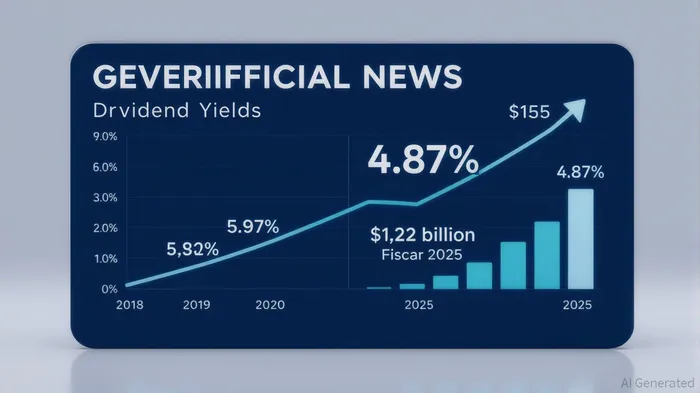
In the volatile landscape of the food and consumer goods sector, General MillsGIS-- (GIS) has emerged as a compelling case study in strategic reinvention. Amid inflationary pressures, shifting consumer preferences, and margin compression, the company’s “Accelerate” strategy—centered on portfolio optimization, cost discipline, and high-growth bets—positions it as a potential turnaround play for value investors. With a robust dividend yield of 4.87% in 2025 and aggressive share repurchases, General Mills is balancing short-term challenges with long-term value creation, making it a noteworthy opportunity in a sector marked by uncertainty.
Strategic Repositioning: From Yogurt to Pet Food
General Mills’ 2025 strategic moves underscore its pivot toward resilient markets. The $2.1 billion sale of its North American and Canadian yogurt businesses, which faced declining demand and supply chain complexities, was swiftly followed by the $1.45 billion acquisition of Whitebridge Pet Brands [1]. This shift aligns with broader industry trends: the global pet food market is projected to grow at a 6% CAGR through 2030, driven by rising pet humanization and health-conscious consumers [4]. General Mills’ pet segment, now including Blue Buffalo and Wilderness, saw a 7% operating profit increase in Q1 2025, validating the strategic pivot [5].
The company’s Holistic Margin Management (HMM) initiatives further reinforce its cost discipline. By targeting $600 million in productivity savings by 2026, General Mills aims to offset inflationary pressures while reinvesting in innovation, such as oat-based protein bars and themed fruit snacks [1]. These efforts are part of a $130 million global transformation initiative, which includes restructuring costs but is expected to yield $100 million in reinvestment capital [3]. While fiscal 2025 net sales declined 2% year-over-year, the North America Retail segment showed resilience, with 7 of its top 10 U.S. categories gaining pound and dollar share [5].
Dividend and Buyback Appeal: A Value Investor’s Sweet Spot
General Mills’ commitment to shareholder returns is evident in its 2025 dividend and buyback program. The company raised its quarterly dividend to $0.61 per share, a 2% increase from 2024, translating to an annualized $2.44 and a yield of 4.87% at its August 2025 stock price of $48.44 [1]. This follows a decade of consistent dividend growth, with a 1.69% average annual increase over the past 12 months and 5.57% over three years [2]. Analysts project the dividend could rise to $2.54 per share by 2027, supported by disciplined capital allocation and strong free cash flow [5].
Share repurchases have also been aggressive. In fiscal 2025, General Mills repurchased $1.2 billion worth of shares, with $600 million spent in the first half alone [4]. These actions signal confidence in the company’s long-term value, even as it navigates a 5% volume decline in North America Retail and margin pressures in snacks [3]. For value investors, the combination of a high yield and active buybacks creates a compelling narrative: returning capital to shareholders while restructuring for growth.
Navigating Headwinds and Long-Term Prospects
Despite these positives, challenges persist. General Mills’ North America Retail segment, which accounts for 63% of revenue, faces weak organic sales growth and competitive pressures from private-label brands, which gained 50% of global consumers in 2025 [4]. The company’s refrigerated dough and snack categories also struggle with shifting consumer preferences, including the impact of GLP-1 weight-loss drugs on snacking habits [3].
However, the strategic focus on pet food, digital engagement, and premium brands offers a path to differentiation. The pet segment’s 7% operating profit growth in Q1 2025 highlights its potential to offset weaker areas [5]. Meanwhile, General Mills’ investment in e-commerce—driving a 2% Q2 2025 net sales increase—positions it to capitalize on the 40% of U.S., UK, and German consumers who use grocery delivery services weekly [4].
Conclusion: A Calculated Bet on Resilience
General Mills’ 2025 performance reflects the pain of strategic transformation but also the promise of a more agile, high-margin portfolio. For value investors, the 4.87% yield and $1.2 billion in share repurchases provide immediate appeal, while the company’s pivot to pet food and digital innovation addresses long-term growth. While fiscal 2026 will test the company’s ability to restore volume-driven sales, the disciplined approach to cost management and capital allocation suggests a path to outperformance in a low-interest-rate environment. In a sector where many peers are struggling with inflation and consumer trade-offs, General Mills’ strategic clarity and shareholder-friendly policies make it a standout turnaround candidate.
Source:
[1] General Mills: Navigating Challenges and Positioning for Growth [https://www.ainvest.com/news/general-mills-navigating-challenges-positioning-growth-consumer-goods-2506/]
[2] General Mills, Inc. (GIS) Dividend Date & History [https://www.koyfin.com/company/gis/dividends/]
[3] General Mills Sees Silver Lining in Rough Fiscal 2025 [https://www.foodbusinessnews.net/articles/28529-general-mills-sees-silver-lining-in-rough-fiscal-2025]
[4] General Mills Reports Fiscal 2025 Fourth-quarter and Full Year Results [https://www.generalmills.com/news/press-releases/general-mills-reports-fiscal-2025-fourth-quarter-and-full-year-results]
[5] General Mills' Earnings Recovery: Strategic Cost Management and Consumer Demand Resilience [https://www.ainvest.com/news/general-mills-earnings-recovery-strategic-cost-management-consumer-demand-resilience-shifting-retail-landscape-2507/]





Comentarios
Aún no hay comentarios