
General Mills' Q1 Earnings Outlook: Assessing Risks and Opportunities in a Shifting Consumer Goods Landscape
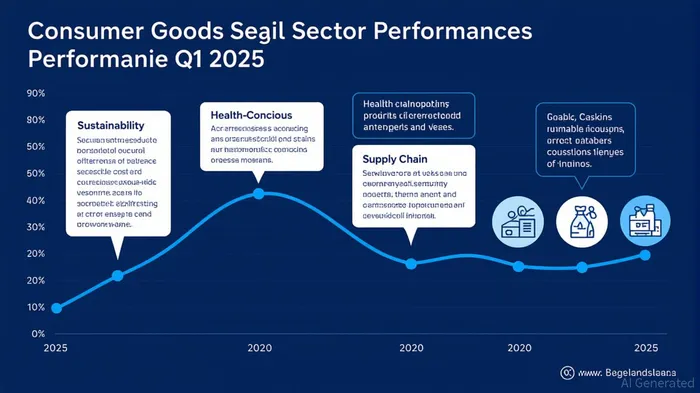
As the consumer goods sector navigates a landscape defined by evolving consumer preferences and macroeconomic pressures, General MillsGIS-- finds itself at a crossroads. While the company has long been a stalwart in the packaged food space, its Q1 2025 earnings outlook hinges on its ability to address strategic underperformance while capitalizing on sector-specific tailwinds. Let's break it down.
Strategic Underperformance: A Recipe for Stagnation
General Mills' recent initiatives have shown signs of lagging behind industry peers in innovation and agility. For instance, while competitors like Kellogg's and PepsiCoPEP-- have aggressively pivoted toward plant-based and functional foods, General Mills has been slower to scale its offerings in these high-growth categories. This hesitancy risks alienating younger, health-conscious consumers who prioritize sustainability and nutritional transparency[1].
Compounding this issue is the company's reliance on legacy brands, which, while stable, lack the growth potential of newer, niche products. According to a report by Bloomberg, the is projected to expand by 12% in 2025, driven by regulatory tailwinds and shifting dietary trends[2]. General Mills' tepid response to this shift could erode market share, particularly as private-label brands and startups undercut its pricing in the organic and non-GMO spaces.
Sector-Specific Tailwinds: A Silver Lining
The broader consumer goods sector, however, is not without its bright spots. The emphasis on product safety, sustainability, and efficiency—highlighted by Consumer Reports in its 2025 evaluations—offers a blueprint for General Mills to recalibrate[3]. For example, the automotive and electronics sectors' focus on rigorous testing and transparency[4] could translate to food products through enhanced quality assurance and .
Moreover, the sector's pivot toward value-conscious consumers—evidenced by the popularity of budget-friendly hybrids like the Nissan Sentra—suggests that affordability remains a key driver[5]. General Mills could leverage this by optimizing its supply chain to reduce costs without compromising quality, a move that would resonate with households navigating inflationary pressures.
The Path Forward: Balancing Risks and Opportunities
To unlock growth, General Mills must address its strategic inertia. Accelerating R&D in plant-based and functional foods, while integrating sustainability into its core operations, could position the company to capture emerging demand. Additionally, leveraging data analytics to refine its product mix and marketing strategies would help it better compete with agile startups.
However, the risks of inaction are clear. As Consumer Reports underscores, transparency and evidence-based decision-making are now non-negotiable for consumers. If General Mills fails to align with these expectations, it risks being outpaced by rivals who prioritize innovation and ethical sourcing.
Conclusion
General Mills' Q1 2025 earnings will serve as a litmus test for its ability to adapt. While the company's underperformance in innovation poses a near-term risk, the sector's focus on sustainability and affordability offers a roadmap for revival. Investors should watch for concrete steps toward strategic reinvention—because in today's consumer goods landscape, standing still is the same as falling behind.





Comentarios
Aún no hay comentarios